



Nowości

William V (Bill) Lindley visits Łódź
William V (Bill) Lindley visits Łódź
On 10
September 2015 the water supply and sewerage company (ZWiK) in Lodz
(Poland)
celebrated the 90th anniversary of the
start of the water and sewage construction in this city. At the invitation of
the President of ZWiK Romuald Bosakowski, Francis William (Bill) Naunton
Lindley, with his wife Philippa came to Łódź. He is a direct descendant of
William Lindley (1808-1900), the English civil engineer, and founder of the
family's company providing expertise and building the water supply and drainage
in dozens of European cities.
Sir William II Heerlen (1853-1917), the eldest son and Chief Engineer in the
company, with the help of his two brothers, Robert and Joseph Searles,
contributed to the design and implementation of sanitation and water supply in Prague, Budapest, Frankfurt
on Maine, Warsaw
and Baku. He
also designed the water supply projects for St. Petersburg,
Radom and Łódź.
The first two have not been executed mainly because of revolutionary events of
1905, Russo-Japanese war and the First World War.
The first preparatory works in Łodź began at the end of the 19th century, but gained momentum only ten years later. At this time William Heerlein led the work on design and construction of the aqueduct in Baku, which was the last of his great works. Inspite the Bolshevik Revolution, William Heerlein Lindley managed to take part in the opening of the aqueduct in Baku February of 1917. In December of that year he died suddenly of a heart attack. Fortunately for Łódź, Deputy of W.H. Lindley in Baku was engineer Stefan Skrzywan. The First World War and the premature death of Sir W.H. Lindley prevented the implementation of the project. Engineer Skrzywan, who was the great admirer of working methods of Lindley, after taking the functions of the Chief Engineer in Łódź, decided to implement the project. After some necessary modifications this great investment was completed.
Part of the system comprises four identical water tanks. The structure of these tanks, due to arched brick work, resemble the inside of a medieval cathedral. The first two of these were built between 1935 and 1937, and the second pair in 1949-1953. Each has a capacity of 15 000 m3 .
William V (Bill) Lindley is a great-great grandson of William I Lindley and a great grandson of Robert Searles, brother of William II Heerlein. He is also the only living male descendant bearing the primary name William (Bill).
This was William (Bill) Lindley's first visit to Poland. He was most appreciative of the hospitality of ZWiK and thoroughly enjoyed the Jubilee Gala. It took place under the slogan "Lodz water is the best". Invited guests could taste Łódź water in variety of products: sorbet-ice, Jubilee Beer, Silky Beer (March Beer) and Lodz Compote "Apple".
Four of the employees were awarded diplomas in recognition of the quality of their work. The diplomas were presented by William (Bill) Lindley.
The Gala was attended by the President of the city of Łódź, Mrs. Hanna Zdanowska, senator Ryszard Bonisławski (a great connoisseur of the history of Łódź and the author of many publications on this topic) and Małgorzata Niemczyk, Member of Parliament from the city of Łódź and other eminent guests.
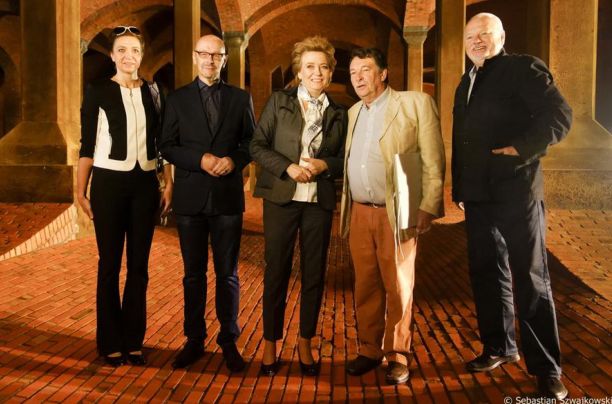
On the photo (from left): Małgorzata Niemczyk, the Member of the Polish Parliament (city of Łódź), Romuald Bosakowski, the President ZWiK, Ms. Hanna Zdanowska, the President of Łódź, William (Bill) Lindley and Ryszard Bonisławski, the Senator in Underground Cathedral in Stoki, the10th of September 2015.
The entertainment part of the Jubilee comprised of an excellent performance of Andrzej Poniedzielski, stand-up comedian, and Lena Ledoff Trio with recital of a mix of jazz and popular musicals. Gala ended with a champagne toast by the President ZWiK, Romuald Bosakowski and slices of Jubilee cake.
For more details go to:
http://www.zwik.lodz.pl/w-lodzi-goscil-william-v-lindley/
http://lodz.tvp.pl/21573471/potomek-williama-lindleya-odwiedzil-pdowodna-katedre
https://www.radiolodz.pl/posts/17936-romuald-bosakowski
https://www.radiolodz.pl/posts/17945-podziemna-katedra-na-stokach-w-lodzi-william-v-lindley-zdjecia
http://lodz.naszemiasto.pl/artykul/uroczysta-gala-zwik-w-teatrze-muzycznym-w-lodzi-zdjecia,3507129,artgal,t,id,tm.html

Lindleys works in Warsaw the Monument of History
Lindleys works in Warsaw the Monument of History
Three years ago, on February 2, 2012, the President of the Republic of Poland Bronisław Komorowski during the official ceremony presented his decree on the Filter and the Water Pump Station in Warsaw as a monument of Polish History.In Warsaw, next to the Old Town, the Lindleys’ works is the second historical monument on that list.
Warsaw's filters it is the joint work of the four Lindleys: the father William Lindley (1808-1900) and his three sons, William Heerlein (1853-1917), Robert Searles (1856-1925) and Joseph (1859-1906). The youngest of the brothers, Joseph, spent nearly his entire professional life in Warsaw, representing a family company.
Being placed on the list of Monuments of History means a serious step towards entering the list of UNESCO World Heritage sites.
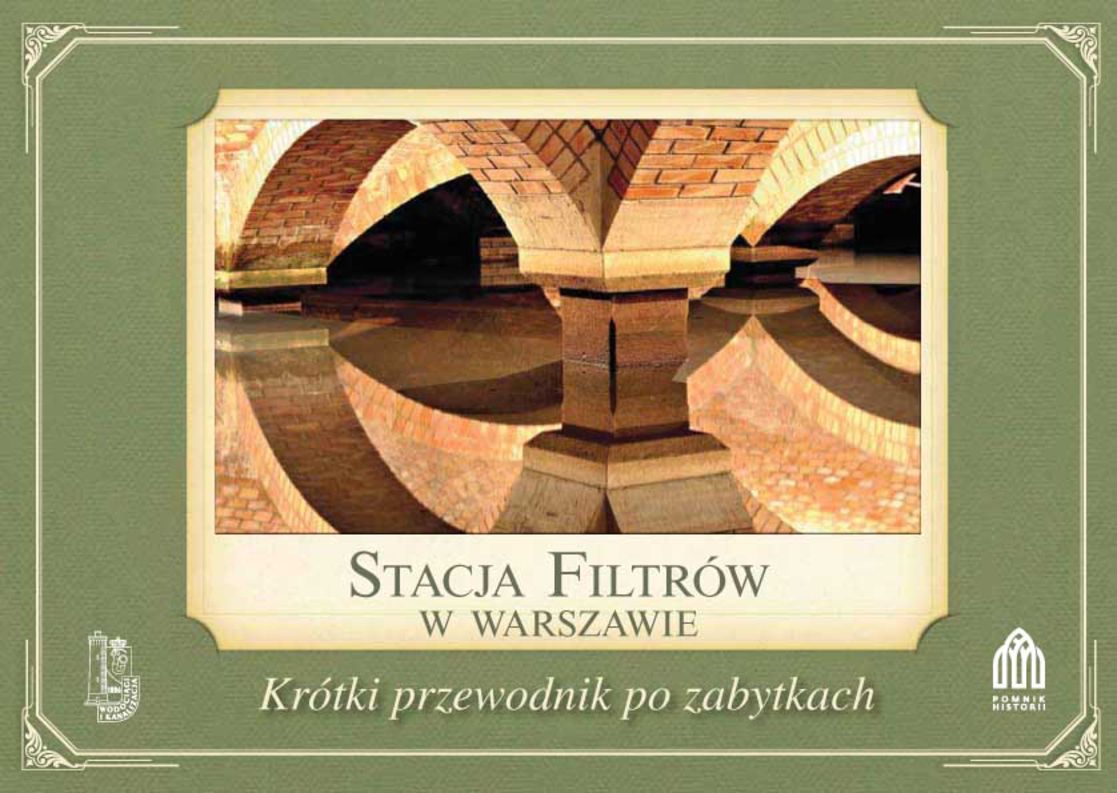
You can view this wonderful album in our E-library (texts in Polish):
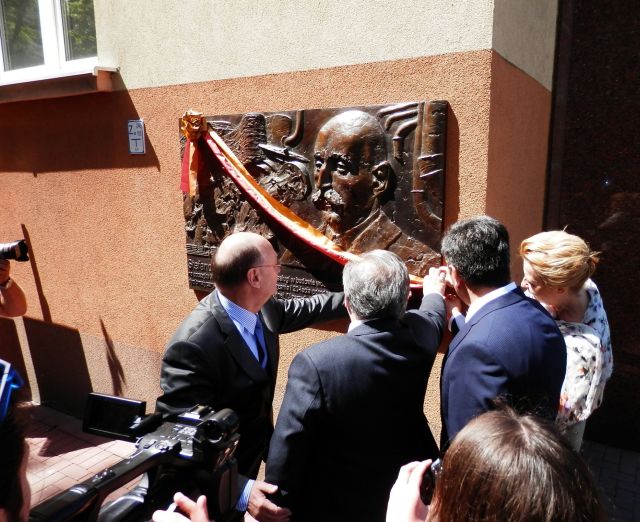
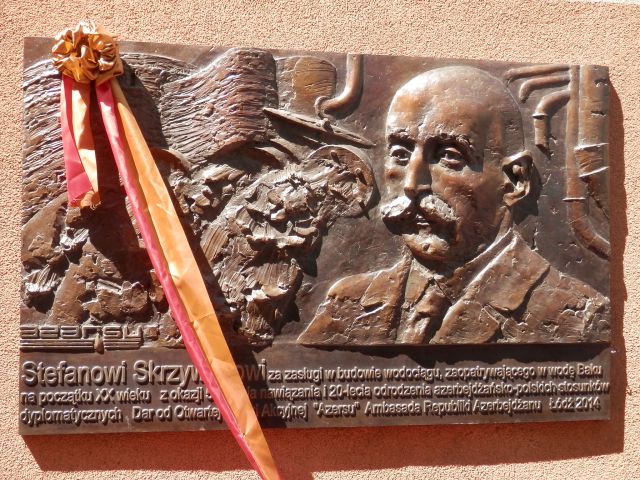
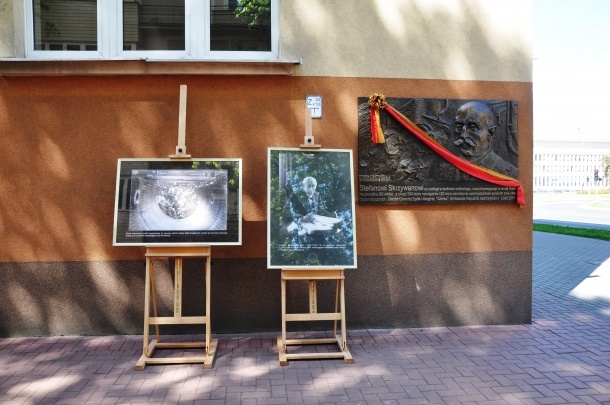
Memorial plaque for engineer Stefan Skrzywan, contractor of the water supply and sewerage system in Łódź
Memorial plaque for engineer Stefan Skrzywan, contractor of the water supply and sewerage system in Łódź
On June 19, 2014, a commemorative plate dedicated to engineer Stefan Skrzywan was unveiled in the city of Łódź. The plaque was affixed to a wall of the former headquarters of the city's water supply company at the Narutowicz Street 65, where Rectorate of the University of Łódź is located. The sponsor of the plaque was the state company AZERSU JSC, of Baku, Azerbaijan. The unveiling of the plaque was one of the events connected with preparations for the celebration of the centenary of the completion of the water works in Baku, which falls in 2017.
Participating in the ceremony were Hasan Hasanov, Ambassador of the Republic of Azerbaijan, Teyyub Jabbarov, Vice President of AZERSU, Hanna Zdanowska, President of the city of Łódź, Professor Włodzimierz Nykiel, Rector of the University of Łódź and Czesław Cieslak, a representative of the Water and Sewerage Company of Łódź.
Stefan Skrzywan (1876-1932) was born in Odessa. After graduating from the Institute of Technology in St. Petersburg in 1911, he worked in the construction of water and sewage system in Warsaw under the direction of William Heerlein Lindley. When construction of the water supply in Baku began in 1911, Skrzywan replaced Englishman Frank Durham, who had previously represented W.H. Lindley in the Caucasus.
Construction of the water works in Azerbaijan impressed the Europeans. The viaduct for the water extended about 180 km, originating from the springs of in the foothills of the Caucasus in Shollar, near the town of Guba. Water, by the force of gravity travelled to a pump station located about 40 km from Baku, from where it was sent under pressure through the water pipe network.
The waterworks in Baku was the final fully completed project of Sir William H. Lindley. In February 1917, despite the raging war and the Russian Revolution, he was present in Baku for the occasion of opening of the taps with clean water. In December of that year, Sir W.H. Lindley died in London.
Engineer Stefan Skrzywan survived World War I and was invited to finish the work on a comprehensive water supply and sewer system of the city of Łódź. The project included most of the work carried out by the W.H. Lindley and his associates earlier in the 20th century. No one was more qualified to be the contractor of the project than Skrzywan. Thanks to Skrzywan’s diligence, attention to detail and his understanding of the concept of aesthetic and engineering, Lindley’s project was completed posthumously and still appeals to us today with its timeless beauty.

William Lindley’s first grandchild
William Lindley’s first grandchild
It is not what you might think. We do not refer again to the history of the Lindleys’ family. It is here and now. The proud grandfather is William Lindley V (Francis William Naunton Lindley, Bill, born in 1955). He is the direct descendant of William Lindley (1808-1900).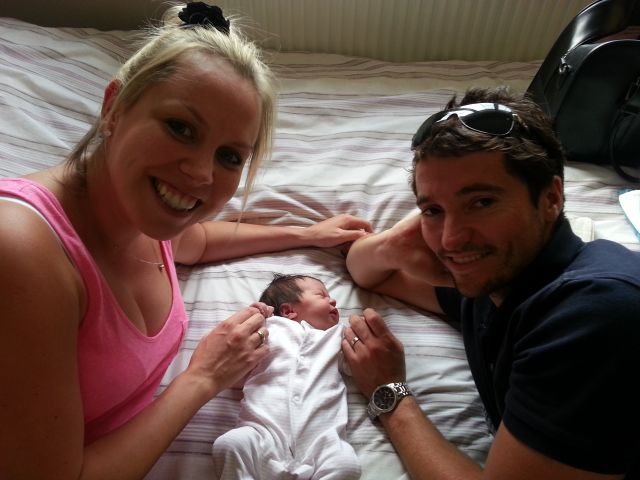
The happy parents are Edward William Robert Lindley (Edward, born in 1983) and Emma Lindley (né Kelly,born the same year). Ed and Emma married on the 4th August 2012. Their child - Francesca Grace Lindley - was born on the 1st September 2013.
.Congratulations to proud new parents! She couldn't have happened to a nicer parents!
What a great feeling:
“There’s nothing in this world that compares to being a grandparent…no words can express the emotions that grow from the first moment grandparents learn that a grandchild will soon be part of their loving family” (unknown member of the European Union of Grandparents).
“What children need most are the essentials that grandparents provide in abundance. They give unconditional love, kindness, patience, humor, comfort, lessons in life. And, most importantly, cookies.” Rudolph Giuliani.
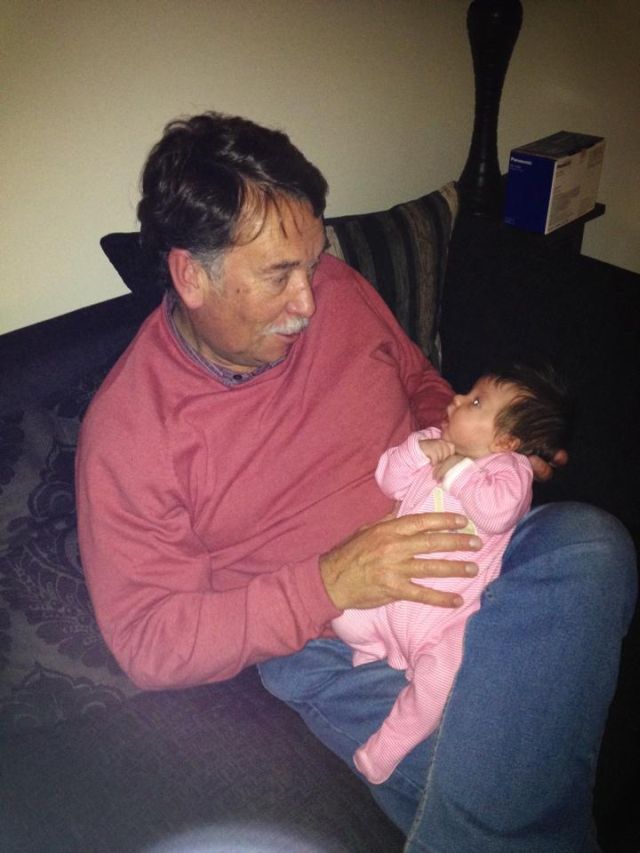
Happy William Lindley V with the fragile grandchild - Francesca Grace
Congratulations from all members of The Societas Lindleiana!

London's blue plaque for the Lindleys!
William Lindley and Sir William Heerlein Lindley will be honored by prestigious English Heritage sheme called London's blue already in 2014...
London's blue plaque for the Lindleys!
There is quite a chance that William Lindley and Sir William Heerlein Lindley will be honored by the prestigious English Heritage sheme called London's blue plaques already in 2014! This electrifying news came to us yesterday. We cannot reveal more details at this moment because we are still in the middle of the procedures. It is only worth mentioning that it would greatly coincide with our plans of the family reunion in the United Kingdom in 2014.Here is an example of the blue plaque:
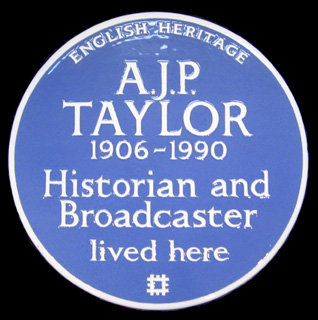
The London's blue plaques scheme, founded in 1866, is believed to be the oldest of its kind in the world and has inspired many other schemes across London, the UK and even further afield.
Run successively by the
(Royal) Society of Arts, the London County Council, the Greater London Council,
and since 1986, English Heritage, it commemorates the link between notable
figures of the past and the buildings in which they lived and worked. It is a
uniquely successful means of connecting people and place.
For more details see: http://www.english-heritage.org.uk/discover/blue-plaques/