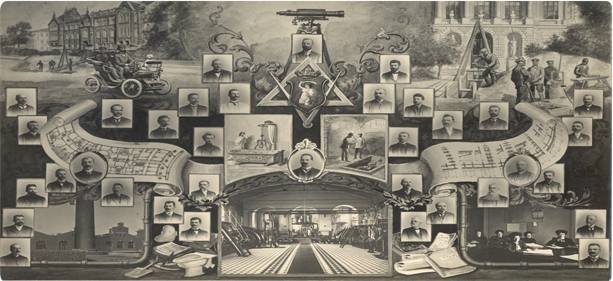
130 lat temu, 5 czerwca 1894 roku we Lwowie odbyła się Powszechna Wystawa Krajowa, w ramach której po raz pierwszy udostępniono zwiedzającym „Panoramę Racławicką”. Zorganizowana w setną rocznicę insurekcji kościuszkowskiej wystawa była największym przedsięwzięciem gospodarczym i kulturalnym okresu rozbiorowego. Ekspozycja była nie tylko przeglądem dorobku gospodarczego Galicji, ale przede wszystkim ponadzaborową prezentacją narodowej kultury i sztuki, „[…] wielką manifestacją jedności i żywotności narodu polskiego”. Wystawę przygotowywano dwa lata. Na obszarze około 46 hektarów – w obrębie Wzgórza Stryjskiego – wzniesiono 129 rozmaitych budowli, wśród których były m.in.: pałac sztuki, sala koncertowa, stadion, hala maszyn, stajnie, cieplarnie, restauracje, kawiarnie.
Zob.
Beata Stragierowicz, „Powszechna Wystawa Krajowa 1894 roku – wielkie dni Lwowa,
Galicji i Polski”,
https://mnwr.pl/intrygujace-powszechna-wystawa-krajowa-1894-roku-wielkie-dni-lwowa-galicji-i-polski/

Medalion pamiątkowy awers i rewers
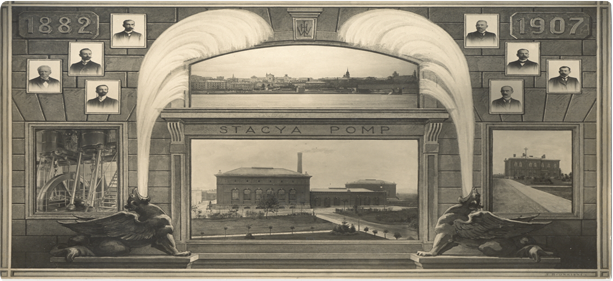
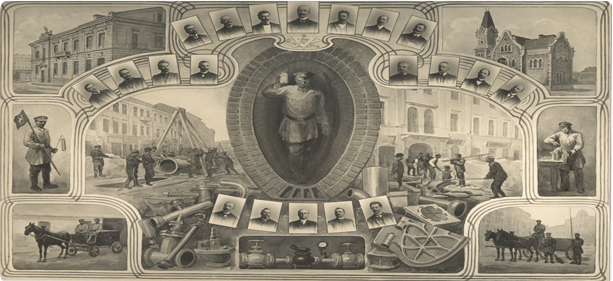
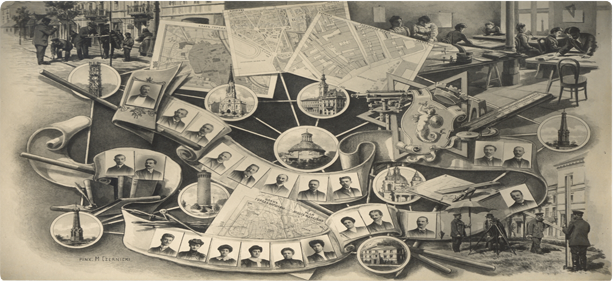
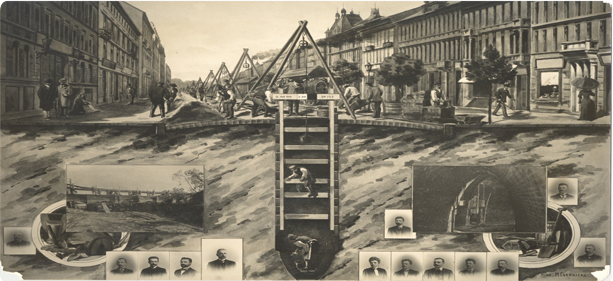
Na wystawę tę William Heerlein Lindley przygotowali się jak przystało na tak znanych inżynierów. Specjalnie otwarty na tę okazję pawilon mieścił wystawę planów i modeli, obok niego zaś znalazł się „Wzór budowli przedstawiający kanał spławny z przyrządem przepłukującym i przyporami”. Opracował także publikację w języku polskim przystępnie popularyzującą pięćdziesiąt lat doświadczenia w zakresie projektowania i realizacji przez nich miejskich robót kanalizacyjnych i wodociągowych. Katalog wystawowy zawierał 138 pozycji, z których numery od 42 do 93 dotyczyły Warszawy. Za najważniejsze dla swoich dokonań Lindleyowie uznawali prace nad wodociągami i kanalizacją w Hamburgu, Frankfurcie nad Menem, w Warszawie, w Elberfeld, Mannheim oraz w Hanau. Katalog zawierał też czterojęzyczne objaśnienie „do typowej budowy kanału spławnego”, wykonanych w Hamburgu w 1842 roku, we Frankfurcie w 1865 roku i Warszawie w 1882 roku.

Fragment opisu eksponatu
Zob. R. Żelichowski, Lindleyowie. Dzieje inżynierskiego rodu, Societas Lindleiana, Warszawa 219, t. II, s. 231

Kanały Lindleya, wzór 1843

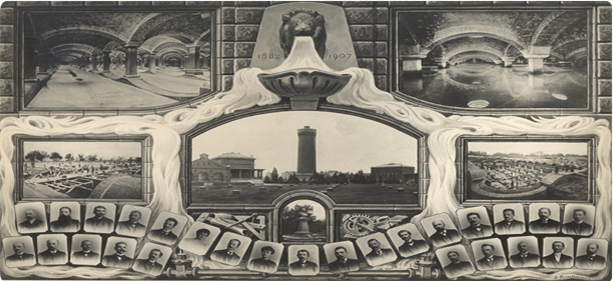
Of the three water suppliers in Warsaw, the Central Department of Water (Zakład Wodociągu Centralnego, or ZWC) is the oldest and largest. Built between 1883 and 1886, it has supplied water to the inhabitants of Warsaw since that time and continues to meet 50% of the capital’s water needs. Its technology today remains largely faithful to the original, and was first designed by William Lindley and his son William Lindley Heerleina; this design was enriched and improved in 1933 by the Department of Rapid Water Filters. The second wave of technology was launched in 1972, in which specially fired, moisture-resistant bricks were used.
The outbreak of WWII brutally interrupted the successful distribution of water
in the city, with the bombing of September 1939 and the Warsaw Uprising in 1944
causing massive damage, as the main buildings and their networks suffered a
direct attack. On September 22, 1944 Warsaw's water supply was completely cut
off, and was not restored again until May 29, 1945. The damage was worsened by
the fact that much of the water filtering machinery was stolen by the
retreating Germans, and so both reconstruction and replacement of equipment
took several years.
Currently, the ZWC uses an ultra-modern, fully equipped laboratory to test the
water at all stages of its treatment and supply. In addition to water quality
control continuously being performed by the laboratory, selected parameters are
constantly monitored by an on-line measuring device.

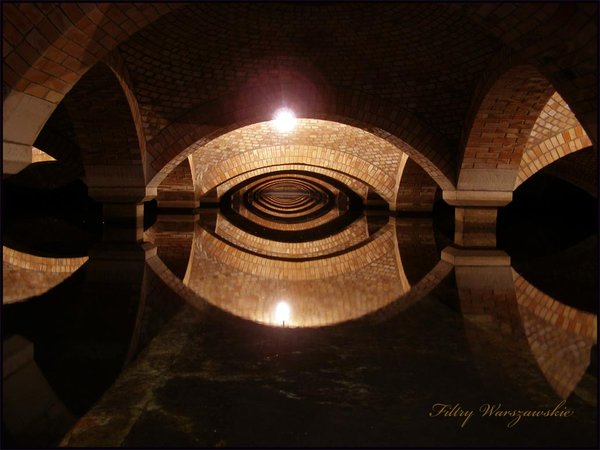
Hidden beauty of the clean water tanks
The filtering station has open days in July and August, and invites visitors to see the historic technology that has functioned for over 120 years. Visits must be pre-arranged, and are by invitation only; the booking office begins accepting requests in the last week of June, at which time ZWC security issues as many invitations as possible, based on one's preferred date, time and number of guests.
http://www.warsawtour.pl/en/tourist-attractions/lindley-water-filters-filtry-1962.html
This filtering station is the oldest and largest from water suppliers in Warsaw which supplied water to the inhabitants of Warsaw since a half of 19th century. In July and August, visitors are invited to see that historic technology.
ul. Koszykowa 81 (map)