

• O nas

  • O nas

  • Lindleyowie

  • Lindleyowie

  • E-biblioteka

  • E-biblioteka

  • Nasze archiwum

  • Nasze archiwum

  • Kontakt

  • Kontakt

  • Nowości

  • Nowości

  • Linki

  • Linki

Aktualności

Ziemia obiecana z Lindleyami w tle

 „Ziemia obiecana. Miasto i nowoczesność”, to tytuł wystawy w Bibliotece Uniwersyteckiej w Warszawie. Część ekspozycji o dziejach higieny i o Lindleyach w Warszawie.

Ziemia obiecana z Lindleyami w tle

Muzeum Historii Polski zorganizowało w Bibliotece Uniwersyteckiej w Warszawie niezwykle interesującą wystawę zatytułowaną "Ziemia obiecana. Miasto i nowoczesność".


Jak pisze autor autor scenariusza i komisarz wystawy prof. Michał Kopczyński.:  „Największa rewolucja w dziejach naszej cywilizacji ostatnich stuleci to rewolucja przemysłowa. Wiąże się ona nie tylko z pojawieniem się przemysłu fabrycznego. Jej rewolucyjność polega też na zmianie trybu życia większości ludzi. Naturalnym środowiskiem stało się dla nich miasto, w miejsce dotychczas dominującego środowiska jakim była wieś. Właśnie ta przemiana jest jednym z najważniejszych elementów rewolucji przemysłowej. I to przejście pokazujemy na wystawie - ukazując, jak wraz z nim zmieniali się ludzie”. Zobaczyć można dawną Warszawę, Lwów, Kraków, Łódź i Poznań, czyli największe ośrodki miejskie wszystkich trzech zaborów.


Wystawa koncentruje się na kilku aspektach życia miejskiego:


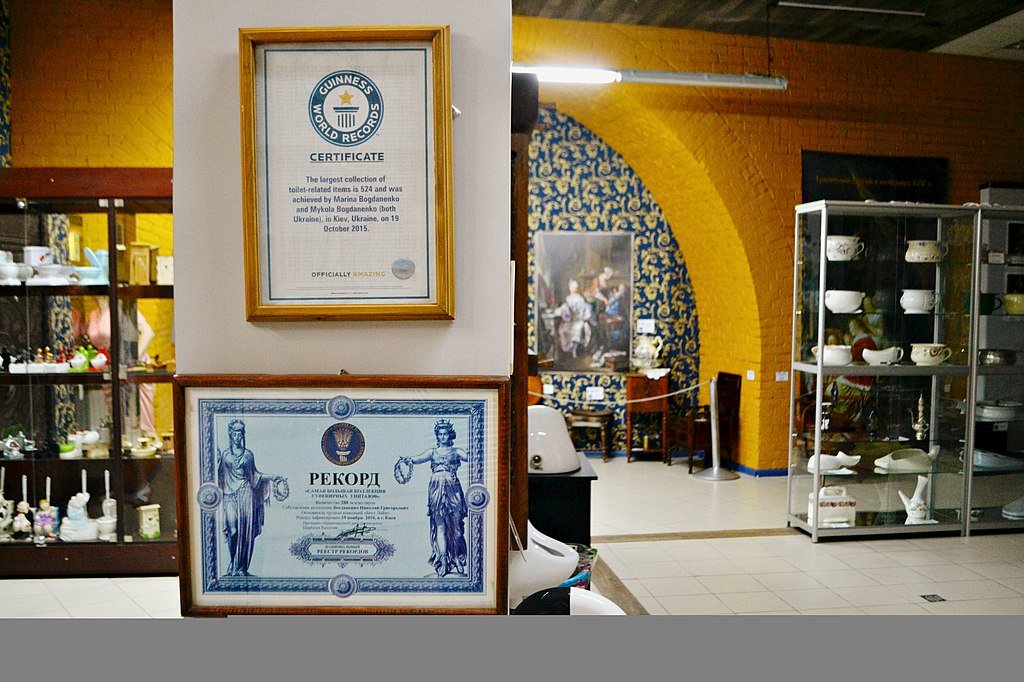
 - na narodzinach higieny (bohaterami tej części wystawy są William i William Heerlein Lindley). Oprócz plansz tematyce tej poświęcone projekcje multimedialne. Towarzyszy im również wystawa przedmiotów użytkowych z epoki, m.in. XIX-wieczną ozdobną muszlę klozetową czy spluwaczkę


Wystawa koncentruje się też na narodzinach nowoczesnego konsumenta. „To pokazuje jak rewolucja przemysłowa pozwoliła znacznie większej części ludności cieszyć się zwykłymi, codziennymi rzeczami. Np. ubranie przestało być dla większości tylko okryciem ciała, a zaczęło stawać się jego ozdobą. Było to możliwe dzięki sztucznym barwnikom i zaawansowanej technice włókienniczej, takiej jak żakard, które przyniosła rewolucja przemysłowa. Obniżyły one ceny barwnych, zdobionych ubrań, które stały się dostępne także dla zwykłych ludzi” – podkreślił Kopczyński


- na  ówczesnej reklamie. „Na początku XX w. wzorem amerykańskim sztuka reklamowa wychodzi na ulice w postaci plakatu reklamowego. Opowiadamy też o formach handlu, bazarach, sprzedaży naręcznej. I pokazujemy, jak władze starają się ten początkowy chaos uporządkować, czego dowodem jest np. Hala Mirowska” – mówi autor ekspozycji.


- na prywatnych salonach i na narodzin nowej przestrzeni publicznej rozrywki: kawiarni, powszechnie dostępnych teatrów i teatrzyków na wolnym powietrzu, wystaw, zawodów sportowych, a więc form aktywności dziś dobrze znanych, a wtedy nowych.

- na symbolice kryjącej się w nazwach ulic czy pomnikach.

- na wydarzeniach rewolucji 1905 r., której rocznica przypada w tym roku.

Na wystawie można zobaczyć fotografie, wycinki prasowe czy plakaty reklamowe oraz codzienne przedmioty ilustrujące tworzenie się nowoczesnego miasta. „Często są to przedmioty zwyczajne jak zegarek, bez którego jednak nie mogła funkcjonować kolej, dostarczająca ówczesnym mieszkańcom miast towarów konsumpcyjnych. Innym razem rzeczy niezwykłe, jak jednostrzałowy pistolet dla rowerzystów, aby mieli się czym bronić przed atakującymi ich psami” –  dodaje Kopczyński.


Na wystawę składa się ikonografia oraz artefakty z epoki pochodzące ze zbiorów muzeów i z kolekcji prywatnych. Wśród eksponatów są m.in. bicykl, oryginalne suknie, w tym pierwsze modele szyte seryjnie, telefon Ericssona, aparat fotograficzny Kodaka i telegraf.


Uzupełnieniem ekspozycji są nieme filmy będące w repertuarze objazdowego kina jarmarcznego. A miłośnicy gier planszowych mogą zagrać w oryginalną grę z epoki „Wyścigi konne”.


Ekspozycja jest czynna codziennie w Bibliotece Uniwersyteckiej w Warszawie (ul. Dobra 56/66, sala wystawowa na parterze) w dniach 25 września – 6 grudnia 2015, w godzinach od 10 do 18 [z wyłączeniem 1 i 22 listopada].


Ceny biletów: 4 zł (ulgowy), 8 zł (normalny), bilet grupowy – 4 zł/osoba (min. 10 osób), 16 zł rodzinny (min. trzy osoby). W piątki i dla osób powyżej 60. roku życia wstęp wolny.

Wystawie towarzyszy audioprzewodnik, który można pobrać na swoje urządzenie mobilne (telefon lub tablet) przed lub w czasie wizyty na wystawie. O wystawie opowiada kurator, prof. Michał Kopczyński.

Wystawie towarzyszą wykłady połączone ze zwiedzaniem wystawy | godz. 17.00 | wstęp wolny


Informacje: http://muzhp.pl/pl/c/1574/wystawa-ziemia-obiecana-miasto-i-nowoczesno

William H. Lindley (1853-1917), w 100. rocznicę

O sir W.H. Lindleyu w setną rocznicę śmierci w Bibliotece "Pod Skrzydłami" przy ul. Grójeckiej 109

William H. Lindley (1853-1917), w 100. rocznicę

Na miesiąc grudzień przypada setną rocznicę śmierci Williama Heerleina Lindleya. Będziemy ją obchodzić wspólnie z mieszkańcami Ochoty, dzielnicy najbardziej związanej z twórcami naszej kanalizacji i wodociągów oraz planu naszego miasta.


W dniu 6 grudnia gościć nas będzie Biblioteka "Pod Skrzydłami" mieszcząca się przy ul. Grójeckiej nr 109 (róg Dickensa) . Najwygodniejszy dojazd tramwajem nr 9.


Zapraszamy wszystkich zainteresowanych życiem i działalnością tego wielkiego angielskiego inżyniera.


Zarząd Towarzystwa Lindleyowskiego - Societas Lindleiana


  • Archiwum
Slideshow Image 1 Slideshow Image 2 Slideshow Image 2 Slideshow Image 2 Slideshow Image 2 Slideshow Image 2 Slideshow Image 2

Nowości

  • wszystkie
  • spotkania
  • książki
  • wystawy
  • Informacje prasowe
  • Ciekawostki
337335327324318

120th anniversary of the death of Joseph Lindley

 On April 20, 1906, in Ober Ursel (Germany) died Jospeh Lindley, age 47


To read more click on  Czytaj więcej
czytaj więcej

120th anniversary of the death of Joseph Lindley

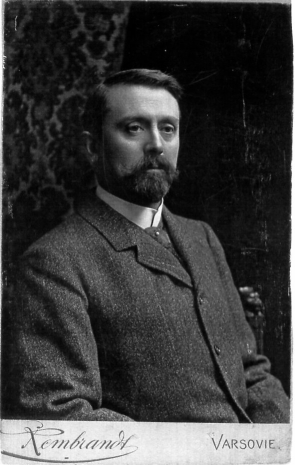
On April 20, 1906, in Ober Ursel (Oberursel), Joseph Lindley died at the age of only forty-seven. We recalled it on our pages a decade ago. Today we look back at Joseph's life story again.


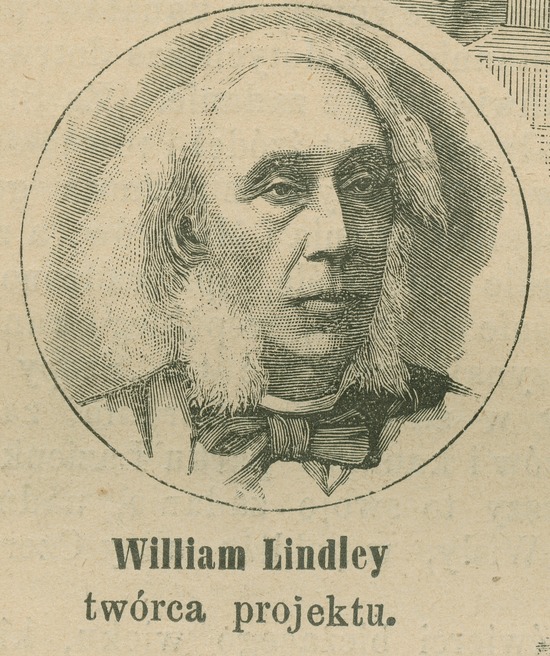
He was the youngest of the three Lindley brothers and lived from 1859 to 1906. He came to Warsaw in December 1888 to replace his older brother Robert and represent in Warsaw the oldest of the three brothers, chief engineer William Heerlein, and to supervise the city's measurements as well as the construction of sewage and waterworks.


 Joseph Lindley stayed with Warsaw for seventeen years. A nervous illness, despite his stay in a southern climate and treatment in a renowned sanatorium in the Taunus Mountains, he ended his "busy life" there.


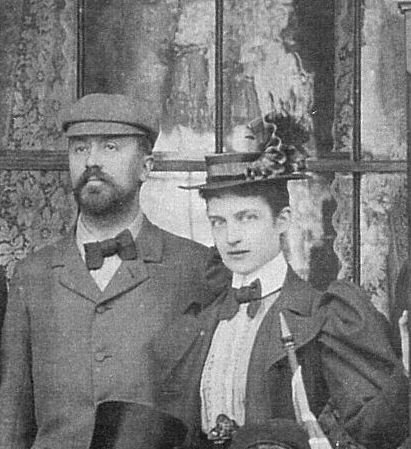
Joseph Lindley with his wife, Emily Suermondt


Joseph Lindley left behind his wife Emilia Suermondt, son Henry William and daughter Julia Anita. The Great Universal Illustrated Encyclopedia wrote: "for 16 years he developed a very useful activity in our country. Warsaw owes his great diligence and energy for completing these [sewerage] works."


In our E-library under the title "The Fourth Lindley" we have included an article on Joseh Lindley. We encourage you to read it again. We gave him the attention he deserves.

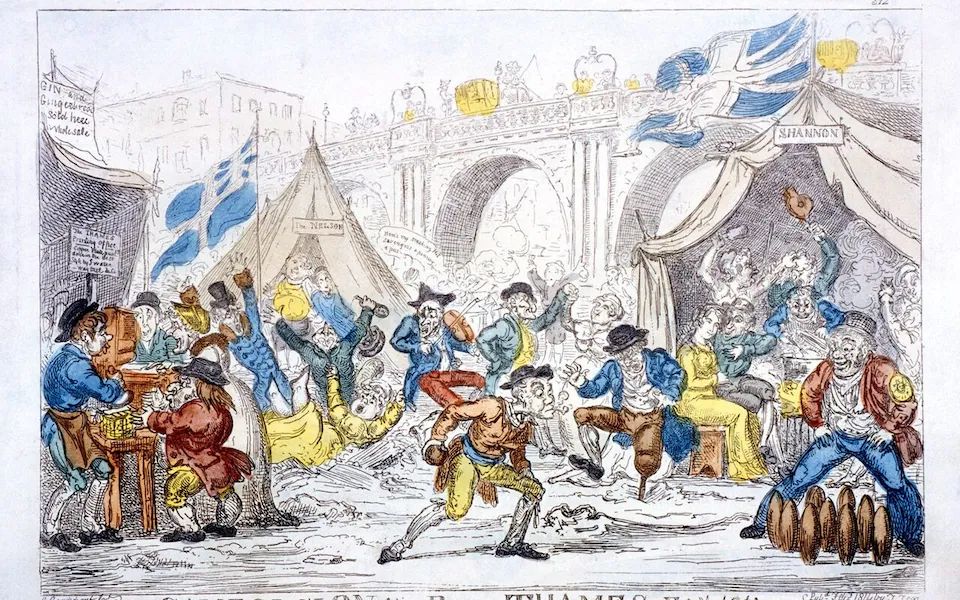
The London fair in 1814 on the Thames

 Frozen the Thames 200 years ago.


For more details click on Czytaj więcej
czytaj więcej

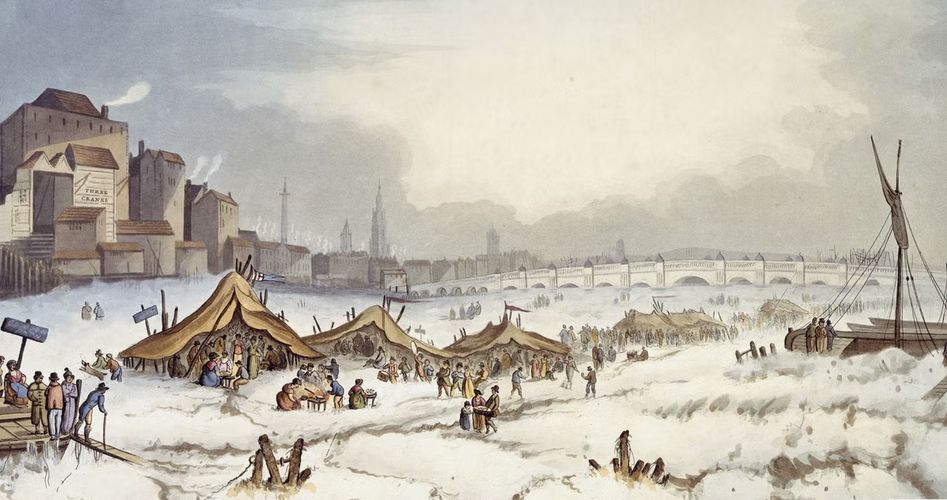
The London fair in 1814 on the Thames

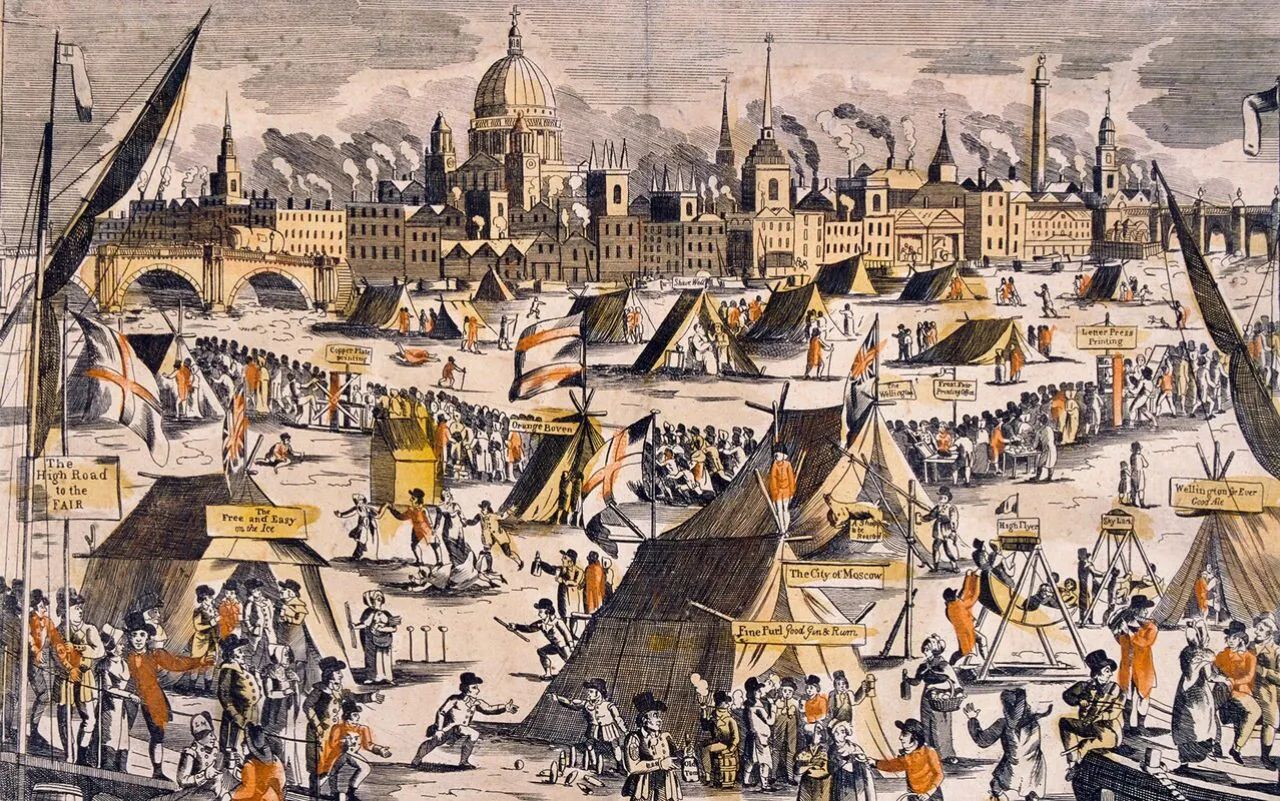
The London fair in 1814 on the Thames. “The drinkers played skittles, stampeded around fires to fiddle music," the chronicler wrote. In the background the cathedral of St. Paul. 


               Credit: Getty


Below, away from the hustle and bustle of the City at the height of the Steelyard (Stahlhof), a Hanseatic property whose purchase by London was negotiated in 1853 by the adult William Lindley. This may have been the last view of the King's River that six-year-old William Lindley would enjoy. The Little Ice Age was ending. The Thames had frozen over so spectacularly several times before (in 1683-84, 1716, 1739-40, 1789). As the Industrial Revolution took hold, the Thames turned into the river we know today. 


                                                                                                                                                                      Credit: Getty


Holidays were spent in an atmosphere of fun. Let's try it too: 


MERRY CHRISTMAS AND A PROSPEROUS NEW YEAR 2026 we wish our friends and supporters Societas Lindleiana


125 years ago died William Lindley

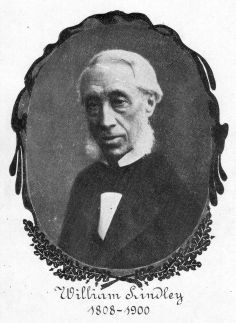
William Lindley, founder of the dynasty of civil engineers died in London on 22 May 1900. Anniversary Memories


To read more click on Czytaj więcej
czytaj więcej

125 years ago died William Lindley

Lindley, William (1808–1900), civil engineer, was born on 7 September 1808 at 1 Surrey Square, Old Kent Road, London, the youngest of four children of Joseph Lindley (1756–1808), of Heath, Yorkshire. In 1827 he became a pupil of Francis Giles and assisted him in the design of the Newcastle and Carlisle Railway and the London and Southampton Railway. In 1836–8 he worked on the regulation of the River Mersey and on the Thames Tunnel with Isambard Kingdom Brunel.


On Brunel's recommendation Lindley was in 1839 appointed engineer-in-chief to the Hamburg and Bergedorf Railway, and subsequently was responsible for a number of projects in Hamburg. However, Lindley's great reputation as an engineer largely stemmed from his role in halting the disastrous fire which raged in Hamburg in May 1842. Under his direction controlled explosions of threatened buildings retarded the conflagration and eventually extinguished the fire. The town council appointed him consulting engineer to the Hamburg water board and the board of works. In the years 1848–60 he supervised that great spate of urban reconstruction. He also designed, executed, and supervised the construction of the Hamburg sewage system and water supply, with later extensions, and the gas works on the Grasbrook.


In 1863 he was invited by the city authorities of Frankfurt am Main to report on its drainage and two years later he was appointed its consulting engineer. In 1868 he submitted a report to the city of Pest on its water supply. Construction of new waterworks began the following year and Lindley was assisted by his eldest son.


Warsaw Water Company


In later years Lindley senior was consulted on water supply systems by the authorities of Düsseldorf, Chemnitz, Basel, Galatz, Brăila, and Jassy. His last, extensive design was sewerage and water supply for the cities of St Petersburg and Warsaw. The latter was carried out by his three sons, William, Robert, and Joseph. Lindley retired from active work in 1879. He died at his home outside London, 74 Shooter's Hill Road, Blackheath, on 22 May 1900, in his ninety-second year.


Excerpts from R.Ż,, Lindley, William (1808-1900), civil engineer, The Dictionary of National Biography, Oxford University Press 1965, Vol. XX, s. 968-969.

January 1880 William Heerlein Lindley first time in Warsaw

On January 16–19, 1880, William H. Lindley arrived in Warsaw for the first time to present water supply and sewage project for Warsaw.

To read more click on Czytaj więcej
czytaj więcej

January 1880 William Heerlein Lindley first time in Warsaw

On January 16–19, 1880, William H. Lindley arrived in Warsaw for the first time. It was a stopover on his way to Saint Petersburg, where he was carrying plans for the city's sewerage system. By that time, he was already the chief engineer in Frankfurt am Main and his father's successor in the family business. On January 16 and 17, 1880, "oral hearings on Lindley's projects" were held at the Magistrate's Office. During the sessions of the Citizens' Committee for the Construction of Sewers (colloquially the Sewerage Committee), chaired by Baron Nikolai Medem (1833–1899), Governor-General and Governor of Warsaw, and assisted by Sokrates Starynkiewicz (acting President of Warsaw, 1875–1891), "exceptionally lively discussions" took place.


During three subsequent meetings, various aspects of the water supply and sewage project submitted by Father William Lindley to the city of Warsaw in 1878 were discussed. They were attended by, "apart from engineers, Warsaw civil and military dignitaries in large numbers, due to the importance of the subject." Although he seemed very young to the distinguished group (he was only 27 years old), but "as one could conclude, he was talented, and especially good at speaking", he made a very good impression on the gathered people. Starynkiewicz supported him with the means at his disposal. He not only responded in the press to all attacks on Lindley, the sewage system, the water supply system or the management of the Magistrate in general, but he was also able to reach individual people to prove his arguments in a personal conversation" - recalled the city engineer Julian Majewski.


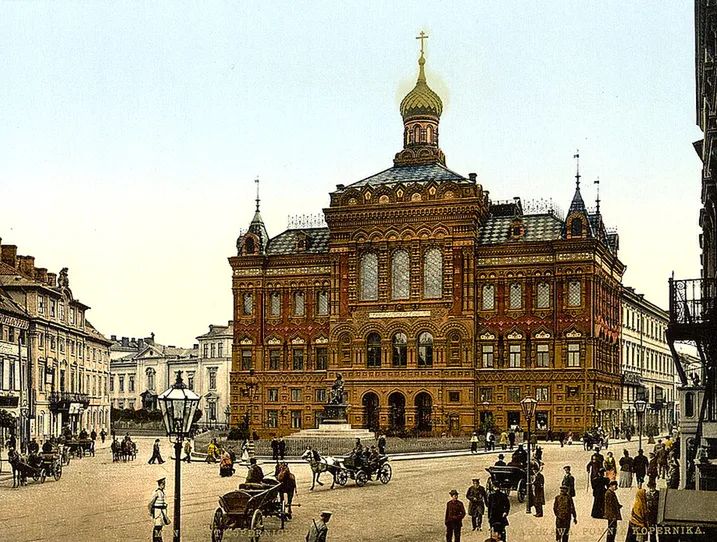
Warsaw City Hall, 1878


The greatest advantage of these three-day sessions was that the Warsaw engineers could express their opinions, and Lindley had the opportunity to present his own point of view. Lindley himself was also given an excellent opportunity to meet Polish specialists whom he was to employ to carry out the project. The direct result of the discussion was the conclusion of a preliminary agreement with William H. Lindley, commissioning him to carry out the construction of water and sewage systems in Warsaw.


Lindleys’ water works in Warsaw in the centre of help for the victims of floods in Poland

Warsaw Water Supply Company sends goods to the victims of floods in Southern Poland


To read more click on Czytaj więcej,
czytaj więcej

Lindleys’ water works in Warsaw in the centre of help for the victims of floods in Poland

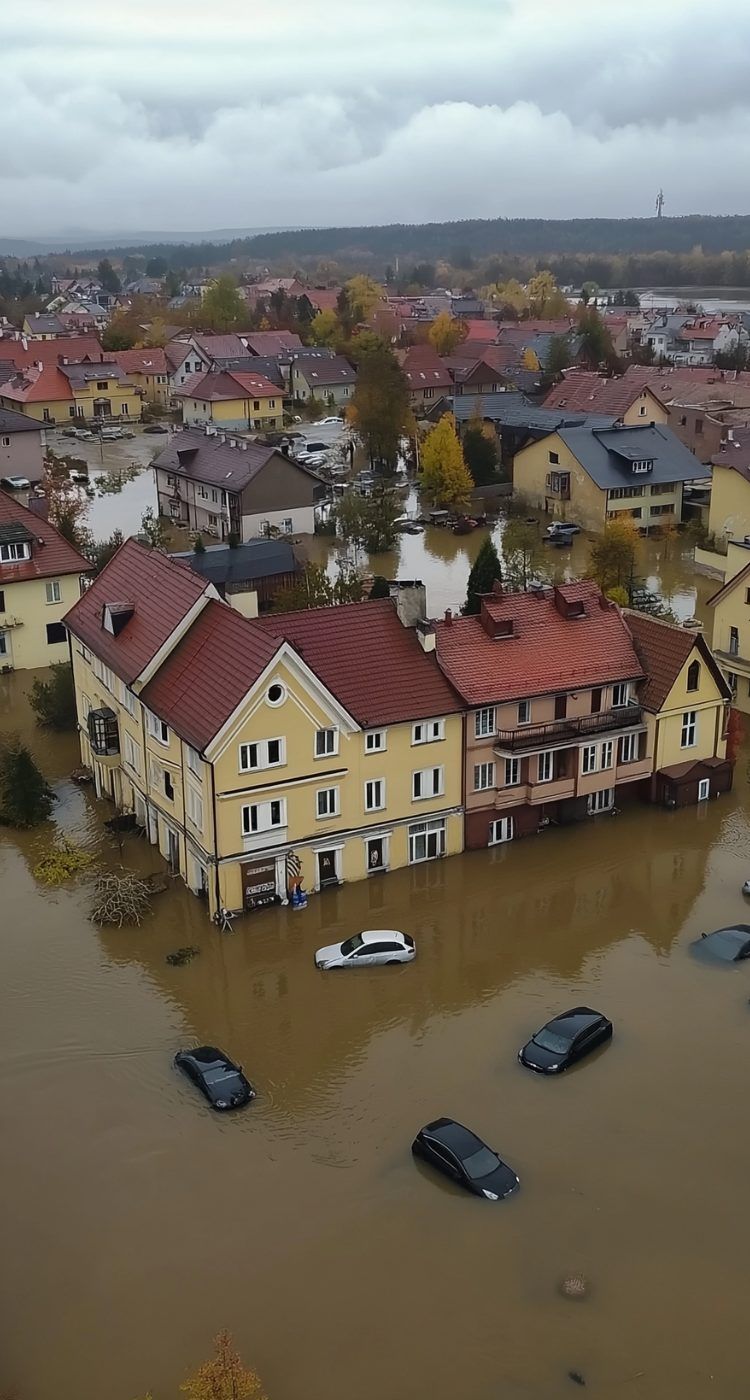
Warsaw residents show a great heart to the victims of floods. Since the announcement of Warsaw's President Rafał Trzaskowski on September 15, 2024, the collection of all kind of goods, the heart of Varsovians beats towards the south of the country - municipalities, cities and towns that suffered as a result of the flood. Collection at the water treatment plant Filters started on Sunday, September 15 at 17.00. Help is taken at the entrance gate to the Filter station from ul. Raszyńska. The generosity of the inhabitants is huge. Cars also came to gifts left in the offices of the capital's districts. The entrance gate to the filter station is practically besieged by cars loaded with gifts.


 Collecting the goods


See the film from this action: https://www.youtube.com/watch?v=mt4wyodjwcg


On the road towards Kłodzko, Lądek Zdrój and Nysa, on September 18, the first convoy went: 2 trucks and 4 transporters, which accommodated a total of 35 pallets of bottled water, 22 pallets with hygiene products, 8 pallets with cleaning products and 18 pallets with food. MPWiK also donated several huge pumps to dry flooded rooms. This is not the end of the capital's generosity - people are constantly reporting more gifts. Their collection will last until further notice.


Modern equipment of Warsaw Water Company against all Lindley's works

Przejdź do strony:
  • << Pierwsza
  • < Poprzednia
  • 1
  • 2
  • 3
  • 4
  • 5
  • 6
  • 7
  • 8
  • 9
  • 10
  • Następna>
  • Ostatnia >>
Societas Lindleiana, wszelkie prawa zastrzeżone
  • O nas
  • Lindleyowie
  • E-biblioteka
  • Nasze archiwum
  • Kontakt
  • Linki
Projektowanie stron internetowych: www.bedweb.pl