
• O nas

  • O nas

  • Lindleyowie

  • Lindleyowie

  • E-biblioteka

  • E-biblioteka

  • Nasze archiwum

  • Nasze archiwum

  • Kontakt

  • Kontakt

  • Nowości

  • Nowości

  • Linki

  • Linki

Aktualności

Europejski Rok Dziedzictwa Kulturowego w Niemczech z W. Lindleyem w tle

Podczas Europejskiego Roku Dziedzictwa Kulturowego w Niemczech Gimnazjum Klosterschule w Hamburgu realizuje Projekt William Lindley. Zaczynamy od niego

Europejski Rok Dziedzictwa Kulturowego w Niemczech z W. Lindleyem w tle


W marcu 2017 roku Przewodniczący Niemieckiego Narodowego Komitetu ds. Ochrony Zabytków, Minister Kultury Brandenburgii oraz Minister Stanu ds. Kultury  zaprosili chętnych do udziału w Europejskim Roku Dziedzictwa Kulturowego w 2018 roku. Tegoroczny projekt odbywa się w Niemczech pod hasłem "Dzielenie Dziedzictwa („Heritage sharing)" i jest inicjatywą Niemieckiego Komitetu Narodowego ds. Ochrony Zabytków, Rządu Federalnego, państw federalnych i stowarzyszeń gmin w Berlinie. Biuro Koordynacji spodziewa się około 500 projektów i około 1000 wydarzeń w Niemczech w ciągu całego roku.


Uroczysta inauguracja roku odbyła się 8 stycznia 2018 roku w Wielkiej Sali Ratusza w Hamburgu.


Sześć szkół połączonych w sieć regionalnej otrzymała zadanie zapoznania się i zinterpretowania roli  pomników oraz budowli zabytkowych w przestrzeni miejskiej. Zespoły uczyć się będą dziedzictwa kulturowego swojego miasta jako części historii północnych Niemiec i zaangażowania na rzecz ochrony zabytków. 


Projekt William Lindley. Zaczynamy od niego


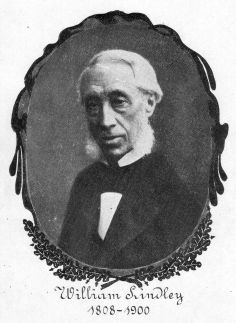
Gimnazjum Klosterschule w Hamburgu, w ramach projektu William Lindley. Zaczynamy od niego, skoncentrowało się na Williamie Lindleyu, brytyjskim inżynierze, który w Hamburgu zaprojektował  pierwsze nowoczesne wodociągi i podziemną kanalizację na kontynencie europejskim, pierwsze połączenie kolejowe i zaangażował się w przeprojektowanie portu. Jego wyniki zostaną zaprezentowane publicznie w ramach wystawy zorganizowanej przez Urząd ds. Ochrony Zabytków w Hamburgu.


Gmach Gimnazjum


https://denkmal-aktiv.de/schulprojekte/archiv/schulen-2017/gymnasium-klosterschule-hamburg/


Właz dla Lindleya

W nietypowy sposób łodzianie uhonorowali pamięć Wiliama Heerleina Lindleya. Z okazji Światowego Dnia Wody, na ulicy jego imienia zamontowano ozdobny właz kanalizacyjny poświęcony wielkiemu projektantowi systemów wodociągowo-kanalizacyjnych

Właz dla Lindleya

Pokrywa studzienki kanalizacyjnej to forma uhonorowania budowniczego łódzkich wodociągów i kanalizacji - inżyniera Williama Heerleina Lindleya. Właz poświęcony Lindleyowi odsłonili szefowie Zakładu Wodociągów i Kanalizacji oraz Łódzkiej Spółki Infrastrukturalnej.


Właz z nazwiskiem Williama Heerleina Lindleya, datami jego urodzin i śmierci oraz napisem "Łodzianie projektantowi systemu wodociągowo kanalizacyjnego 2010" w poniedziałek  22 marca 2010 roku  zamontowany został w pobliżu rektoratu Uniwersytetu Łódzkiego, na ulicy Lindleya. Odsłonili go prezesi wodociągów - Mieczysław Teodorczyk i ŁSI - Celestyn Podgórski.

Odsłonięcie włazu to jeden z elementów obchodzonych w Łodzi od niedzieli Dni Wody. Poza tym na Piotrkowskiej przed urzędem miasta prezentowana jest wystawa fotografii prezentujących stare łódzkie włazy kanalizacyjne.

Właz Lindleya jest kolejną z serii klap "Historia Łodzi włazami pisana". Planowane jest wydanie albumu z historycznymi i najnowszymi włazami łódzkich studzienek kanalizacyjnych. To z kolei inicjatywa społeczników i miłośników historii Łodzi, którzy od kilku miesięcy prowadzą inwentaryzacje najciekawszych i najcenniejszych łódzkich klap. Okazuje się, że część z nich jest dużo starsza, niż sama kanalizacja w Łodzi i pochodzi z lokalnych instalacji, później dopiero włączonych do systemu miejskiego.


http://www.dzienniklodzki.pl/stronaglowna/235486,lodz-odslonili-wlaz-lindleya,id,t.html?cookie=1 


  • Archiwum
Slideshow Image 1 Slideshow Image 2 Slideshow Image 2 Slideshow Image 2 Slideshow Image 2 Slideshow Image 2 Slideshow Image 2

Nowości

  • wszystkie
  • spotkania
  • książki
  • wystawy
  • Informacje prasowe
  • Ciekawostki
74686360

My flaps…


There are many amazing photo collections to be found on the Internet. One of them caught our attention. It includes photograph of the sewer entry flap dedicated in Lodz in 2010 to William Heerlein Lindley...

czytaj więcej

My flaps…

The ‘fotoblog’ offers an overview of the vast collection of sewer entry flaps (covers) from the whole world. One can be amazed with the variety of decorative motives on the flaps and variety of ideas how the unique space can be used. Commemorating people, events or places seems to be the most popular form.


The conclusion: be on the alert when you pass by the sewer flap, or you may overlook an important cultural artifact of the local culture!  


Fotoblog: Klapy me (My flaps): 


http://klapyme.flog.pl/wpis/1029971/i-oto-ona-.

Water Towers once more…

On 3 October 2002 Małgorzata Łoś launched the website page dedicated to the water towers. She gives technical description of what is the water tower, deivides them into categories and lists them geographically. Małgorzata Łoś’s page has huge collection of photographs taken on locations. And it is bilingual (Polish and English). A perfect page for the admires of beauty of water towers! On the photograph the Warsaw Queen of Towers, designed by the Lindleys...

czytaj więcej

Water Towers once more…


Małgorzata Łoś writes:


What is a water tower and how does it work ?


A water tower is an architectural structure used for a technical purpose. A water storage container is placed in its top part. From the container water is distributed in pipes to different destinations. The container is elevated in order to get the appropriate pressure required to distribute water. Water is pumped to the container and then can be distributed out of the container without any additional pressure supply. It relies only on the pressure produced by the elevation of water (due to gravity). This is the main reason why the water container must be elevated higher than the water consumers.


My Project – water towers collection


I am interested in water towers mainly because of their architecture. I try to immortalize them in photographs and to show the beauty of these buildings. My project is also of a documentary character – with the purpose being collecting photos and information about all water towers in Poland (existing and of the ones already destroyed) and creating a catalogue of water towers.

On my web page you can find pictures of water towers done by me or received from other people.

If anybody knows about any water tower or its history, please let me know:  losiolek@tlen.pl


http://www.wieze.republika.pl/index_ramka_eng.html


From the history of „water martyrs”

The Hummel Statue commemorates the profession of water carriers of Hamburg. His first tatue was erected on the 18th March 1938 on the corner Rademachergang and Breiter Gang. Hummel was called by the contemporary media   “the first victim” of William Lindley’s modern water supply system for Hamburg...

czytaj więcej

From the history of „water martyrs”

On the 15th of March 1854 died in Hamburg  (Germany) Johann Wilhelm Bentz (1787-1854), the last of Hamburg’s water carriers. Bentz's likeness published in the Hamburger papars portrays him as a man walking through the streets of Hamburg with two buckets of water over his shoulders. By the contemporary sources he was called “the first victim” of William Lindley’s modern water supply system for this city.


His first Statue was erected on the 18th March of 1938 on the corner Rademachergang and Breiter Gang and pays tribute to a genuine original Hamburg character widely known as The Hummel.


Johann Wilhelm Bentz (1787-1854) 

Today, in addition to the 1938 original, there are many statues throughout Hamburg’s city center dedicated to Hummel. In the whole city of Hamburg there are now over 100 different Hummel statues, created by many different artists, always as a man carrying two buckets of water. Souvenirs shops in Hamburg offer stautes of Hummel in all sizes and colours.


On the photograph Bentz's sculpture on one of the wooden houses in Bergedorf, suburb of Hamburg.


http://andrewvanz.blogspot.com/2008/11/throughout-center-of-city-of-hamburg.html


John Lindley (1799-1865)

The English botanist John Lindley (1799-1865) was the first botanist, who took a classification of orchids in hand and he is deemed to be the father of the science of orchids. In 1822 Lindley became assistent secretary of the Royal Horticultural Society (RHS). He had to identify the plants, which has been sent to the RHS from collectors around the world. The Gardeners Chronicle, a gardener magazin, founded by Lindley amongst others, should become the most important plattform for the science of orchids this time. In his days, John Lindley was the most important expert  on orchids in Europe. Unfortunately he is not one of “our Lindleys”…

 
czytaj więcej

John Lindley (1799-1865)

John Lindley FRS (8 February 1799 – 1 November 1865) was an English botanist. Lindley was born at Catton, near Norwich, England, where his father, George Lindley, author of A Guide to the Orchard and Kitchen Garden, owned a nursery garden. He was educated at what was then Norwich Grammar School. His first publication, in 1819, a translation of the Analyse du fruit of  L.C.M. Richard, was followed in 1820 by an original Monographia Rosarum, with descriptions of new species, and drawings executed by himself, then in 1821 by Monographia Digitalium, and "Observations on Pomaceae", which were both contributed to the Linnean Society. Shortly afterwards he went to London where he was engaged by J.C. Loudon to write the descriptive portion of the Encyclopaedia of Plants.


During his labour on this undertaking, which was completed in 1829, and through arduous study of character patterns, he became convinced of the superiority of the "natural" classification system devised by Antoine Laurent de Jussieu – a system that he believed reflected the great plan of nature as distinct from the "artificial" system of Linneaus followed in the Encyclopaedia of Plants. This conviction found expression in A Synopsis of British Flora, arranged according to the Natural Order (1829) and in An Introduction to the Natural System of Botany (1831).


Barkeria lindleiana


Assistant secretary to the Horticultural Societ since 1822, in 1829 Lindley was appointed to the chair of botany at University College, London, which he retained until 1860. He also lectured on botany from 1831 at the Royal Institution, and from 1836 at the Chelsea Physic Garden, starting the society's flower show in the late 1830s.


Lindley described the plants collected on Thomas Livingstone Mitchell’s 's expeditions of 1838 and wrote an Appendix to the Botanical Register of 1839, describing plants collected by James Drummond and Georgiana Molloy of the Swan River Colony in Wstern Australia. He also played a large part in having Charles Moore appointed as Director of the Sydney Botanical Gardens.


During his professorship, he wrote many scientific and popular works as well as making significant contributions to the Botanical Register, of which he was the editor for many years, and to The Gardeners’ Chronicle, where he was in charge of the horticultural department from 1841. He was a fellow of the Royal, Linnean and Geological Socieies and died at his house in Bedford Park near Turnham Green, London in 1865.


A few of John Lindleys Publications:
* Rosarum Monographia, 1820
* Digitalium Monographia, 1821
* A Synopsis of the British Flora, 1829, 1835, 1841
* An introduction to the natural system of botany, 1836
* Sertum Orchidaceum, 1837–1841
* The Genera and Species of Orchidaceos Plants, 1830–1840


http://en.wikipedia.org/wiki/John_Lindley

http://www.orchids-flowers.com/famous-botanists/john-lindley-botanist/

Przejdź do strony:
  • << Pierwsza
  • < Poprzednia
  • 1
  • 2
  • 3
  • 4
  • 5
  • Następna>
  • Ostatnia >>
Societas Lindleiana, wszelkie prawa zastrzeżone
  • O nas
  • Lindleyowie
  • E-biblioteka
  • Nasze archiwum
  • Kontakt
  • Linki
Projektowanie stron internetowych: www.bedweb.pl