• O nas

  • O nas

  • Lindleyowie

  • Lindleyowie

  • E-biblioteka

  • E-biblioteka

  • Nasze archiwum

  • Nasze archiwum

  • Kontakt

  • Kontakt

  • Nowości

  • Nowości

  • Linki

  • Linki

Aktualności

Muzeum Kanału "Dętka" w Łodzi

Tego jeszcze nie było - po raz pierwszy, każdy, kto chce zobaczyć, jak wyglądają kanały wykonane z cegły może to uczynić w Łodzi. W centrum miasta, pod placem Wolności otwarto dla zwiedzających jeden z tutejszych, świetnie utrzymanych kanałów, tzw. "Dętkę". Każdy, kto tam wchodzi jest zaskoczony, że budowla, która z nazwy i przeznaczenia nie budzi miłych skojarzeń zachwyca kunsztownym wykonaniem - bardziej przypomina zamkowy korytarz niż kanał.

Muzeum Kanału "Dętka" w Łodzi

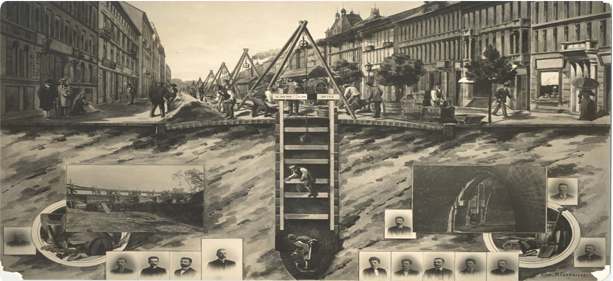
"Dętka" to podziemny, owalny zbiornik na wodę, wybudowany w 1926 roku z myślą o płukaniu sieci kanalizacyjnej w centrum miasta. Jako jeden z pierwszych odcinków miejskiej kanalizacji zaprojektowany został przez brytyjskiego inżyniera, Williama Heerleina Lindleya. Nadzór nad całością prac budowlanych sprawował inżynier Stefan Skrzywan, budowniczy łódzkich wodociągów. Korytarzem "Dętki", wykonanym z czerwonej cegły można obejść Plac Wolności pod ziemią. Ma on ponad 142 metry długości i mieści ok. 300 metrów sześciennych wody. Jest wysoki na 187 centymetrów i szeroki na około półtora metra, co sprawia, że spokojnie można nim spacerować. Jest połączony zasuwami ze zbiegającymi się przy Placu Wolności kilkoma kanałami. Jeśli trzeba było oczyścić któryś z nich, "Dętkę" napełniano wodą i po otwarciu odpowiedniej zasuwy spuszczano ją do jednego z kanałów.


Wejście do kanału


Dziś zbiornik pod placem Wolności to budowla zabytkowa, bo sieć kanalizacyjną od ponad 30 lat czyszczą samochody ciśnieniowe. "Dętka" jest jednak utrzymana w doskonałym stanie technicznym i mogła stać się atrakcją turystyczną Łodzi oraz pionierskim założeniem muzealnym w skali całego kraju jako pierwszy tunel wodociągowy w Polsce otwarty dla zwiedzających. Udostępnienie jej szerokiej publiczności zaproponował Zakład Wodociągów i Kanalizacji. Projekt adaptacji "Dętki" wykonał Krzysztof Wardecki, a wystawę w kanale, który dziś jest częścią Muzeum Miasta Łodzi przygotował znany artysta Robert Kuśmirowski. Całość projektu została zrealizowana przy współudziale Urzędu Miasta Łodzi i łódzkiego Zakładu Wodociągów i Kanalizacji.


Łódzkie kanały - dzieło Lindleya i Skrzywana


Historia łódzkiej sieci wodociągowej sięga początków XX wieku. W latach 1901 - 1908, inżynier William Lindley przedstawił plan zaopatrywania miasta w wodę ze studni głębinowych, wywierconych w rejonie Łódź - Rzgów. Projekt ten jednak, ze względu na przewidywane wysokie koszty nie został przyjęty do realizacji. Kolejne poważne prace nad budową sieci kanalizacyjnej Łodzi rozpoczęto w 1925 roku. Pracami kierował inżynier Stefan Skrzywan, według projektu Williama Lindleya, który wykorzystał położenie topograficzne Łodzi. Od strony północno - wschodnich wzniesień w rejonie Nowosolnej i Stoków teren miasta opada stopniowo w kierunku południowo - zachodnim do doliny Neru, a różnice poziomów w skrajnych punktach przekraczają 100 metrów. To właśnie pozwoliło na zaprojektowanie i zbudowanie uregulowanej sieci kanałów, odprowadzających ścieki grawitacyjnie do oczyszczalni, którą zaczęto wznosić na Lublinku w 1932 roku.


Szczegóły oraz panoramiczny obraz patrz:
http://www.muzeum-lodz.pl/inne/detka.php

Wizyta rodziny Lindleyów w Baku

W dniach 7-13 kwietnia 2014 roku czterech członków rodziny Lindleyów z Niemiec, Szwajcarii i Szkocji, wraz z prezesem Societas Lindleiana i jego żoną odwiedzili ostatnią inwestycję W.H. Lindleya w Baku (Shollar). Na fot. obok W.H. Lindley i H. Tagiyev w Shollar w 1901 r.

Wizyta rodziny Lindleyów w Baku

W dniach 7-13 kwietnia 2014 roku czterech członków rodziny Lindleyów z Niemiec, Szwajcarii i Szkocji, wraz z prezesem Societas Lindleiana i jego żoną, otrzymało zaproszenie na konferencję państw regionu morza Kaspijskiego (CATEC – Caspian Aqua Technologies Exhibition and Conference), zorganizowaną w Baku przez Azersu OJSC (Państwowe Przedsiębiorstwo Zaopatrzenia w Wodę, otwarta spółka akcyjna). Azersu zorganizowało nam wspaniały program, dzięki któremu mogliśmy nie tylko poznać historię Republiki, miasta i wielkich przemian dokonanych przez prezydentów Hejdara Alijewa i Ilhama Alijewa, ale także odwiedzić miejsca, w których pracował William H. Lindley. Mogliśmy na własne oczy zobaczyć źródło wody pitnej dla Baku w Shollar, z którego przewodem na długości około 180 km jest ona transportowana do miasta.


Grupa pracowników przedsiębiorstwa Azersu z gośćmi z  rodziny Lindleyów oraz prezesem i jego żoną. Od lewej: Manaf Suleymanov, Xadija Abdullayeva, Ryszard Żelichowski, Hanna Żelichowska, Alexander Caspar, Tasognov Abdulbagi, Karin Deubner, Hijran Aliyeva-Sztrauch, Catharina Porter, Eugen Deubner i Shakir Mammadov pod pomnikiem H. Tagiyeva w Shollar

  • Archiwum
Slideshow Image 1 Slideshow Image 2 Slideshow Image 2 Slideshow Image 2 Slideshow Image 2 Slideshow Image 2 Slideshow Image 2

Nowości

  • wszystkie
  • spotkania
  • książki
  • wystawy
  • Informacje prasowe
  • Ciekawostki
127109887876

Book about William H. Lindley in Baku scheduled for April 2014!

Authors from Azerbaijan prepare  a book on the development of the water supply of the city Baku. One of the heroes is William H. Lindley. The book is scheduled for April 2014...

czytaj więcej

Book about William H. Lindley in Baku scheduled for April 2014!


Chingiz Abdullayev and Xadija Abdullayev prepare  a book about the development of the water supply for the ciity of Baku. One of her heroes is William H. Lindley and the Polish engineer Stefan Skrzywan and perhaps more engineers, which can be  traced in Azerbaijani archives. In the autumn comes  to Warsaw with a visit author of the book and his closest associates. Society Lindleiana will gladly guide Azerbaijani guests through the works of the Lindleys in Warsaw and hope show them all interesting them materials. The book is scheduled for April 2014.


William H. Lindley with legendary millionaire H.Z. Tagiyev, sponsor of the water supply system of Baku


For more details about water supply of Baku see our e-publication: How Baku Got Its Water by Ryszard Żelichowski

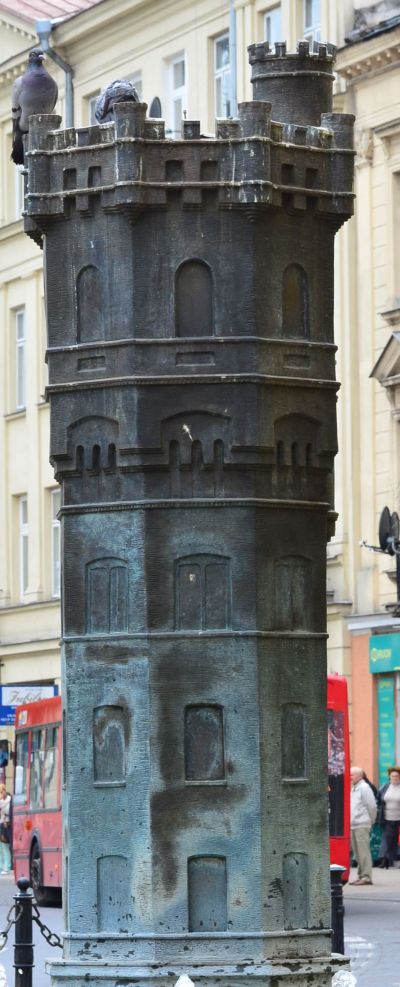
Monument of Water Tower in Lublin

In 2003 during changes in Freedom Square in Lublin, the city authorties decided to commemorate ... the water tower - a place where it once stood. In 2004 the Municipal Water and Sewage Company erected a bronze monument of  miniature old water tower and built a new fountain in that city...
czytaj więcej

Monument of Water Tower in Lublin

At the end of the 19th century Lublin needed a new water supply system, because the sanitary condition of the city at the time was very bad. Between 1892 and 1894 cholera epidemics struck Lublin, also regularly erupting fires were difficult to control due to insufficient quantities of water.


The construction of a network supplying water Lublin was to the german engineer Adolf Weisblatt. T The Water Tower itself was build in the period 1897-1899 at then Bernardine Square, Freedom Square today. The official opening took place on 1 July 1899.

The tower was built in the fashionable neo-Gothic style somewhat reminiscent of the medieval towers of defense. The Tower was crowned with battlements, while inside there was a tank, which could accommodate up to 150 cubic meters of water pumped by two steam pumps. The tower was made of bricks brought from Volhynia. The network designed by Weisblat consisted of artesian wells and drainage system.


As a result of fighting at the end of the second world  the water tower was completely burnt down and in 1946 the tower was dismantled. Moreover, vanished houses, which stood in its neighborhood.


In 2003, because of changes in Freedom Square decided to mark the water tower - a place where once stood are marked dark cobbles. In 2004, the Municipal Water and Sewage Company decided to put money in a new fountain at Freedom Square. In the middle of the fountain bowl bronze monument was erected - miniature old water tower.


Photo: R. Żelichowski, April 2012

Finnish journalist on Lindleys in Warsaw

Finnish journalist Katriina Etholén works on article about activities of the Lindeys in Warsaw
On Monday 13 September Katriina visited Water Supply Company. She writes for monthly "Vesitalous" dealing with water issues...

czytaj więcej

Finnish journalist on Lindleys in Warsaw

12 -14 September 2011 Warsaw visited Finnish free-lancer journalist Katriina Etholén who works on article about the Lindleys in our city. Last year Katriina Etholén published nicely illustrated text"William Lindley Hampurissa" (William Lindley in Hamburg) for monthly "Vesitalous" dealing with water issues. Article of the Finnish journalist is to read on our ‘e-publications’ page.


On Monday 13 September Katriina Etholén visited Water Supply Company. Her guide was Marzena Wojewódzka from the Press Office of the Water Company, who in a very Professional manner presented to the Finnish guest achievements of the Lindleys in Warsaw as well as showed her the modern addition to the old project. Mrs. Ewa Grzymała from the Company Archive prepared sample of c.a. 50 original drawings from Lindley’s office.


Katriina Etholén was very impressed by what she had seen. The biggest impression made on her the slow filters filled with water.


In the afternoon Katriina Etholén visited places known to Lindleys during their assignments in Warsaw, the famous “bench of Lindley”, among others (photo)


We wait impatiently for the fruits of Katriina Etholén’s  work!


100 years ago - William Heerlein Lindley knighted

In 1911 William H. Lindley received a knighthood from King George V. As Franz Lerner, author of the first short biography of William Heerlein rightly states, knighthood was and always be “the highest honour for the British citizen, which in those days was a privilege to only few engineers working on their own account”...

czytaj więcej

100 years ago - William Heerlein Lindley knighted

In the years 1906 – 1908 as a member of the Royal Commission on Canals and Waterways William H. Lindley studied the inland waterways of Germany, France, Belgium and Holland. After four months work in London these studies gave rise to a final report. Along with the next report on the canals and inland navigation of the UK, presented to both Houses of Parliament published two years later, his continental works for the glory of the British Empire were also appreciated*.


In 1911 William H. Lindley received a knighthood from King George V. As Franz Lerner, author of the first short biography of William Heerlein, writes, knighthood is and always be “the highest honour for the British citizen, which in those days was a privilege to only a few engineers working on their own account”.


On this occasion William Heerlein ordered a special jacket, which can be seen on the photograph below, printed in “Illustrated London News” (1911). His name has published since then in The Book of Knights of the British Empire (First time: Dod's Peerage, London 1915, p. 249).


Only for the record one needs to note, that title Sir has been awarded to W.H. Lindley exclusively. We have stated with certain embarrassment, that this fact has not been known to the city authorities of Hamburg. When in June 1993 150 anniversary of the start of water supply and sewage works for this city was celebrated, the highlight event was unveiling of the William Lindley's statue. The sculpture designed and made by Hansjörg Wagner, very well-known artist from Munich, was located on the prestigious Baumwall in Hamburg and was unveiled in presence of members of the family (Alexander Caspar and Margret Schulz) on 27 June 1993. On the front of the monument to their dismay was placed wrong description „Sir William Lindley 1808 – 1900”.


*Report on the Waterways of France, Belgium, Germany and Holland, by W.H. Lindley (Assistant Commissioner for the Foreign Inquiry), London 1909; Royal Commission on Canals and Waterways. Report[s] of the Royal Commission appointed to inquire into and to report on the canals and inland navigation of the UK. Presented to both Houses of Parliament by Commission of His Majesty. London 1906-1911.  


William Lindley in colour...

In 1879 William Lindley went to a photo atelier and ordered a couple of his photo portraits. He was 71 and just retired from his duties...
czytaj więcej

William Lindley in colour...

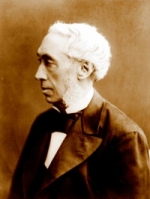
In 1879 William Lindley went to a photo atelier and ordered a couple of his photo portraits. He was 71 and just retired from his duties. We do not know what was the purpose of the photo session. The four photographs taken by an unonymous photographer could serve as a family token, or were required by a publisher. The second option seems to be the most probable, taking into consideration very formal poses stroke by William Lindley.  One of the luckily preserved photographs pictures William Lindleya looking at the photographer, the second one pictures his profile. 


The first one is the best known and frequently published (above. For a better quality photo see our Album The Lindleys on this website). 


The second one, the property of City Archive of Hamburg, is little known. Slightly modified and dramatized, black and white photograph was placed on the cover of the book  "William Lindley Konstrukteur der modernen Stad" (Edit. O. Pelc & S. Groetz), a final product of the seminar and exhibition in 2008 in Hamburg dedicated to the 150s birthday of  William Lindley.


Brownish old print looks almost like a colour photograph... William Lindley in colour?


Przejdź do strony:
  • << Pierwsza
  • < Poprzednia
  • 1
  • 2
  • 3
  • 4
  • 5
  • Następna>
  • Ostatnia >>
Societas Lindleiana, wszelkie prawa zastrzeżone
  • O nas
  • Lindleyowie
  • E-biblioteka
  • Nasze archiwum
  • Kontakt
  • Linki
Projektowanie stron internetowych: www.bedweb.pl