• O nas

  • O nas

  • Lindleyowie

  • Lindleyowie

  • E-biblioteka

  • E-biblioteka

  • Nasze archiwum

  • Nasze archiwum

  • Kontakt

  • Kontakt

  • Nowości

  • Nowości

  • Linki

  • Linki

Aktualności

Wolna Ukraina: Muzeum Historii Toalet w Kijowie obchodzi w tym roku swoje 15-lecie

Muzeum Historii Toalet w Kijowie obchodzi w tym roku swoje 15-lecie. Czy przetrwa niszczycielskie ataki rosyjskich rakiet?

Wolna Ukraina: Muzeum Historii Toalet w Kijowie obchodzi w tym roku swoje 15-lecie


Jedno z niewielu światowych muzeów poświęconych toaletom znajduje się w Kijowie, bombardowanej przez rosyjskie wojska, stolicy niepodległej Ukrainy. Warto złożyć mu wirtualną wizytę zanim przypadkowa rakieta zniszczy jej unikalne zbiory.  


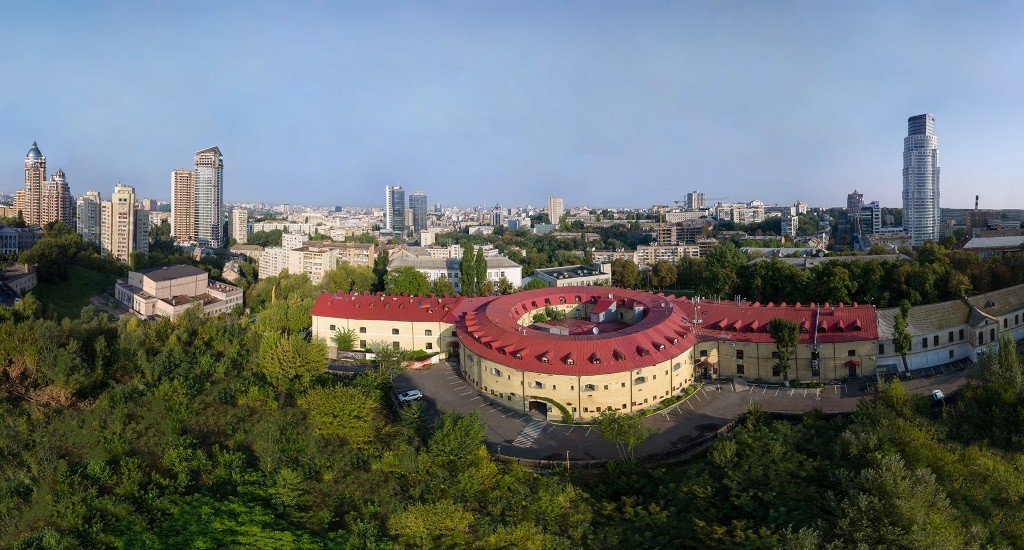
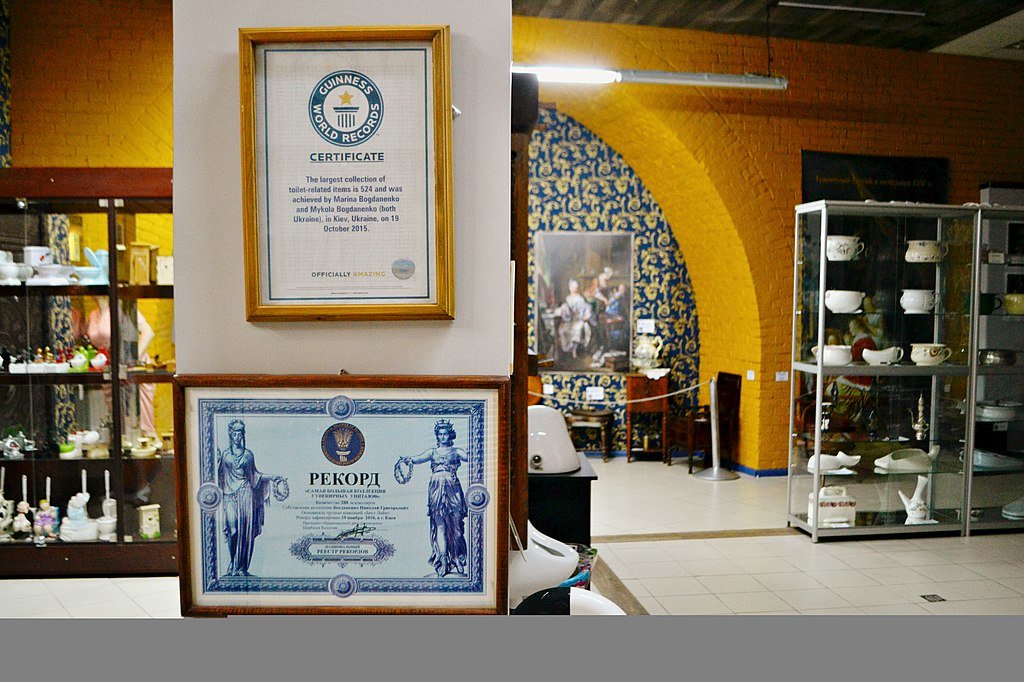
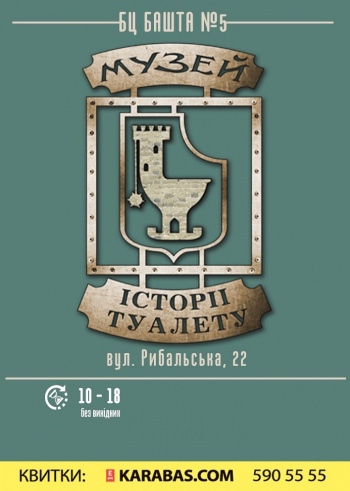
Muzeum Historii Toalety to prywatne muzeum założone w Kijowie przez małżeństwo biznesmenów i entuzjastów historii higieny, Nikolaya i Mariny Bogdanenko. Otwarte zostało ono we wrześniu 2007 r. Znajduje się ono na liście 10 najpopularniejszych i najbardziej ciekawych muzeów w Ukrainie. Mieści się we „Wieży numer 5”, na ul. Rybalskiej nr 22.  Wieża stanowiła część umocnień Twierdzy Kijów i prace przy niej rozpoczęto w 1833 r. (trwały 13 lat), z przeznaczeniem na magazyny z prowiantem i amunicją. Dzisiaj we wieży znajduje się jedno z dużych centrów biznesowych w Kijowie oraz  największa na świecie kolekcja toalet oraz pamiątek z nimi związanych, co odnotowane zostało w Księdze Rekordów Guinnessa.


Eksponaty muzeum są uporządkowane chronologicznie, zgodnie z historią rozwoju ludzkości: „Prahistoria”, „Starożytność”, „Średniowiecze”, „Odrodzenie”, „Wiek XVII – XXI” i „ART WC”.


Zapraszamy do zwiedzania, chwilowo wirtualnie, w niedalekiej przyszłości osobiście!

https://pl.wikipedia.org/wiki/Muzeum_historii_toalety

http://museumtoilet.com.ua/


Societas Lindleiana objęło Honorowy Patronat

Na zaproszenie organizatorów Międzynarodowego  Festiwalu Pianistycznego Chopin w sercu Warszawy, Towarzystwo Lindleyowskie "Societas Lindleiana" zostało Honorowym Patronem tej najważniejszej tego lata imprezy kulturalnej naszej stolicy. 


Societas Lindleiana objęło Honorowy Patronat

Z wielką przyjemnością informujemy, że na zaproszenie organizatorów Międzynarodowego  Festiwalu Pianistycznego Chopin w sercu Warszawy, Towarzystwo Lindleyowskie "Societas Lindleiana" zostało Honorowym Patronem tej najważniejszej tego lata imprezy kulturalnej naszej stolicy.


 ***


Inauguracyjny recital włoskiej artystki Leonory Armellini
będzie miał miejsce 7 lipca o godzinie 16.00.

Kolejne recitale odbędą się w dniach:  14, 21, 28 lipca oraz 4, 11, 18 i 25 sierpnia 2018 r.


Szczegóły: http://chopinwsercuwarszawy.pl/festiwal-2018/

***


Cieszymy się z tego zaszczytu podwójnie. Po pierwsze, na rok 2018 przypada dwieście dziesiąta rocznica urodzin Williama Lindleya, założyciela inżynierskiego rodu, którego trzech synów nadzorowało prace kanalizacyjne i wodociągowe w Warszawie. Centralne obchody odbędą się jesienią w mieście Hamburgu, gdzie zaczęła się europejska kariera Lindleyów. 


Po drugie, festiwal będzie miał miejsce w nadzwyczaj pięknie odrestaurowanym kościele Świętej Trójcy, w którym „w roku 1825 Fryderyk Chopin wystąpił przed carem Aleksandrem I i otrzymał od niego pierścień z brylantem. Młody kompozytor śpiewał także w parafialnym chórze i słuchał tu kazań” - pisze Przemysław Lechowski, dyrektor artystyczny festiwalu.


Dla naszego Towarzystwa Lindleyowskiego najważniejsze jest to, że organizatorzy zauważyli i docenili, obok oczywistej religijnej roli kościoła (świątynia Boża) i kulturalnej  (dokonała akustyka), jej skromną całkiem świecką rolę w dziejach naszego miasta.


W 1881 roku oko Williama Heerleina Lindleya, angielskiego inżyniera cywilnego, w czasie wizyty w Warszawie, padło na elegancki w proporcjach, zaprojektowany przez samego Szymona Bogumiła Zuga, królewskiego architekta, kościół Świętej Trójcy. Nie względy religijne odegrały tu największą rolę, choć William H. Lindley był członkiem kościoła anglikańskiego, ale fakt, że wraz z wieńczącym go krzyżem był najwyższą budowlą ówczesnej Warszawy. Po rezygnacji ze względu na stan zdrowia siedemdziesięciotrzyletniego ojca Williama z prac nad kanalizacją i wodociągami Warszawy wszystkie jego obowiązki przejął najstarszy syn William H. Lindley.


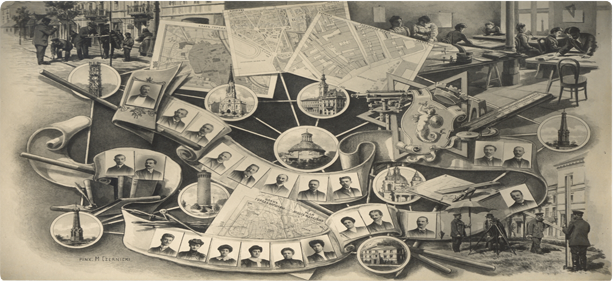
Do tak wielkiej inwestycji infrastrukturalnej miasta potrzebny był nowoczesny i dokładny jego pomiar, a także szczegółowy plan. Do pomiarów zaś potrzebna była odpowiednia sieć punktów triangulacyjnych. I tak to na plan pierwszy wysunął się kościół Świętej Trójcy przy obecnym placu Stanisława Małachowskiego (wówczas placu Ewangelickiego przy ulicy Mazowieckiej i Erywańskiej). Krzyż na jego kopule wybrany został przez Williama H. Lindleya jako punkt główny (zero geodezyjne) do triangulacji Warszawy, w którym się zbiegało pięć punktów pomiarowych wyznaczonych w różnych miejscach miasta (szczegóły zob. R. Żelichowski, Paweł E. Weszpiński, Rok 1912. William Heerlein Lindley. Plan Warszawy. Wyd. Muzeum Warszawy 2016).


Jak pisał dr Paweł E. Weszpiński: „Wliczając pomiary i kartowanie uzupełniające, 237 ulic miasta na lewym brzegu Wisły skartowano w latach 1883-1893 na 686 arkuszach szkiców, a 71 ulic Pragi w latach 1903-1904 – na 170 arkuszach szkiców. Łącznie prace objęły 308 warszawskich ulic o długości 187,4 km, pomieszczono je na 836 arkuszach szkiców” (s. 161).


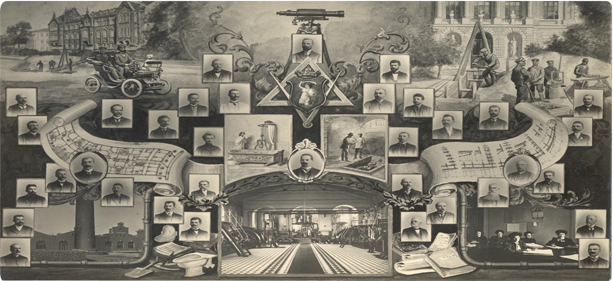
Przygotowania do prac triangulacyjnych w Warszawie ilustruje reprodukowana poniżej strona albumu pamiątkowego przygotowanego przez współpracowników Williama H. Lindleya z okazji 25-rocznicy rozpoczęcia prac kanalizacyjnych i wodociągowych w naszym mieście. Centralnym punkt tej strony stanowi kopuła i krzyż kościoła Świętej Trójcy. Widoczne jest także pięć pozostałych punktów pomiarów.


Organizatorzy/Organizers

Parafia Ewangelicko-Augsburska Świętej Trójcy W Warszawie

Towarzystwo im. Fryderyka Chopina

Partnerzy Artystyczni/Atristic Partners

Międzynarodowy Konkurs Pianistyczny Towarzystwa Chopinowskiego W Hanowerze / Niemcy

Syberyjski Międzynarodowy Konkurs Pianistyczny Im. Fryderyka Chopina W Tomsku / Rosja

Warszawskie Warsztaty Pianistyczne

Partnerzy Organizacyjni/Organizational Partners

Zespół Państwowych Szkół Muzycznych im. Fryderyka Chopina W Warszawie

Patronaty/Patronate

Towarzystwo Lindleyowskie Societas Lindleiana


  • Archiwum
Slideshow Image 1 Slideshow Image 2 Slideshow Image 2 Slideshow Image 2 Slideshow Image 2 Slideshow Image 2 Slideshow Image 2

Nowości

  • wszystkie
  • spotkania
  • książki
  • wystawy
  • Informacje prasowe
  • Ciekawostki
331329322320290

35 Years in Warsaw. William H. Lindley and Lindley's plans

In 1915, after 35 Years in service of Warsaw, William H. Lindley’s his contract was ended. His legacy is a cartographic masterpiece known as  “Lindley's plans”


To read more click on  Czytaj więcej

czytaj więcej

35 Years in Warsaw. William H. Lindley and Lindley's plans

From August 26, 1881, to August 5, 1915, William Heerlein Lindley was the Chief Engineer for the construction and operation of the waterworks and sewerage systems in Warsaw. His name is associated with the cartography of Warsaw from 1883 to 1915.

At that time, the Warsaw municipal surveying service was organizationally linked to the Waterworks and Sewerage Department, hence the term "Lindley's plans." Warsaw plans from 1883-1915 include the phrase "Survey under the direction of Chief Engineer W. H. Lindley" (in Russian).


He last appeared at a meeting of the Waterworks and Sewerage Construction Committee on March 26, 1914. World War I broke out in August. During the German occupation, the Municipal Departments were liquidated. From August 10, 1915, only the Water and Sewerage Section of the Warsaw City Council, with its Surveying Office, existed. The contract with W. H. Lindley was automatically suspended.


The last meeting of the Construction Committee took place on November 10, 1915. This also marked the end of the 35-year-long, highly fruitful collaboration between engineer Sir William H. Lindley, an honorary doctor of the University of Darmstadt.


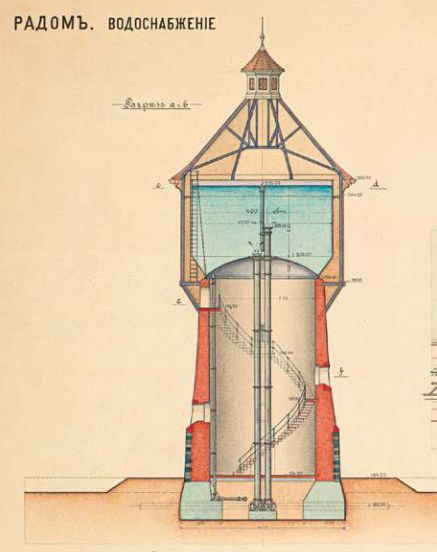
1925 an Old – New Project of W.H. Lindley for Radom

A century ago, in 1925, the Radom City Hall signed a contract for the construction of a water main based on W.H. Lindley's 1912 design.


To read more click on  Czytaj więcej
czytaj więcej

1925 an Old – New Project of W.H. Lindley for Radom

In 1908, the city authorities of Radom announced a competition for the construction of a water supply and sewage system. Karol Francke's company from Bremen submitted a bid, presenting three solutions for establishing a water supply and sewage system. The subcommittee evaluating the project ruled that the project was too expensive and did not meet the city's expectations. In this situation, Mayor Paweł Kłossowski, with the consent of the provincial authorities, decided to request the same from the "famous engineer" William Heerlein Lindley.


W.H. Lindley visited Radom on September 26 and 27, 1909, where he familiarized himself with the city's hydrological and geological conditions, and again in July 1910 to select a water intake and inform the city authorities of the results of the work. On October 12th, he received an official commission from the new city mayor, Władysław Modzelewski, to prepare a preliminary design for the water supply and sewage system.


On May 1st, 1912, the designs were ready. "I hope," Lindley wrote in a letter to President Modzelewski, published in the booklet part of the project, "that the above explanations will enable you to take further action on this important matter."


Radom water tower, 1912


"The lack of necessary capital funds and the outbreak of World War I prevented the implementation of this modern project for its time," wrote Z. Wilczyński.


The artistic value and meticulous execution of all the preserved documentation were noteworthy.


Details


In 1924, the matter was revisited. The Radom City Hall signed a contract with the American Ulen & Company, a New York-based financial firm. The idea was ill-fated, and work on the project dragged on. Fearing the growing threats to the city's plans, Lindley's existing design was used. As a result, work could begin in 1925, and two years later, water flowed from the new water main.


Source: 

R. Żelichowski, Radom, w: Lindleyowie. dzieje inżynierskiego rodu, Societas Lindleiana, Warszawa 2019, t. II, s. 340-349.

Holiday greetings from and to MPWiK in Warsaw

Hundred years ago, on January 1, 1924, in independent Poland Warsaw Water and Sewage Company was established


To read more click on: czytaj więcej
czytaj więcej

Holiday greetings from and to MPWiK in Warsaw

Dear/ friends, supporters/ supporters of Societas Lindleiana,

Another calendar year passes, which prompts memories.


In the Kingdom of Poland under Russian rule, the care of supplying water to the population of Warsaw rested in the hands of the City (Municipal) Board, while water supply and sewage were one of the administrative departments of the Warsaw Magistrate. It was not until January 1, 1924, when the Warsaw Water and Sewage Company was established, that this part of the city's economy became independent. The Warsaw Water and Sewage Company was headed by the Board as the legislative body and the Directorate as the executive body. The first director was Edward Szenfeld (1863-1943?), an engineer, graduate of the Faculty of Engineering at the Riga Polytechnic, employed in the construction of water supply and sewage systems in Warsaw (1888-1896), initially as an assistant to the construction manager, later as head of the construction and operation office of the sewage and water supply systems. Joseph Lindley's right hand. In 1927, construction began on a new building at the corner of Starynkiewicza and Nowogrodzka streets. The building was completed and consecrated on June 28, 1930. 


Congratulations to MPWiK on a beautiful anniversary! 

Societas Lindleiana


On this occasion, we share with you, our Dear Ones, wishes that we received from our friends from MPWiK in Warsaw, along with the link is a funny film about the adventure of Saint. Nicholas with Kranówka (tap water) in Warsaw.

https://www.youtube.com/watch?v=bc6j5xDDk2w 


Societas Lindleiana

William Lindley's first journey to Hamburg

 
200 years ago, on September 25, 1824, 16-year-old William Lindley made his first journey to Hamburg.


To read more click on: czytaj więcej
czytaj więcej

William Lindley's first journey to Hamburg

Two hundred years  ago, on September 25, 1824, 16-year-old William Lindley, the decision of Mother Catherine and Uncle Ben, made his first journey to Hamburg. The goal of the journey was the care of the family for the further education of William and the Hanseatian city-state, having close commercial contact with London, seemed to be an interesting idea. German could be extremely useful. 


William with mother Catherine and siblings, Croydon, 1820 (Album Soltau)


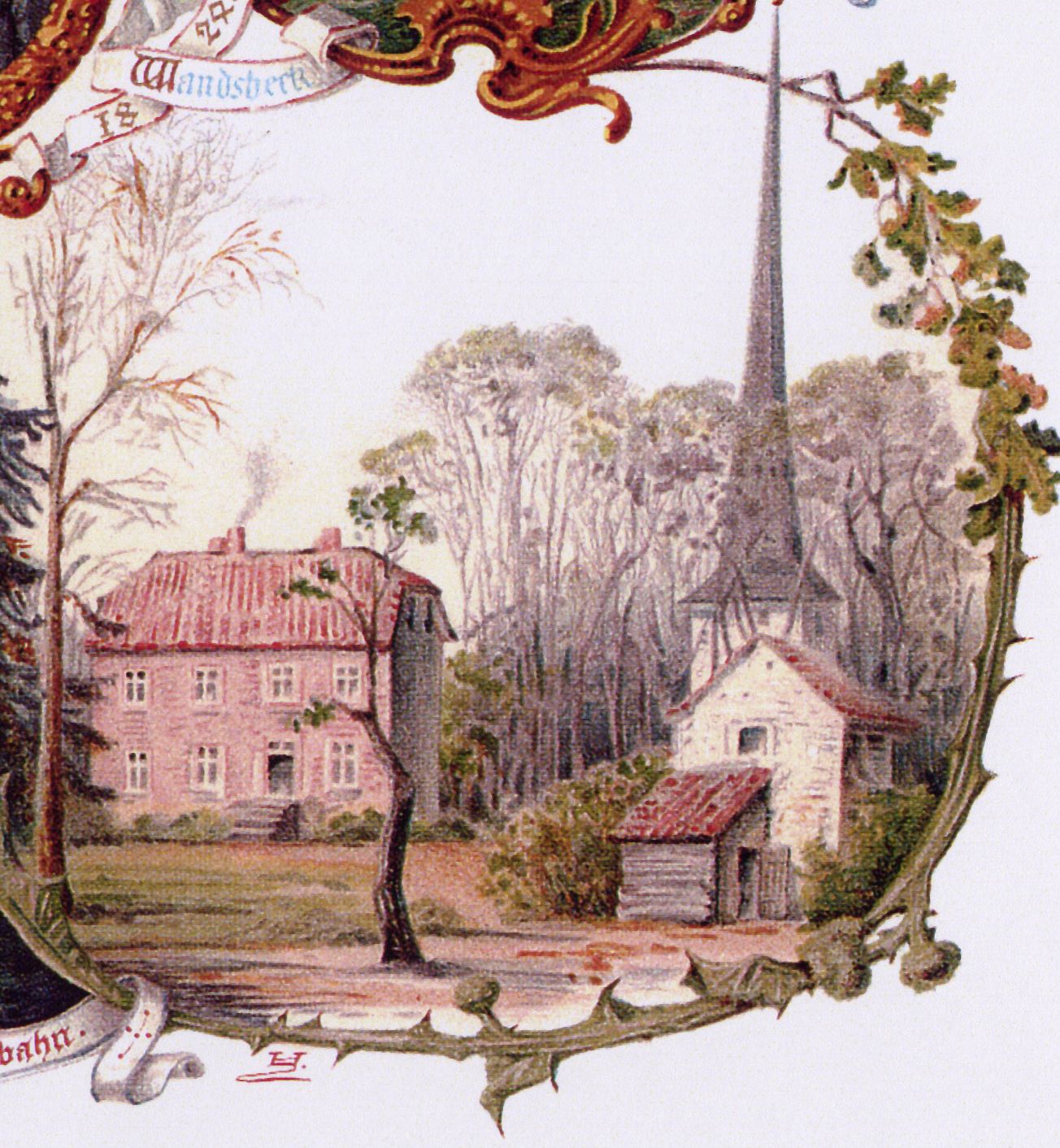
The choice of family fell on pastor Schröder, a son -in -law of the famous German poet Matthias Claudius, inhabited in Wandsbek near Hamburg. As his mother wrote, William left London on September 25, 1824 and returned home on July 2 the following year. The steamer, whom he traveled under the care of an older friend, had a much speaking name "Perserverance". German lessons at Pastor Jacob Schröder ((1777-1831), William took for 10 months. In the following years, fate threw young William to this city again. He supervised the construction of the Hamburg-Rothenburgsort railway connection and then rebuilt this city after a great fire in 1842. William Lindley associated his professional and family life with Hamburg for the next two decades.


Pastor Schröder's house in Wandsbek, 1824 (Album Soltau)

Water, or observation tower?

In the years 2013-2015 the Uruski Palace and the (water?)tower were completely revitalized.


To read more click on: czytaj więcej


czytaj więcej

Water, or observation tower?

One of the most magnificent buildings in Warsaw, located at Krakowskie Przedmieście at No. 30, currently houses the Faculty of Geography and Regional Studies of the University of Warsaw. It is known under several names Poniatowski / Czetwertyński / Uruski and Tyszkiewicz Palace.The observer may notice from the internal courtyard of the building a mysterious tower, reminiscent of a modern water supply tower.


Photography: Małgorzata Łoś


According to numerous publications, it was to be part of the 17th century water supply built according to the design of Titus Liviusz Burrattini, from 1646 in Warsaw, from 1650 the royal architect and palace builder for Kazimierz Poniatowski, brother of the king. At the request of Seweryn Uruski (1817-1890), architect Andrzej Gołoński (1799-1854) demolished the existing buildings and erected here in 1844-1847 a completely new building, leaving "the water tower for the local water supply." 

Another reconstruction of the building, under the direction of Józef Huss (1846-1904), was in 1893-1895.


Photography: Małgorzata Łoś


The preserved photograph from before the outbreak of World War II shows the tower in all its glory.


Wikipedia, Warszawa1939


During the World War II, a bomb hit the southern pavilion of the building, destroying several of its rooms. After the fall of the Warsaw Uprising in 1944, the palace was burned by the Germans. His walls, although burned, without roofs and ceilings, survived. After World War II, the palace was transferred to the University of Warsaw, which rebuilt it for the needs of the Geographical Institute. The works, carried out under the direction of architect Jan Dąbrowski, lasted until 1951.

In 2013-2015 he was completely revitalized.


I share the doubts of some researchers (Marek Patakiewicz) as to the period of the origin of the tower. As far as one can agree with the generally accepted information that in the 17th century a water supply was created here according to the design of Titus Liviusz Burrattini (1617-1681), the tower presented in the photo has a nineteenth-century look. It could have been a water tower that stored water, which gravitationally flowed into the taps by keeping the pressure on the local network. It could also be a observation tower, today serving climatological measurements and also an observation tower in the event of a local fire.


Fire brigade post from 1851 at Cłodna street 3


Sources: 

Marek Kwiatkowski, Pałac Uruskich. Państwowe Wydawnictwo Naukowe, Warszawa 1974.

Zdjęcia: Małgorzata Łoś (2018, 2019).

https://wiezecisnien.eu/mazowieckie/warszawa_uniwersytet/

Także: Marek Patakiewicz, http://www.wieze.geotor.pl/wieze_cisn/warszawa_8/warszawa_8.htm

http://miaster.pl/miejsce/palac-uruskich-czetwertynskich/


Przejdź do strony:
  • << Pierwsza
  • < Poprzednia
  • 1
  • 2
  • 3
  • 4
  • 5
  • Następna>
  • Ostatnia >>
Societas Lindleiana, wszelkie prawa zastrzeżone
  • O nas
  • Lindleyowie
  • E-biblioteka
  • Nasze archiwum
  • Kontakt
  • Linki
Projektowanie stron internetowych: www.bedweb.pl