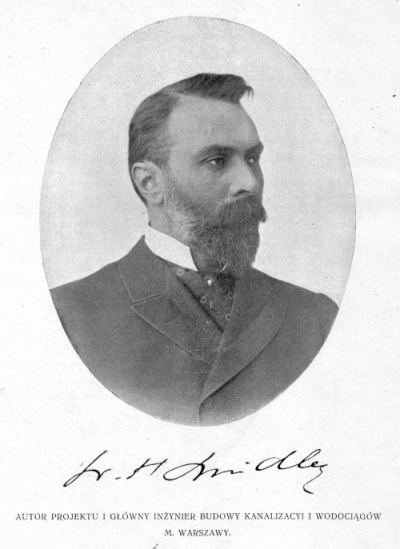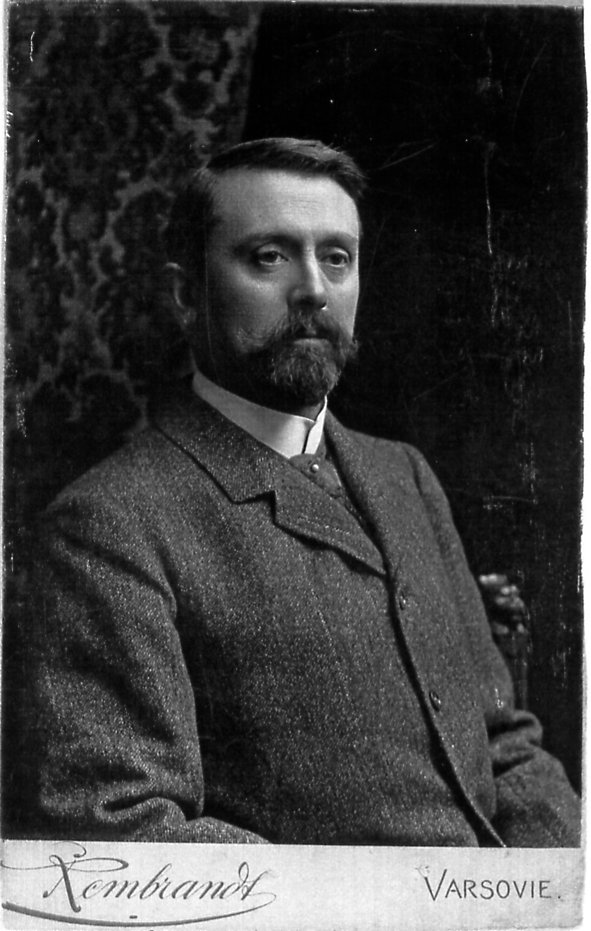
Popiersie W.H. Lindleya stoi w najnowszym obiekcie Miejskiego Przedsiębiorstwa Wodociągów i Kanalizacji - stacji ozonowania pośredniego i filtracji na węglu aktywnym. O ile płaskorzeźba przedstawiająca Williama Lindleay-ojca na frontonie budynku jest widoczna z ulicy Filtrowej, o tyle popiersie nie jest publicznie dostępne. Mogą je obejrzeć jedynie goście obiektu.


In front
of the Office of the Ochota District of the Capital City of Warsaw, at the main
entrance from ul. Grójecka, commemorative paving slabs, devoted to the memory
of people distinguished for Ochota, for Warsaw. One of the boards was dedicated
to the Lindleys - Father William and Son, William Heerlein.

It was here, in this
district, a central water supply was created with characteristic water supply
towers. The idea for launching in the pavement of honoring plates important for
the district was created a few years ago, when the City Road Administration
built a new pavement in front of the district office.
The originator of the
installation of commemorative plates was Piotr Żbikowski, councilor of the
Council of the Capital City of Warsaw Warsaw. It began with Konstanty Julian
Ordon, commemorated by Adam Mickiewicz in the poem "Reduta Ordon" as a
heroic defender of one of the forts from 1831.
Next was Maria Curie-Skłodowska,
a double Nobel Prize winner who is strongly associated with the Ochota
district. Here she built a radio institute, in which the Maria Skłodowska-Curie
Society operates and houses the House of Remembrance.
Then appeared a plaque dedicated to Socrates Starynkiewicz - who was the president of Warsaw in 1875-1892. The natural choice was a record dedicated to English civil engineers. The opportunity was the 150th century to swim the first filtered water in the taps of the inhabitants of Warsaw (2016)
On July 23, 1881,
William Heerlein Lindley, authorized by his father, signed a contract with the
Warsaw Magistrate for the execution of sewage and water supply plans and to
supervision of their construction. Agreement between the Magistrate and William
H. Lindley is deposited at the state archive in Warsaw and consists of 42
paragraphs and additional points regarding the relationship between engineers
with the city authorities. The contents of the contract was revealed to the residents of Warsaw only in October with the publication of details in
"Technical Review" monthly.

William Heerlein Lindley in Warsaw
The citizen
committee for the construction of sewage and water supply system of the city of Warsaw was gathered two days
later. As "Kurier Warszawski" wrote on 26 July: "The first
meeting [of Committee] was held yesterday under the leadership of the city
President in the presence of Mr.
Lindley, the son. The President presented the main points of the
contract". For "supervision
and executing of works on the construction of sewage and waterworks" the
municipal authorities were obliged to pay Lindley annual remuneration of
equivalent of 2000 Pound Sterlings (paid quarterly in Rubles).

Public place
William
Lindley-father did not come to Warsaw to sign the contract, officially due to
the illness. In reality, because two years earlier he retired and withdrew from
undertaken obligations making a place for his successor, his eldest son. From
all his rights and obligations resulting from the contract with the Warsaw
Magistrate he resigned on August 26, 1881.
With signing of the contract the uncertain situation in Warsaw concerning the fate of this great project finally came to an end. Tsar Aleksander II, who died on March 13, 1881, in a bomb assault directed by the Polis anarchists, was succeeded by his son, Alexander III. In his inaugural speech (manifesto of 14/2 March) he promised “to follow the footsteps of his father and finish all what he began". In the case of Warsaw, the tsar kept his promise and signed relevant documents enabling the construction of local sewage and modern water supply system. The works could have been started, but it took five long years before the inhabitants of Warsaw could enjoy filtered water.
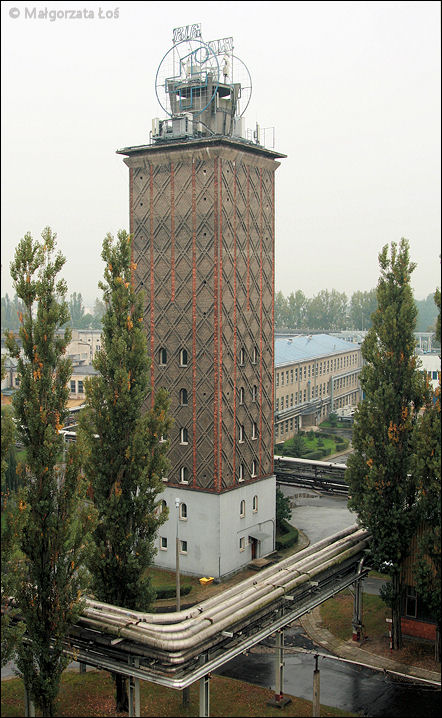
On March 14, Jakub Lewicki, the Masovian Voivodeship Conservator of
Monuments, informed that the Water Tower of the Polfa Tarchomin Pharmaceutical
Works was registered as a historical monument.
The water tower building was
erected in the complex of pharmaceutical plants in Tarchomin, on the premises
of Ludwik Spiess' plants nationalized after World War II. In 1957, the final project of the tower's crowning by Ing.K. Bohatyrewicz, was
developed by the BIPROFARM company.

The Tarchomin Water Tower, present day
Phot. Małgorzata Łoś
For more photographs of the tower visit:
Małgorzata Łoś, https://wiezecisnien.eu/mazowieckie/warszawa_polfa/
Year 2019 brings the 160th anniversary of the birth of Joseph Lindley
(1858-1906), the youngest of three Lindley brothers. Ten years ago, we devoted
to him the text „On the
margins of the 150th anniversary of the birth of Joseph Lindley" published
in the Chronicle of Warsaw" (No. 1, 2009) included in our E-library under
the title "The Fourth Lindley".

We encourage you to read it again. Today we will only remind our friends and readers that he came to Warsaw in December 1888 to replace his older brother Robert, who decided to with his family return to England.
As a representative of the chief engineer William H„eerlein, he took over supervision of the city's measurements and the construction of sewage and water supply systems. He surrounded himself with Poles, participated in the current life of the city, co-financed and was a faithful reader of the „Technical Review". He enjoyed the respect of his employers and the sincere sympathy of those with whom he cooperated. Among the features that characterized him were: justice, goodness of heart and helpfulness for everyone who turned to him for help. In 1894 he married Emma Emilie Suermondt from Wroclaw. They had one son named Henry (Harry) William.
He died on April 20, 1906 at the Ober Ursel (Oberursel) hospital, only forty-seven years old. Joseph Lindley spent most of his professional life in Warsaw.
Lodz street, whose patron is William H. Lindley, has undergone renovation
and beautifying. The city authorities with great commitment and consistency
change the look of the streets in the so called “Woonerf program”.
Woonerf is a word borrowed from the Dutch language, which in free translation means "street to life" or "place to live." This term was invented in the Netherlands the 1970s for the design of streets to make them more friendly to residents and the passersby.
Photos: Grzegorz Sikora

"Lindley
Street after the reconstruction was divided into two parts. From Narutowicz street to the building of the University of Lodz is an
urban courtyard, while to Węglowa street thre are roadways with authorized local traffic and
parking spaces.
The surface has been laid out of
stone and concrete cubes. The old, antique granite cube
has also been preserved.
The existing greenery has also been preserved. There were additionally dozens of new decorative trees and shrubs. We also installed benches, bicycle stands and rubbish bins on the street"
Text after: