
• O nas

  • O nas

  • Lindleyowie

  • Lindleyowie

  • E-biblioteka

  • E-biblioteka

  • Nasze archiwum

  • Nasze archiwum

  • Kontakt

  • Kontakt

  • Nowości

  • Nowości

  • Linki

  • Linki

Aktualności

200 lat zasłużonej Instytucji Inżynierii Cywilnej w Londynie

Do Instytucji Inżynierii Cywilnej należało aż pięciu członków rodziny Lindleyów

200 lat zasłużonej Instytucji Inżynierii Cywilnej w Londynie

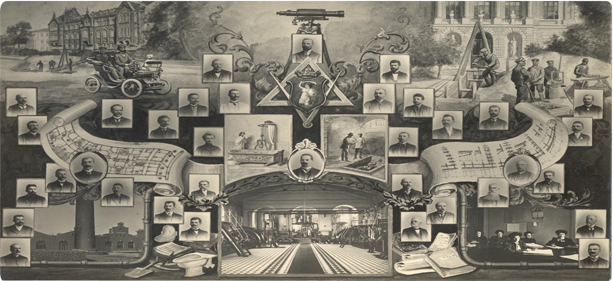
Instytucja Inżynierii Cywilnej (ang. Institution of Civil Engineers (ICE) jest jedną z najbardziej szanowanych i uznanych na świecie instytucji zrzeszających inżynierów. Od 1818 roku przyjmuje w swoje szeregi słynnych i wpływowych inżynierów z Wielkiej Brytanii. W 2018 roku ICE obchodziła jubileusz 200-lecia swojego istnienia organizując z tej okazji szereg działań przypominających jej dorobek i ludzi z nią związanych.


Do tej szacownej instytucji należało aż pięciu członków rodziny Lindleyów.. William Lindley dołączył do Institution of Civil Engineers w 1842 roku, William Heerlein  w 1878, Robert Searles w 1881 i Joseph Lindley w 1899 roku. W XX wieku Marie Lindley, ostatni inżynier cywilny w rodzinie, została członkiem stowarzyszonym ICE w 1953 roku. W 1972 roku była drugą kobietą w historii ICE, która otrzymała pełne członkostwo (Fellowship).

Krótka historia ICE

Skromne początki ICE sięgają początków 1818 roku. Niewielka grupa młodych inżynierów spotkała się w londyńskiej kawiarni i podjęła decyzję o założeniu Instytucji Inżynierii Cywilnej, pierwszej na świecie organizacji  zrzeszającej profesjonalną kadrę inżynierską. Pierwszym prezydentem został w 1820 roku Thomas Telford. Znany z licznych projektów infrastrukturalnych przyciągnął do ICE wielu nowych członków i odegrał ogromną rolę w kształtowaniu dzisiejszego oblicza ICE.
Od tego czasu ICE jest domem dla wielu największych inżynierów w historii Wielkiej Brytaniii. Po 200 latach zrzesza ponad 92 000 członków w swoich filiach w ponad 150 państwach na całym świecie.


Linki w j. ang.: https://www.ice.org.uk/about-ice/our-history

https://en.wikipedia.org/wiki/Institution_of_Civil_Engineers


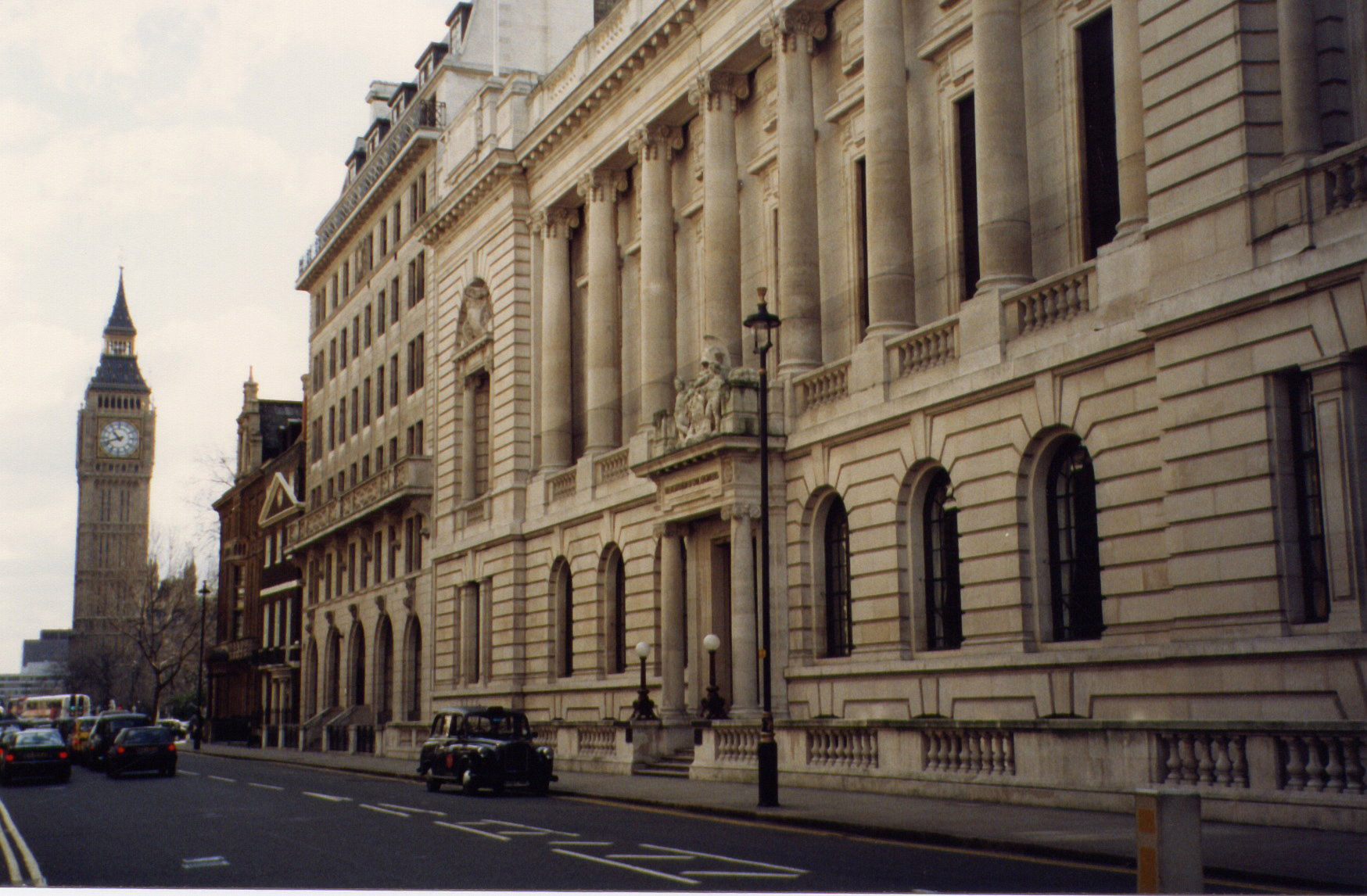
Siedziba ICE, One Great George Street, London SW1


Siedziba ICE

Jubileusz naszego Towarzystwa


Towarzystwo Lindleyowskie „Societas Lindleiana” świętuje w 2019 r. dziesięciolecie swojego istnienia

Jubileusz naszego Towarzystwa

Towarzystwo Lindleyowskie „Societas Lindleiana” istnieje już dziesięć lat!


W dniu 12 grudnia 2019 roku Zarząd Towarzystwa Lindleyowskiego „Societas Lindleiana” (TL-SL) spotkał się na uroczystym posiedzeniu z okazji dziesiątej rocznicy powstania naszej organizacji. Krajowy Rejestr Sądowy (KRS) wpisał nas do centralnego rejestru stowarzyszeń 23 listopada 2009 roku.


Wniosek do KRS o jego rejestrację podpisała grupa dwudziestu jeden osób, którym droga jest historia warszawskich wodociągów i kanalizacji zaprojektowanych oraz budowanych pod nadzorem czwórki angielskich inżynierów cywilnych, Williama Lindleya i jego synów Williama Heerleina, Roberta Searlesa i Josepha.


W minionej dekadzie odnotować możemy kilka znaczących sukcesów. Na konto swoje TL-SL zaliczyć może uczestnictwo członków jego Zarządu w przygotowaniu i publikacji (w 2016 r.) planu Lindleya z 1912 roku, umieszczenie tablicy upamiętniającej Lindleyów na angielskim domu w Blackheath.


W 2015 roku udało się nam doprowadzić do zaproszenia do Łodzi Billa (Williama V) Lindleya na uroczyste obchody  90. rocznicy uruchomienia wodociągów, a w 2016 roku do Warszawy na 130. rocznicę uruchomienia  stołecznych wodociągów.  


W 2018 roku, na zaproszenie organizatorów Międzynarodowego  Festiwalu Pianistycznego Chopin w sercu Warszawy, TL-SL zostało Honorowym Patronem tej najważniejszej tego lata imprezy kulturalnej naszej stolicy. 


Z okazji 10-lecia powstania TL-SL jego prezes. prof. Ryszard Żelichowski przygotował nowe wydanie monografii Lindleyowie. Dzieje inżynierskiego rodu (na ten temat zob. następną informację).


W podjętej na posiedzeniu Uchwale Zarządu zapowiedziane zostało zwołanie w pierwszym kwartale 2020 roku Walnego Zgromadzeni członków TL-SL, wybory uzupełniające do jego władz i przedstawienie przez Zarząd na nadchodzące lata nowej oferty programowej dla szerszej publiczności.


Korzystając z okazji Zarząd Towarzystwa Lindleyowskiego „Societas Lindleiana” składa swoim członkom i sympatykom najlepsze życzenia świąteczne oraz wszelkiej pomyślności w 2020 roku,  w życiu zawodowym i osobistym!


Fot:

https://www.emag.pl/dekoracja-foliowa-choinka-swiateczna-amscan-165x85-cm-670228/pd/D8YLZ1BBM/


  • Archiwum
Slideshow Image 1 Slideshow Image 2 Slideshow Image 2 Slideshow Image 2 Slideshow Image 2 Slideshow Image 2 Slideshow Image 2

Nowości

  • wszystkie
  • spotkania
  • książki
  • wystawy
  • Informacje prasowe
  • Ciekawostki
266261259256247

William Lindley the hero of street art in Bergedorf!

Street art give an opportunity to breath fresh air and walk to enjoy the beauty of the city during the days of pandemic!


To read more click on  czytaj więcej
czytaj więcej

William Lindley the hero of street art in Bergedorf!

Street art can fulfill various functions, commemorate places and people, and decorate streets. This was the idea behind the unusual decision of the municipal authorities of Bergedorf.


Let us just remind here that Bergedorf or Hamburg-Bergedorf is a part of the city of Hamburg, from April 1, 1938 included in the borders of Big Hamburg. The commissioning in 1842 of the railroad linking this small town with the Free Hanseatic City of Hamburg began William Lindley's great European career.


The joint stock company for culture and history of Bergedorf-South (Kultur-und Geschichts-AG Bergedorf-Süd) was aware of the dubious beauty of distribution boxes supplying electricity to apartments and industrial facilities and decided to campaign for their artistic redesign.


At the end of 2017, these previously gray, inconspicuous or heavily soiled energy distributors were renovated by the Hamburg artist Vincent Schulze, who for several years has been specializing in urban art and creating high-quality wall graphics and decoration of the facades of German city buildings, murals and a serie of works full of illusion scenes. He uses a variety of colored sprays for these purposes.


The audience liked Schultze's graphics and the author was invited to the second stage of the project. In 2018, new historical themes were selected, referring to the history of the place. Along the Rector-Ritter-Straße, paintings were created showing the images of William Lindley, the architect of Hamburg Alexis de Chateauneuf, or other figures important to the city. An image of one Lindley-related object was also created - a wooden railway station of his design, which has survived to this day. 


Journalist Heidi vom Lande recalled these artistic objects in the context of the covid-19 epidemic. “Graffiti is legal in Bergedorf-Süd! Get out in the fresh air and admire the street art! " - she called on the inhabitants of the district to the recreational activity.


To see more click here: 

Zobacz: http://www.08schulzedesign.de/start.html

 https://develop.heidivomlande.de/2018/11/27/die-schoensten-graffiti-verteilerkaesten-in-bergedorf-sued-sprayer-durfte-erneut-ran/#more-20697342

Photograph of  W. Lindley's painting by Bernd Carstensen, https://www.flickr.com/photos/161366249@N02/49526820036/

Happy Holiday!

Happy New Year 2022!

To read more click on  czytaj więcej
czytaj więcej

Happy Holiday!

  • To all our friends:
  • Warmest greetings of the season and many good wishes for the New Year 2022!
  • Societas Lindleiana

New find in Warsaw - two commemorative plaques of W.H. Lindley sewerage works in 1906

On 20 October 1906 William H. Lindley inaugurated sewerage work on the eastern side of Vistula river. This year two commemorating plaques were found.

To read more click on  czytaj więcej
czytaj więcej

New find in Warsaw - two commemorative plaques of W.H. Lindley sewerage works in 1906

In October 2021, Marek Smółka, spokesman of Water Supply Company, informed the inhabitants of Warsaw about an interesting find. In the Praga collector chamber under Jagiellońska Street, at the intersection with ul. I. Kłopotowski, two commemorative plaques in Polish and Russian were found. The inscription on them, which is difficult to read due to the passage of time, reads: "The stone laid by the acting mayor of Warsaw, W. Litwiński, to commemorate the commencement of sewage works in the suburbs of Praga on October 20, 1906, according to the design and under the supervision of engineer W.H. Lindley ".


Two plaques, in Russian (left) and Polish


This information is also important because October 20 marked the 115th anniversary of the commencement of the Prague sewage system under the supervision of William H. Lindley. It happened in 1906. The plaques will remain in their place, where they have been for 115 years, in the chamber of the Prague collector, announced the spokesman.


After:

https://radiowarszawa.com.pl/ponad-stuletnie-tablice-odkryte-na-pradze-przez-pracownikow-mpwik/


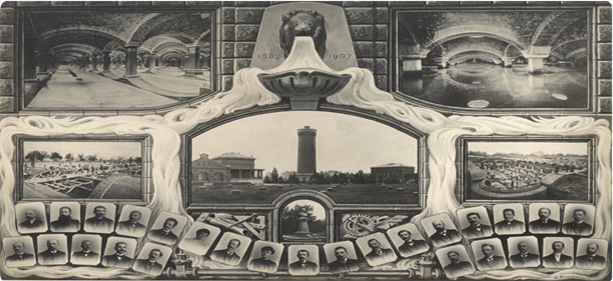
150 years of the Lindleys’ Kőbánya water reservoirs

In 1871, William Lindley and his eldest son William Heerlein finished construction of famous underground cathedral in Kőbánya, located recently in the 10th district of Budapest. 

To read more click on  czytaj więcej
czytaj więcej

150 years of the Lindleys’ Kőbánya water reservoirs

The Ottoman Emipre ruled Hungarian lands 1541-1686. When the Turks were defeated by the Habsburgs, Hungariona cities Buda, Óbuda and Pest  became a part of the Habsburg dominion. In 1867, after signing the Austro-Hungarian Compromise, the Austro-Hungarian Empire was established. Hungary, in general, and Buda and Pest, in particular, benefited greatly from this union and enjoyed a rapid growth, economicand progress. Pest became the political, economic and trade hub in the area, and in time, it became the most populated area.


In 1866 the cholera outbreak in these cities made the City Council to decide to build a waterworks to supply water to Pest (the water supply of Buda was less critical).


The Municipal Commission visited several cities in Western Europe, where modern water and sewage systems were built. Among them Hamburg and Frankfurt am Main, because on the advice of the chief engineer of Pest, Pál Szumrak, the mayor Móric Szentkirályi, proposed in mid-December 1867, that the work related to water supply to Pest be entrusted to William Lindley, famous for his waterworks in German cities. After visiting the site, Lindley handed the project over to the city in early February of the following year. He suggested in the report that before sufficient amount of money is raised for a modern water plant, a temporary system of pumps and wells be set up in the shipyard site (Flottillenplatzon, now Kossuth Lajos Square) near the Danube, for the extraction of water naturally filtered by the river gravel. From here, a network of pipes was to be pumped to a part of the city and its inhabitants. Since the capacity of such an intake due to the thin layer of gravel was insufficient for the rapidly growing number of the city's inhabitants, he designed the construction of sand filters from the Danube waters and a more efficient pumping station, pipeline network as well as a high-level reservoir in a nearby quarry at such a height that would ensure adequate pressure in the network. William Lindley was assigned in 1868 to build the waterworks and reservoirs. according to his design.


After an audience with Emperor Francis I, the mayor of the city and Lindley obtained permission to use the shipyard area, current Kossuth-tér and  Parliament Building.  Constructions started in April and were finished in November 1968. 


Temporary water supply system in the Flottillenplatzon, now Kossuth Lajos Square, with water reservoir under construction, 1868


Two impressive underground water reservoirs were built between 1869 and 1871 in Ihász Street (Kőbánya, 10th district of Budapest) on the Óhegy hill. They had capacity of 10,800 m3 each, and the reservoirs were able to store 21,600 m3 water. Though at that time the water consumption of Pest was estimated at 1,850 m3 per day, Lindley planned the waterworks, pipeline and reservoirs for a daily capacity of  9,100 m3/day. The reservoirs were built by masons from Italy; the bricks were produced in Hungary.


Kőbánya water reservoir (present state)


In 1869 William was joined in Pest by his eldest son William Heerelein, who was then 16-years old. The same pattern of  construction of water reservoirs were used by him almost over 40 years later in Polish Lodz.


The previously separate towns of Buda, Óbuda, and Pest were officially unified in 1873 and given the new name Budapest. The reservoirs are still in use and can be visited once a year when they drained for maintenance.

Read more:

https://www.industrialheritagehungary.com/02-Industrial-Heritages/04-Utilities/kobanya-water-reservoir.html

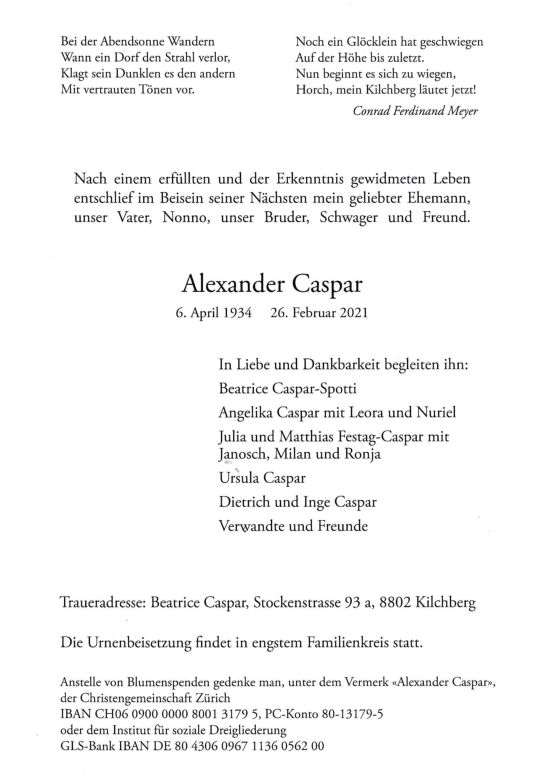
Family's Annoucement concerning Death of Alexander Caspar


Family announces Death of Alexander Caspar with beautiful poem of local Zürich poet, Conrad Ferdinand Meyer...
czytaj więcej

Family's Annoucement concerning Death of Alexander Caspar


Przejdź do strony:
  • << Pierwsza
  • < Poprzednia
  • 1
  • 2
  • 3
  • 4
  • 5
  • 6
  • 7
  • 8
  • 9
  • 10
  • Następna>
  • Ostatnia >>
Societas Lindleiana, wszelkie prawa zastrzeżone
  • O nas
  • Lindleyowie
  • E-biblioteka
  • Nasze archiwum
  • Kontakt
  • Linki
Projektowanie stron internetowych: www.bedweb.pl