


Nowości
The Lindley waterworks in Warsaw was launched 140 years ago
The Lindley waterworks in Warsaw was launched 140 years ago
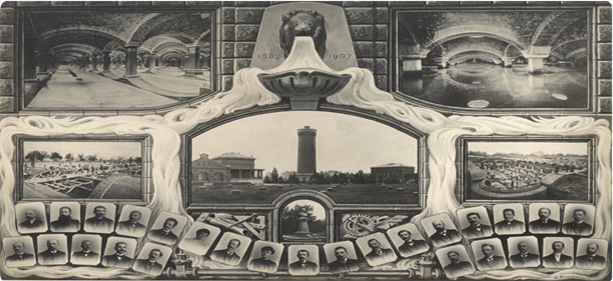
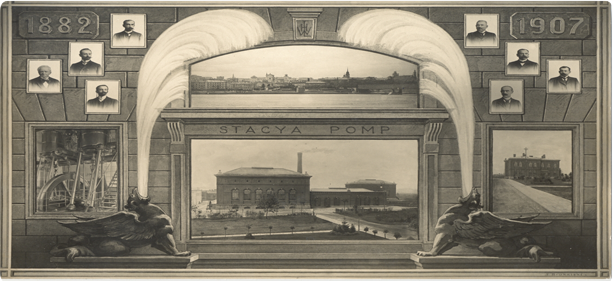
Engineer Włodzimierz Rabczewski, director of the Water Supply and Sewerage Company of the Capital City of Warsaw. Warsaw and engineer Stanisław Rutkowski, his former deputy director, in the book Waterworks and sewerage m.st. Warsaw 1886–1936 Saturday, July 3, 1886, was assumed to be the date when water from new filters appeared in the homes of Warsaw residents.
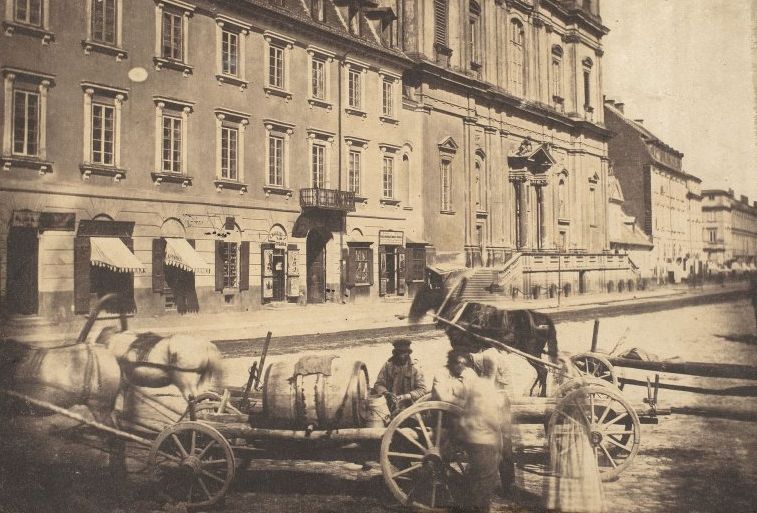 Warsaw water carrier in the city center, K. Beyer, 1858
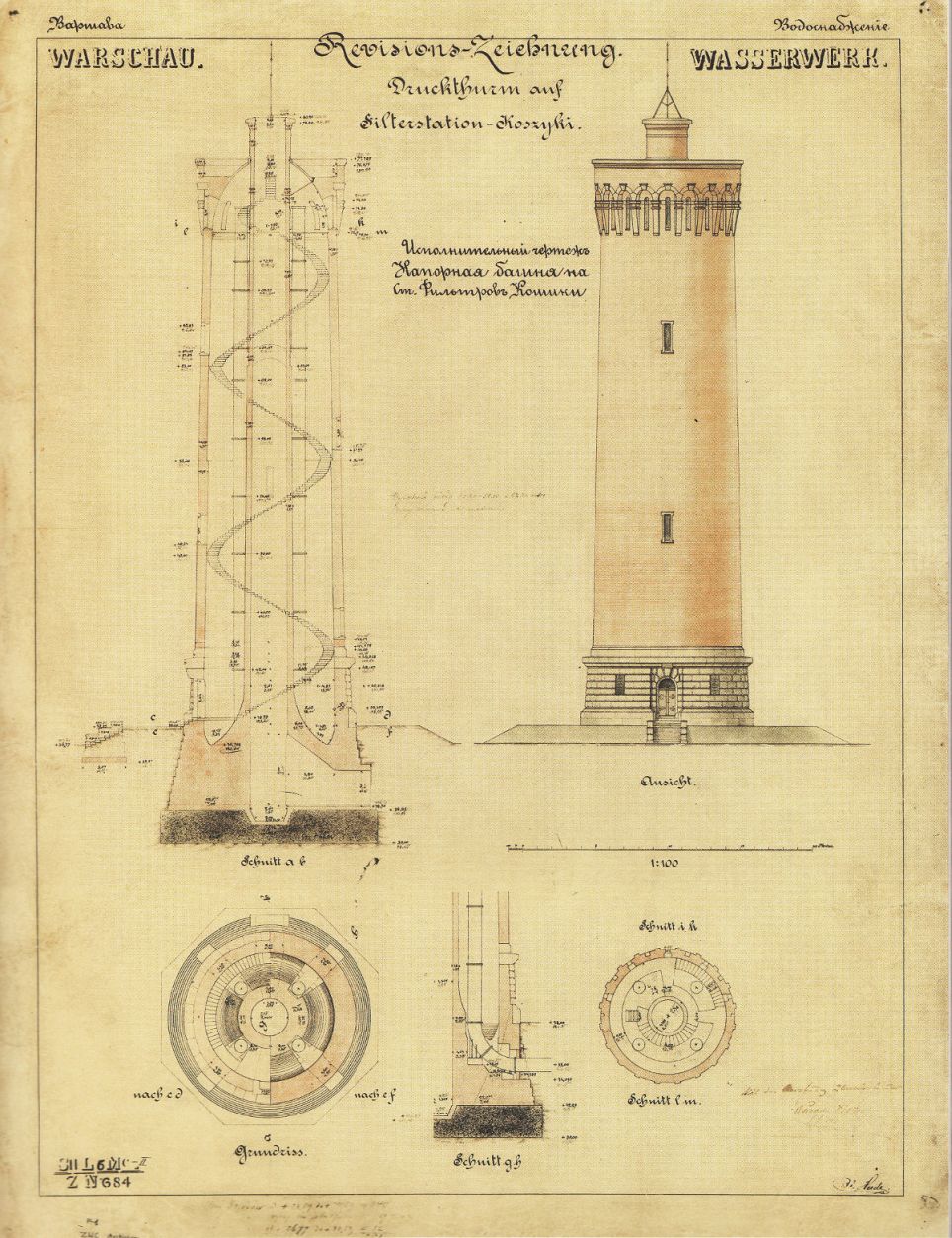
It is completely symbolic and was the beginning of a technological process that ended a year later. In the "Regulations of the Municipal Board of the City of Warsaw" of October 12, 1886, we read that: "After the construction of the river pump station of the new water supply and filters in Koszyki was completed, the operation of the new water supply began and the city is supplied with water drawn from the Vistula near the Czerniakowska tollgate, duly purified at the filter station." It is true that water actually flowed to the lower part of the city on July 3, 1886, but first to the former water supply station at ul. Dobra, where it was pumped by a steam engine to the Pump Station at Koszykowa street, and from there, after filtering, it was fed by gravity to... the Powiśle water supply network.
This state of affairs lasted until the water tower was put into operation and the pumps at the filter station were started, that is, until mid-1887. From now on, we can talk about supplying the upper city network with filtered water. Old waterworks at Dobra street ceased to function on December 31, 1888. Filtered water began to be supplied to Praga suburb eight years later.
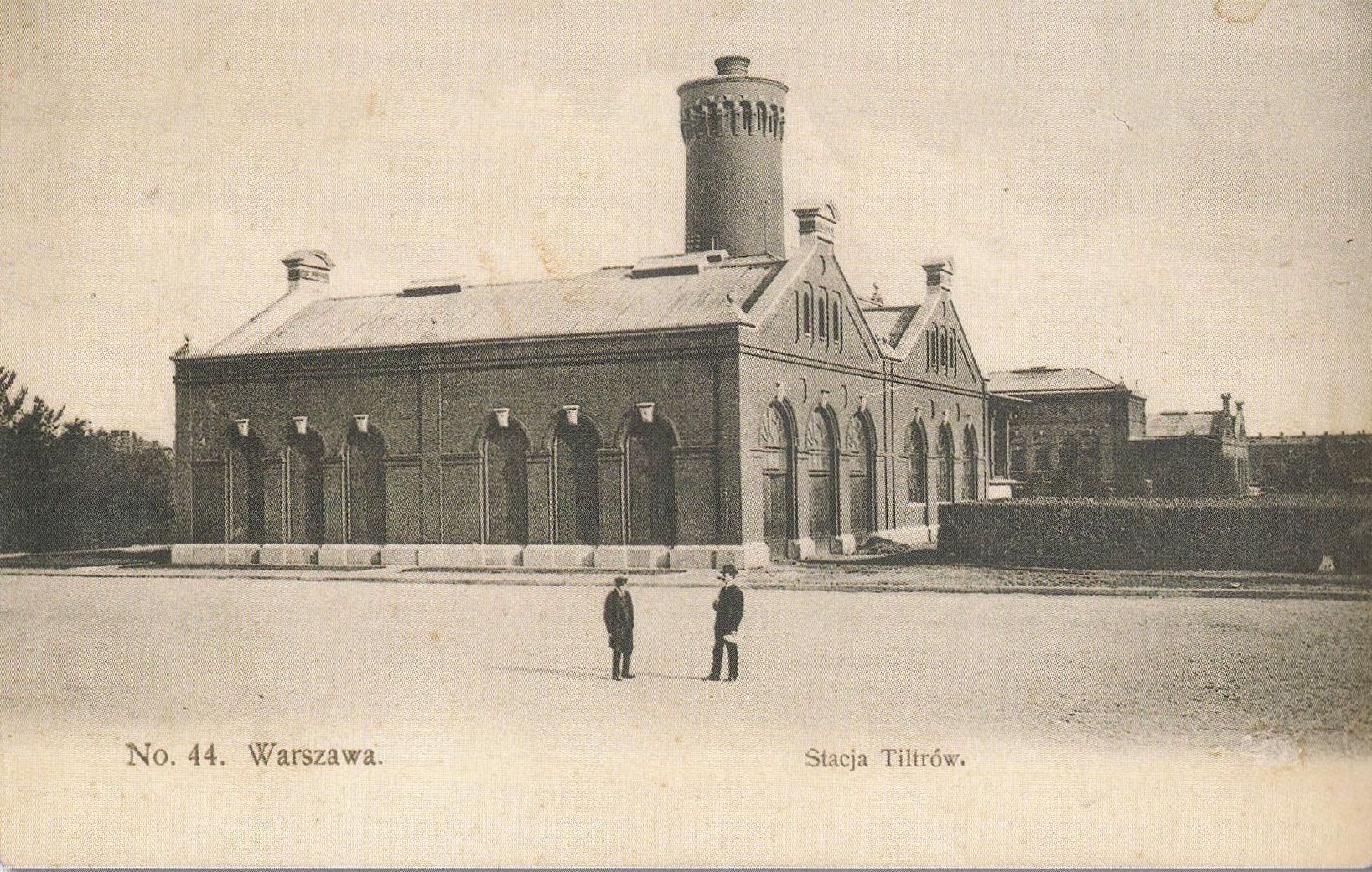 Central Water Filter Station in Warsaw, 1916
Interview with Ryszard Zelichowski at this site:
Filip Mazurczak, Built 140 years ago and still in use, Warsaw’s sewers connect the city to its brutal past, Notes from Poland: https://notesfrompoland.com/2026/05/31/built-140-years-ago-and-still-in-use-today-warsaws-sewers-connect-the-city-to-its-brutal-past/
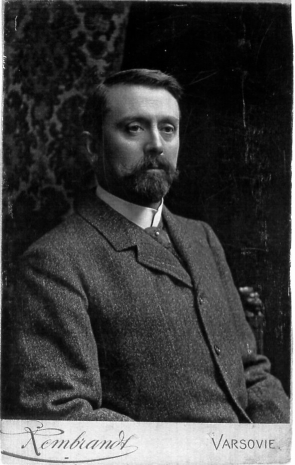
120th anniversary of the death of Joseph Lindley
120th anniversary of the death of Joseph Lindley
On April 20, 1906, in Ober Ursel (Oberursel), Joseph Lindley died at the age of only forty-seven. We recalled it on our pages a decade ago. Today we look back at Joseph's life story again.
He was the youngest of the three Lindley brothers and lived from 1859 to 1906. He came to Warsaw in December 1888 to replace his older brother Robert and represent in Warsaw the oldest of the three brothers, chief engineer William Heerlein, and to supervise the city's measurements as well as the construction of sewage and waterworks.
Joseph Lindley stayed with Warsaw for seventeen years. A nervous illness, despite his stay in a southern climate and treatment in a renowned sanatorium in the Taunus Mountains, he ended his "busy life" there.
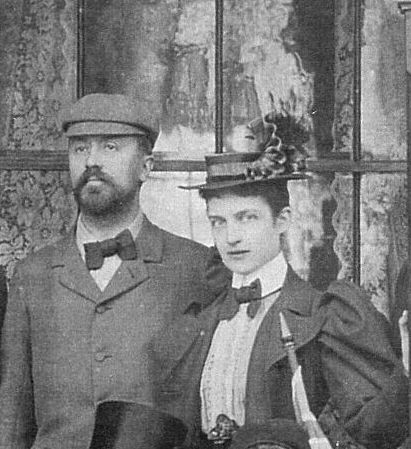
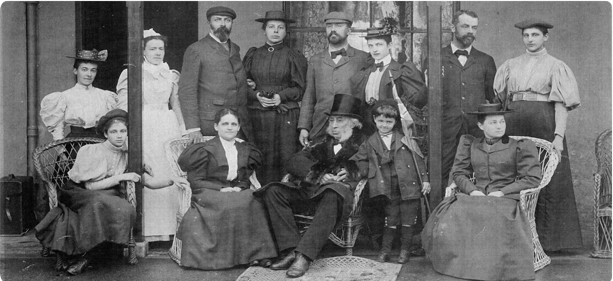
Joseph Lindley with his wife, Emily Suermondt
Joseph Lindley left behind his wife Emilia Suermondt, son Henry William and daughter Julia Anita. The Great Universal Illustrated Encyclopedia wrote: "for 16 years he developed a very useful activity in our country. Warsaw owes his great diligence and energy for completing these [sewerage] works."
In our E-library under the title "The Fourth Lindley" we have included an article on Joseh Lindley. We encourage you to read it again. We gave him the attention he deserves.
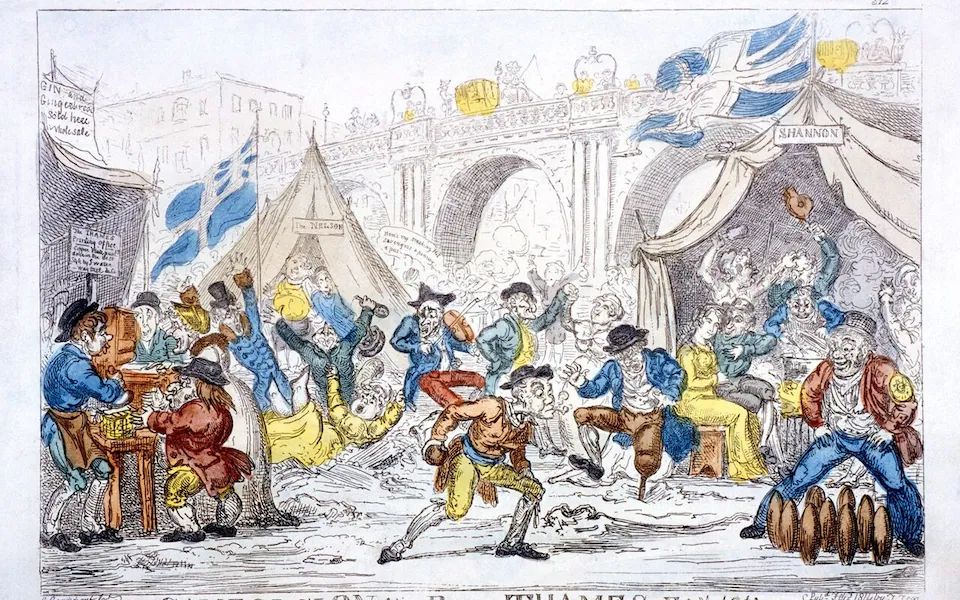
The London fair in 1814 on the Thames
The London fair in 1814 on the Thames
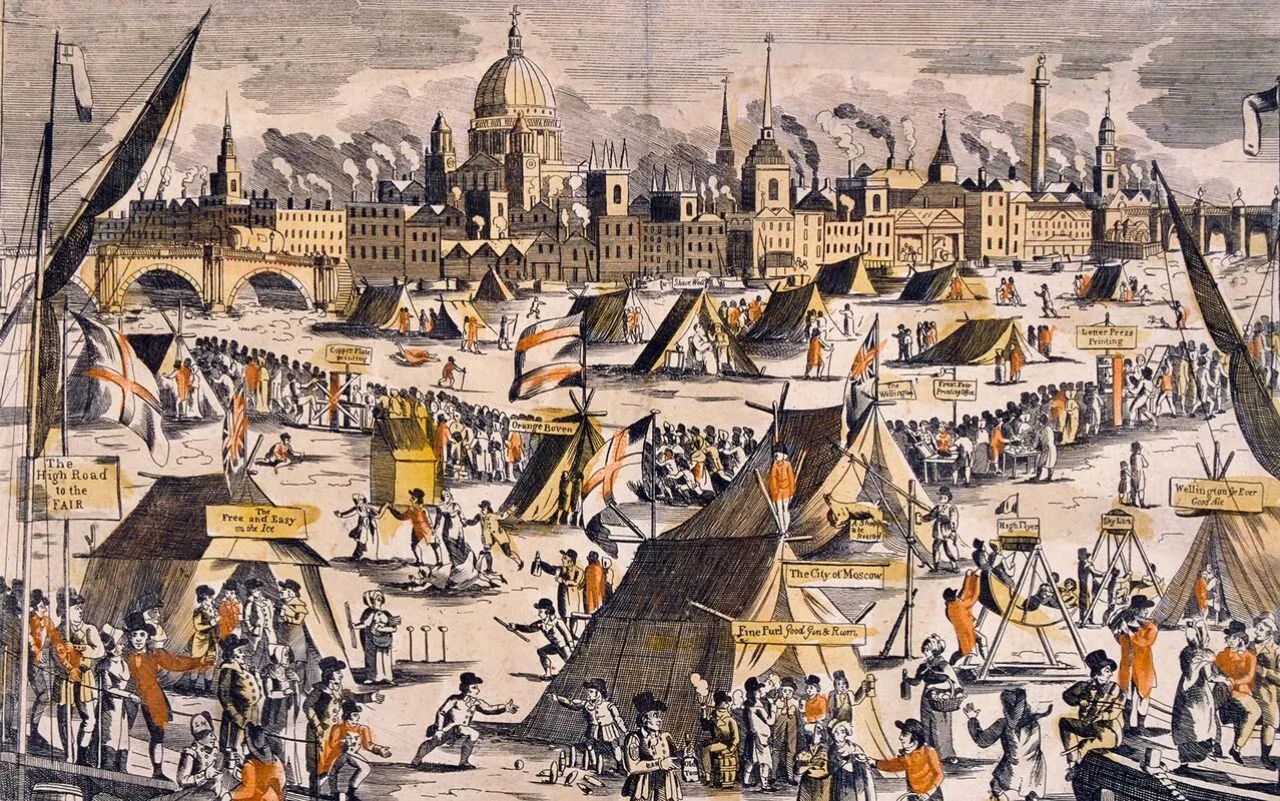
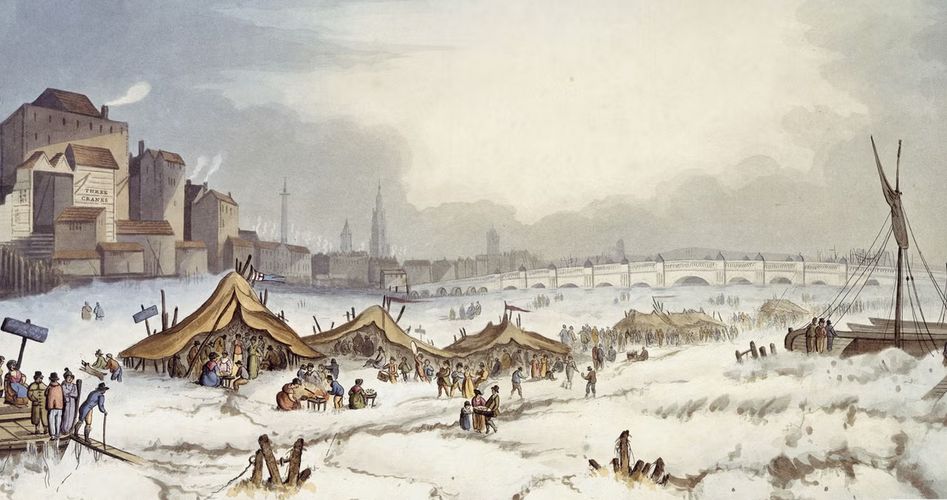
Credit: Getty
Holidays were spent in an atmosphere of fun. Let's try it too:
MERRY CHRISTMAS AND A PROSPEROUS NEW YEAR 2026 we wish our friends and supporters Societas Lindleiana
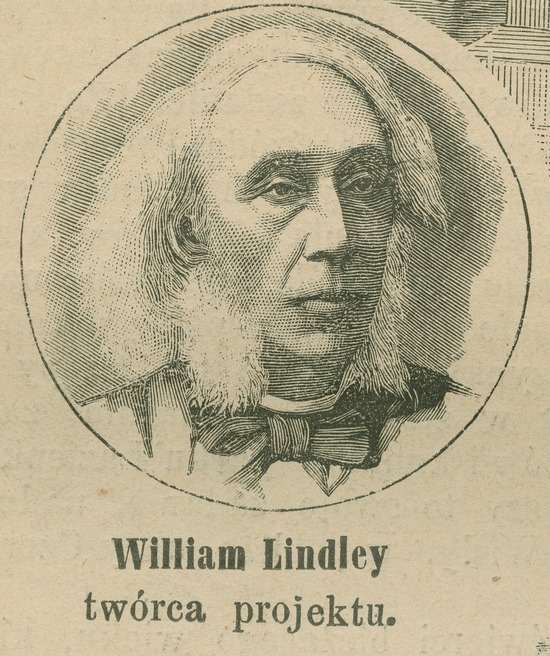
125 years ago died William Lindley
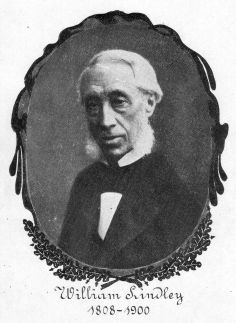
William Lindley, founder of the dynasty of civil engineers died in London on 22 May 1900. Anniversary Memories
To read more click on Czytaj więcej
125 years ago died William Lindley
Lindley, William (1808–1900), civil engineer, was born on 7 September 1808 at 1 Surrey Square, Old Kent Road, London, the youngest of four children of Joseph Lindley (1756–1808), of Heath, Yorkshire. In 1827 he became a pupil of Francis Giles and assisted him in the design of the Newcastle and Carlisle Railway and the London and Southampton Railway. In 1836–8 he worked on the regulation of the River Mersey and on the Thames Tunnel with Isambard Kingdom Brunel.
On Brunel's recommendation Lindley was in 1839 appointed engineer-in-chief to
the Hamburg and Bergedorf Railway, and subsequently was responsible for a
number of projects in Hamburg. However, Lindley's great reputation as an
engineer largely stemmed from his role in halting the disastrous fire which
raged in Hamburg in May 1842. Under his direction controlled explosions of
threatened buildings retarded the conflagration and eventually extinguished the
fire. The town council appointed him consulting engineer to the Hamburg water
board and the board of works. In the years 1848–60 he supervised that great
spate of urban reconstruction. He also designed, executed, and supervised the
construction of the Hamburg sewage system and water supply, with later
extensions, and the gas works on the Grasbrook.
In 1863 he was invited by the city authorities of Frankfurt am Main to report on its drainage and two years later he was appointed its consulting engineer. In 1868 he submitted a report to the city of Pest on its water supply. Construction of new waterworks began the following year and Lindley was assisted by his eldest son.
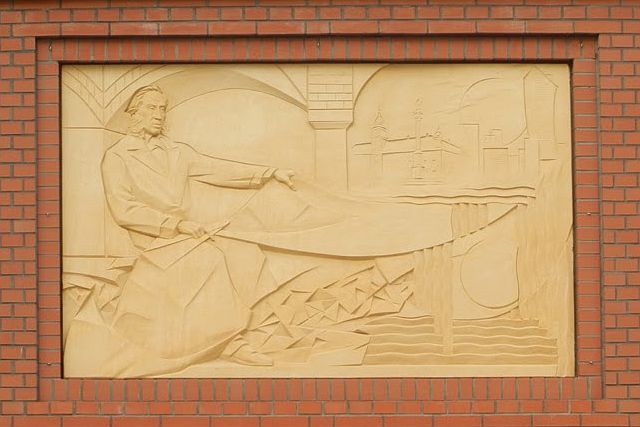
Warsaw Water Company
In later years Lindley senior was consulted on water
supply systems by the authorities of Düsseldorf, Chemnitz, Basel, Galatz,
Brăila, and Jassy. His last, extensive design was sewerage and water supply for
the cities of St Petersburg and Warsaw. The latter was carried out by his three
sons, William, Robert, and Joseph. Lindley retired from active work in 1879. He
died at his home outside London, 74 Shooter's Hill Road, Blackheath, on 22 May
1900, in his ninety-second year.
Excerpts from R.Ż,, Lindley, William (1808-1900), civil engineer, The Dictionary of National Biography, Oxford University Press 1965, Vol. XX, s. 968-969.
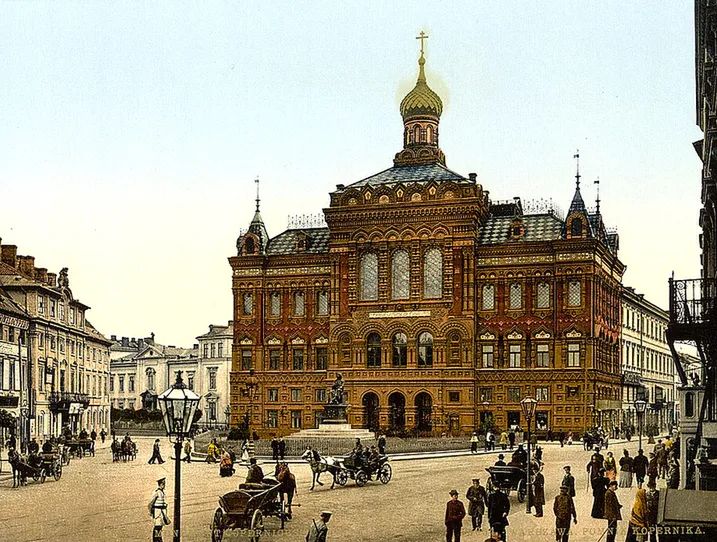
January 1880 William Heerlein Lindley first time in Warsaw
January 1880 William Heerlein Lindley first time in Warsaw
During
three subsequent meetings, various aspects of the water supply and sewage
project submitted by Father William Lindley to the city of Warsaw in 1878 were
discussed. They were attended by, "apart from engineers, Warsaw civil and
military dignitaries in large numbers, due to the importance of the
subject." Although he seemed very young to the distinguished group (he was
only 27 years old), but "as one could conclude, he was talented, and
especially good at speaking", he made a very good impression on the
gathered people. Starynkiewicz supported him with the means at his disposal. He
not only responded in the press to all attacks on Lindley, the sewage system,
the water supply system or the management of the Magistrate in general, but he
was also able to reach individual people to prove his arguments in a personal
conversation" - recalled the city engineer Julian Majewski.

Warsaw City Hall, 1878
The greatest advantage of these three-day sessions was that the Warsaw engineers could express their opinions, and Lindley had the opportunity to present his own point of view. Lindley himself was also given an excellent opportunity to meet Polish specialists whom he was to employ to carry out the project. The direct result of the discussion was the conclusion of a preliminary agreement with William H. Lindley, commissioning him to carry out the construction of water and sewage systems in Warsaw.