

• O nas

  • O nas

  • Lindleyowie

  • Lindleyowie

  • E-biblioteka

  • E-biblioteka

  • Nasze archiwum

  • Nasze archiwum

  • Kontakt

  • Kontakt

  • Nowości

  • Nowości

  • Linki

  • Linki

Aktualności

Powszechna Wystawa Krajowa we Lwowie w 1894 r.

130 lat temu we Lwowie na Powszechnej Wystawie Krajowej W.H. Lindley zaprezentował swoje kanały

Powszechna Wystawa Krajowa we Lwowie w 1894 r.

Powszechna Wystawa Krajowa we Lwowie

130 lat temu, 5 czerwca 1894 roku we Lwowie odbyła się Powszechna Wystawa Krajowa, w ramach której po raz pierwszy udostępniono zwiedzającym „Panoramę Racławicką”. Zorganizowana w setną rocznicę insurekcji kościuszkowskiej wystawa była największym przedsięwzięciem gospodarczym i kulturalnym okresu rozbiorowego. Ekspozycja była nie tylko przeglądem dorobku gospodarczego Galicji, ale przede wszystkim ponadzaborową prezentacją narodowej kultury i sztuki, „[…] wielką manifestacją jedności i żywotności narodu polskiego”. Wystawę przygotowywano dwa lata. Na obszarze około 46 hektarów – w obrębie Wzgórza Stryjskiego – wzniesiono 129 rozmaitych budowli, wśród których były m.in.: pałac sztuki, sala koncertowa, stadion, hala maszyn, stajnie, cieplarnie, restauracje, kawiarnie. 


Zob. Beata Stragierowicz, „Powszechna Wystawa Krajowa 1894 roku – wielkie dni Lwowa, Galicji i Polski”, https://mnwr.pl/intrygujace-powszechna-wystawa-krajowa-1894-roku-wielkie-dni-lwowa-galicji-i-polski/


Medalion pamiątkowy awers i rewers


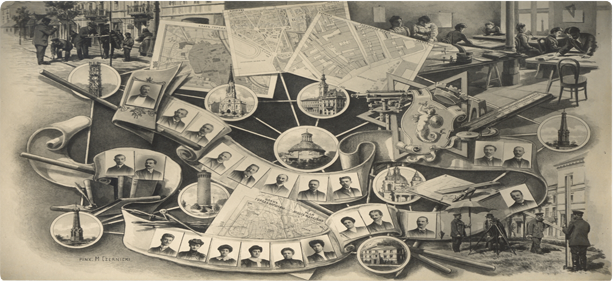
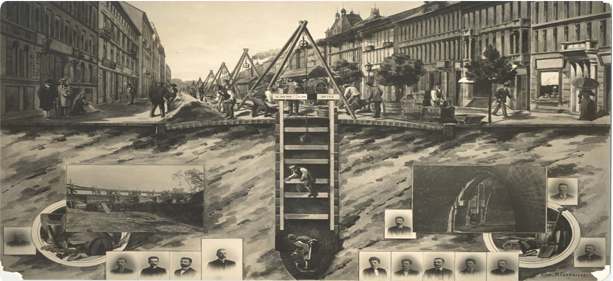
 Na wystawę tę William Heerlein Lindley przygotowali się jak przystało na tak znanych inżynierów. Specjalnie otwarty na tę okazję pawilon mieścił wystawę planów i modeli, obok niego zaś znalazł się „Wzór budowli przedstawiający kanał spławny   z przyrządem przepłukującym i przyporami”. Opracował także publikację w języku polskim przystępnie popularyzującą pięćdziesiąt lat doświadczenia w zakresie projektowania i realizacji przez nich miejskich robót kanalizacyjnych i wodociągowych. Katalog wystawowy zawierał 138 pozycji, z których numery od 42 do 93 dotyczyły Warszawy. Za najważniejsze dla swoich dokonań Lindleyowie uznawali prace nad wodociągami i kanalizacją w Hamburgu, Frankfurcie nad Menem, w Warszawie, w Elberfeld, Mannheim oraz w Hanau. Katalog zawierał też czterojęzyczne objaśnienie „do typowej budowy kanału spławnego”, wykonanych w Hamburgu w 1842 roku, we Frankfurcie w 1865 roku i Warszawie w 1882 roku.


Fragment opisu eksponatu


Zob. R. Żelichowski, Lindleyowie. Dzieje inżynierskiego rodu, Societas Lindleiana, Warszawa 219, t. II, s. 231


Kanały Lindleya, wzór 1843


15. Piknik naukowy w Warszawie

28 maja, w Parku im. Marszałka Edwarda Rydza-Śmigłego na warszawskim Powiślu 15. Piknik Naukowy. Nasze Towarzystwo reprezentował będzie Paweł Weszpiński, gdzie w namiocie numer 31 znajdzie się stoisko współtworzone przez Towarzystwo Lindleyowskie Societas Lindleiana, Zespół Historii Kartografii przy Instytucie Historii Nauki PAN oraz Stowarzyszenie Przyjaciół Archiwum Państwowego m.st.. Warszawy. 


15. Piknik naukowy w Warszawie

Piknik Naukowy Polskiego Radia i Centrum Nauki Kopernik to największa w Europie plenerowa impreza popularyzująca naukę. Odbywa się od 1997 roku corocznie w centrum Warszawy, za każdym razem przyciągając tłumy zwiedzających. W 2005 roku Piknik został wyróżniony przez Komisję Europejską jako jeden z dziesięciu wzorcowych europejskich projektów obszaru "Nauka i społeczeństwo". Był inspiracją do wielu inicjatyw popularyzujących naukę, m.in. do powstania w Warszawie Centrum Nauki Kopernik. Co roku w Pikniku Naukowym uczestniczy ok. 250 instytucji z Polski oraz z zagranicy. Instytucje naukowe, uczelnie, instytuty badawcze, muzea i instytucje kultury, fundacje związane z nauką oraz koła naukowe prezentują tu swoje osiągnięcia oraz odsłaniają kulisy swojej codziennej pracy. Podczas Pikniku reprezentowane są różne dyscypliny naukowe, zarówno nauki ścisłe, przyrodnicze, społeczne i humanistyczne.


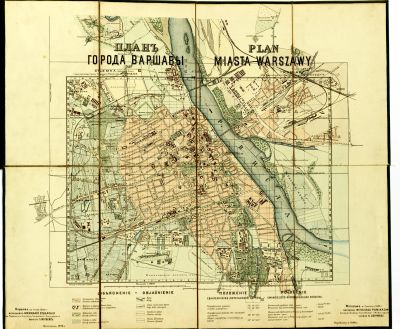
Warszawski plan Lindleya


Tegoroczna edycja Pikniku Naukowego odbędzie się 28 maja, ponownie w Parku im. Marszałka Edwarda Rydza-Śmigłego na warszawskim Powiślu.


Cuda wolności! Ona z niczego coś tworzy – słowa księcia Adama Jerzego Czartoryskiego dobrze ilustrują temat 15. jubileuszowego Pikniku Naukowego Polskiego Radia i Centrum Nauki Kopernik. Temat imprezy – Wolność – koresponduje z hasłem corocznej konferencji naukowej ECSITE, która odbędzie się w tym roku w Warszawie.


28 maja, w Parku im. Marszałka Edwarda Rydza-Śmigłego na warszawskim Powiślu 15. Piknik Naukowy. Nasze Towarzystwo reprezentował będzie Paweł Weszpiński, gdzie w namiocie numer 31 znajdzie się stoisko współtworzone przez:
-Towarzystwo Lindleyowskie Societas Lindleiana
-Zespół Historii Kartografii przy Instytucie Historii Nauki PAN
-Stowarzyszenie Przyjaciół Archiwum Państwowego m.st. Warszawy.


Na stoisku obejrzeć będzie m.in. warszawskie mapy historyczne, także  te wykonane przez Lindleyów. Liczni goście zwiedzający namioty Pikniku dowiedzą się o naszych celach i planach na przyszłość! 


http://www.pikniknaukowy.pl/2011


http://www.pikniknaukowy.pl/standard/aktualnosci/artykul194038.html


  • Archiwum
Slideshow Image 1 Slideshow Image 2 Slideshow Image 2 Slideshow Image 2 Slideshow Image 2 Slideshow Image 2 Slideshow Image 2

Nowości

  • wszystkie
  • spotkania
  • książki
  • wystawy
  • Informacje prasowe
  • Ciekawostki
304298296293292

Happy Season!

Happy Christmas and a Prosperous New Year 2024!
czytaj więcej

Happy Season!

140 years ago, on 20 August 1883, sewage works began in Warsaw

On 20 August 1883, sewage works began in Warsaw commemorated by a plaque.

To read more click on: czytaj więcej
czytaj więcej

140 years ago, on 20 August 1883, sewage works began in Warsaw

On August 20, 1883, the long-awaited sewage works began in Warsaw. This fact was commemorated by the bilingual following plaque:

"To commemorate the commencement of the construction of the sewage system of the city of Warsaw on 20 August 1883, according to the design and under the direction of engineer W. Lindley and his sons, this stone was laid by the acting mayor of the city, general lieutenant Starynkiewicz."


Source: Zespół Stacji Filtrów


A marble plaque with this inscription was embedded in the wall of the "A" sewer (collector) near the viaduct built in 1959 over the perimeter line on the axis of Julian Marchlewski Street, now Jana Pawła II. Currently, this plaque is in the Museum of Waterworks and Sewerage located at the Water Treatment Station "Filtry", at Koszykowa 81.


The Polish -language plaque has traces of damage from World War II.

About a certain monument, an error in the signature and the word sorry for unfair criticism.

On the 30th anniversary of unveiling of William Lindley's Monument in Free Hanseatic City of Hamburg

To read more click on:  czytaj więcej
czytaj więcej

About a certain monument, an error in the signature and the word sorry for unfair criticism.


On June 27, 1993, the city of Hamburg held a series of celebrations to mark the 150th anniversary of William Lindley's commencement of construction work on the city's water and sewerage systems. The culminating point of the celebrations was the unveiling of a statue by Hansjörg Wagner, a well-known Munich sculptor, which stood on the corner of Baumwall and Stubbenhuk. The monument was unveiled jointly by Senator Fritz Vahrenholt and British Consul General Patrick Yarnold.


Monument of William Lindley


The inscription SIR WILLIAM LINDLEY 1808–1900 on the pedestal of the monument, erroneously was transferring the knighthood of William Heerlein's son to his father.


Senator Vahrenholt spoke of "pioneering engineering work" by Lindley, who had done "groundbreaking work." He also reminded that as a Briton, Lindley had active opponents among the deputies of the City Council, who would rather give his position as an engineer, planner and advisor to Hamburg "to the right forces from the German homeland".

The Senator of the Party also uttered the significant word "sorry" [Das Sorry an Lindley] for the unfair assessment of his contemporaries, as well as for a number of difficulties and unpleasantness, as a result of which the discouraged Lindley left Hamburg.


Among the guests invited to these ceremonies were the descendants of William Lindley's children - Margret Julia (1927-2007), MD, and Alexander Caspar (1934-2021). - Margret Julia (1927-2007), MD, and Alexander Caspar (1934-2021).


Consul Yarnold stressed: “I am proud of the achievements of my compatriot. It was not a romantic job, but without a sewage system, no city would have made the jump from the 19th to the 20th century”.


Here it remains only to add that Lindley and his eldest son William Heerlein had to deal with the opposition in all the cities where they came to work. He was a pioneer in his field on the European continent, and his projects were characterized by foresight and panache, and therefore high costs. The outlays incurred on them returned after many years, and the health effects of modern water supply and sewage systems were visible almost immediately


The final form of the Hamburg monument caused a wave of discussion and a dispute between the offices of the Hanseatic city of Hamburg. The bronze sculpture, the final cost of which amounted to 110,000 marks and was covered by over seventy donors, was assessed by the commission of the cultural office as "artistically worthless". However, the support for the sculptor expressed by the mayor of Hamburg, Hennig Voscherau, prevailed, and the monument was erected. The monument, although controversial as to its form, has already grown into the cityscape, just like the former buildings of William Lindley.


In the memory of his contemporaries, William Lindley is remembered as "the man with sidewhiskers", for historians of technical progress he became "the patriarch of the art of engineering" and "a man whose achievements are a breakthrough in the urban construction of Hamburg".


Ursula Caspar, senior member of the German branch of the Lindley family, has died

On April 12, 2023, we lost Ursula Antonia Caspar, the senior member of the German branch of the Lindley family.


To read more click on:  czytaj więcej


czytaj więcej

Ursula Caspar, senior member of the German branch of the Lindley family, has died


We regret to inform you that on April 12, 2023, died Ursula Antonia Caspar, senior member of the German branch of the Lindley family (without issue). She was born on June 15, 1931 in Hamburg as the great-granddaughter of William Heerlein Lindley and Fanny Henrietta Getz.


Ursula Caspar, daughter of Beatrix Fanny Caroline (1907-1989) and Eduard Eberhard Caspar (1899-1977), grew up in the family home in Mannheim, where the eldest daughter of William Heerlein Lindley, Julia Fanny Elizabeth (1880-1943), used to invite to perform outstanding contemporary musicians. Her husband Robert Boveri (1872-1934), director of the Brown, Boveri & Co. branch in this city, a world-renowned power company, was a very talented pianist and a lover of classical music. 

Ursula and her family came to Mannheim from Hamburg just after Robert's death. The house in Mannheim was destroyed in 1943 in an Allied air raid and the ensuing fire destroyed all the family heirlooms.


The Caspar family survived the World War II in a village in the Black Forest mountains (Schwarzwald) in south-western Germany. After the war the family dispersed around the world. The elder brother died in Brazil, the younger one, a source of all knowledge about the Lindley family, died in Zurich, Switzerland.


In the early 1950s, Ursula Caspar went to the UK to visit family and worked part-time to earn her daily-bread and learn English. Later she used her skills teaching English while living in Spain. Eventually, she settled in Munich, where she took a job at Carl Hanser's publishing house, founded in 1928, one of the few existing medium-sized German publishing houses owned by the founding family.Ursula Caspar worked there until retirement.


In this publishing house, she came into contact with Polish culture, when in 1959 the first anthology of Polish poetry by Karl Dedecius (1921-2016), born in Łódź, the greatest translator of Polish literature into German, was published (under the title Lektion der Stille).

In 1980, he became the founder and first director of the Deutsches Polen-Institut (German Institute of Polish Culture) in Darmstadt, an institution that popularizes Polish art in Germany and contacts between the two nations. In 2002, my book The Lindleys.The history of the engineering family, was presented there and the first family reunion of the Lindleys from Great Britain, Germany and Switzerland also took place there.


Ursula celebrating her 90. birthday with friends, on her balcony in Munich


In 1997, while writing the aforementioned history of the Lindley family, the author of this memoir and his wife made a long-term friendship with Ursula Caspar. She visited Warsaw several times to admire the works of her great-grandfather. She willingly participated in family reunions organized in various European cities related to the works of William Heerlein Lindley.


Family reunion in 2006 in Warsaw. Ursula point at the commemorative plaque dedicated to W.H. Lindley on the Warsaw water tower.


Her death was caused by a combination of chronic diseases. She died in the Munich hospital. The funeral ceremony will take place on April 18 at 11.15 am at the Nordfriedhof Cemetery - Ungererstraße 130, Munich.


R. Żelichowski

Easter 2023

 Happy Easter 2023!


To read more click on:  czytaj więcej
czytaj więcej

Easter 2023

 
We wish all our friends and readers happy, relaxed Easter Days and close encounters with the nature!
                                                 SOCIETAS LINDLEIANA


Przejdź do strony:
  • << Pierwsza
  • < Poprzednia
  • 1
  • 2
  • 3
  • 4
  • 5
  • 6
  • 7
  • 8
  • 9
  • 10
  • Następna>
  • Ostatnia >>
Societas Lindleiana, wszelkie prawa zastrzeżone
  • O nas
  • Lindleyowie
  • E-biblioteka
  • Nasze archiwum
  • Kontakt
  • Linki
Projektowanie stron internetowych: www.bedweb.pl