
• O nas

  • O nas

  • Lindleyowie

  • Lindleyowie

  • E-biblioteka

  • E-biblioteka

  • Nasze archiwum

  • Nasze archiwum

  • Kontakt

  • Kontakt

  • Nowości

  • Nowości

  • Linki

  • Linki

Aktualności

Ziemia obiecana z Lindleyami w tle

 „Ziemia obiecana. Miasto i nowoczesność”, to tytuł wystawy w Bibliotece Uniwersyteckiej w Warszawie. Część ekspozycji o dziejach higieny i o Lindleyach w Warszawie.

Ziemia obiecana z Lindleyami w tle

Muzeum Historii Polski zorganizowało w Bibliotece Uniwersyteckiej w Warszawie niezwykle interesującą wystawę zatytułowaną "Ziemia obiecana. Miasto i nowoczesność".


Jak pisze autor autor scenariusza i komisarz wystawy prof. Michał Kopczyński.:  „Największa rewolucja w dziejach naszej cywilizacji ostatnich stuleci to rewolucja przemysłowa. Wiąże się ona nie tylko z pojawieniem się przemysłu fabrycznego. Jej rewolucyjność polega też na zmianie trybu życia większości ludzi. Naturalnym środowiskiem stało się dla nich miasto, w miejsce dotychczas dominującego środowiska jakim była wieś. Właśnie ta przemiana jest jednym z najważniejszych elementów rewolucji przemysłowej. I to przejście pokazujemy na wystawie - ukazując, jak wraz z nim zmieniali się ludzie”. Zobaczyć można dawną Warszawę, Lwów, Kraków, Łódź i Poznań, czyli największe ośrodki miejskie wszystkich trzech zaborów.


Wystawa koncentruje się na kilku aspektach życia miejskiego:


 - na narodzinach higieny (bohaterami tej części wystawy są William i William Heerlein Lindley). Oprócz plansz tematyce tej poświęcone projekcje multimedialne. Towarzyszy im również wystawa przedmiotów użytkowych z epoki, m.in. XIX-wieczną ozdobną muszlę klozetową czy spluwaczkę


Wystawa koncentruje się też na narodzinach nowoczesnego konsumenta. „To pokazuje jak rewolucja przemysłowa pozwoliła znacznie większej części ludności cieszyć się zwykłymi, codziennymi rzeczami. Np. ubranie przestało być dla większości tylko okryciem ciała, a zaczęło stawać się jego ozdobą. Było to możliwe dzięki sztucznym barwnikom i zaawansowanej technice włókienniczej, takiej jak żakard, które przyniosła rewolucja przemysłowa. Obniżyły one ceny barwnych, zdobionych ubrań, które stały się dostępne także dla zwykłych ludzi” – podkreślił Kopczyński


- na  ówczesnej reklamie. „Na początku XX w. wzorem amerykańskim sztuka reklamowa wychodzi na ulice w postaci plakatu reklamowego. Opowiadamy też o formach handlu, bazarach, sprzedaży naręcznej. I pokazujemy, jak władze starają się ten początkowy chaos uporządkować, czego dowodem jest np. Hala Mirowska” – mówi autor ekspozycji.


- na prywatnych salonach i na narodzin nowej przestrzeni publicznej rozrywki: kawiarni, powszechnie dostępnych teatrów i teatrzyków na wolnym powietrzu, wystaw, zawodów sportowych, a więc form aktywności dziś dobrze znanych, a wtedy nowych.

- na symbolice kryjącej się w nazwach ulic czy pomnikach.

- na wydarzeniach rewolucji 1905 r., której rocznica przypada w tym roku.

Na wystawie można zobaczyć fotografie, wycinki prasowe czy plakaty reklamowe oraz codzienne przedmioty ilustrujące tworzenie się nowoczesnego miasta. „Często są to przedmioty zwyczajne jak zegarek, bez którego jednak nie mogła funkcjonować kolej, dostarczająca ówczesnym mieszkańcom miast towarów konsumpcyjnych. Innym razem rzeczy niezwykłe, jak jednostrzałowy pistolet dla rowerzystów, aby mieli się czym bronić przed atakującymi ich psami” –  dodaje Kopczyński.


Na wystawę składa się ikonografia oraz artefakty z epoki pochodzące ze zbiorów muzeów i z kolekcji prywatnych. Wśród eksponatów są m.in. bicykl, oryginalne suknie, w tym pierwsze modele szyte seryjnie, telefon Ericssona, aparat fotograficzny Kodaka i telegraf.


Uzupełnieniem ekspozycji są nieme filmy będące w repertuarze objazdowego kina jarmarcznego. A miłośnicy gier planszowych mogą zagrać w oryginalną grę z epoki „Wyścigi konne”.


Ekspozycja jest czynna codziennie w Bibliotece Uniwersyteckiej w Warszawie (ul. Dobra 56/66, sala wystawowa na parterze) w dniach 25 września – 6 grudnia 2015, w godzinach od 10 do 18 [z wyłączeniem 1 i 22 listopada].


Ceny biletów: 4 zł (ulgowy), 8 zł (normalny), bilet grupowy – 4 zł/osoba (min. 10 osób), 16 zł rodzinny (min. trzy osoby). W piątki i dla osób powyżej 60. roku życia wstęp wolny.

Wystawie towarzyszy audioprzewodnik, który można pobrać na swoje urządzenie mobilne (telefon lub tablet) przed lub w czasie wizyty na wystawie. O wystawie opowiada kurator, prof. Michał Kopczyński.

Wystawie towarzyszą wykłady połączone ze zwiedzaniem wystawy | godz. 17.00 | wstęp wolny


Informacje: http://muzhp.pl/pl/c/1574/wystawa-ziemia-obiecana-miasto-i-nowoczesno

Wizyta rodziny Lindleyów w Baku

W dniach 7-13 kwietnia 2014 roku czterech członków rodziny Lindleyów z Niemiec, Szwajcarii i Szkocji, wraz z prezesem Societas Lindleiana i jego żoną odwiedzili ostatnią inwestycję W.H. Lindleya w Baku (Shollar). Na fot. obok W.H. Lindley i H. Tagiyev w Shollar w 1901 r.

Wizyta rodziny Lindleyów w Baku

W dniach 7-13 kwietnia 2014 roku czterech członków rodziny Lindleyów z Niemiec, Szwajcarii i Szkocji, wraz z prezesem Societas Lindleiana i jego żoną, otrzymało zaproszenie na konferencję państw regionu morza Kaspijskiego (CATEC – Caspian Aqua Technologies Exhibition and Conference), zorganizowaną w Baku przez Azersu OJSC (Państwowe Przedsiębiorstwo Zaopatrzenia w Wodę, otwarta spółka akcyjna). Azersu zorganizowało nam wspaniały program, dzięki któremu mogliśmy nie tylko poznać historię Republiki, miasta i wielkich przemian dokonanych przez prezydentów Hejdara Alijewa i Ilhama Alijewa, ale także odwiedzić miejsca, w których pracował William H. Lindley. Mogliśmy na własne oczy zobaczyć źródło wody pitnej dla Baku w Shollar, z którego przewodem na długości około 180 km jest ona transportowana do miasta.


Grupa pracowników przedsiębiorstwa Azersu z gośćmi z  rodziny Lindleyów oraz prezesem i jego żoną. Od lewej: Manaf Suleymanov, Xadija Abdullayeva, Ryszard Żelichowski, Hanna Żelichowska, Alexander Caspar, Tasognov Abdulbagi, Karin Deubner, Hijran Aliyeva-Sztrauch, Catharina Porter, Eugen Deubner i Shakir Mammadov pod pomnikiem H. Tagiyeva w Shollar

  • Archiwum
Slideshow Image 1 Slideshow Image 2 Slideshow Image 2 Slideshow Image 2 Slideshow Image 2 Slideshow Image 2 Slideshow Image 2

Nowości

  • wszystkie
  • spotkania
  • książki
  • wystawy
  • Informacje prasowe
  • Ciekawostki
928550

Socrates Starynkiewicz and the Lindleys in Warsaw

"Acting temporary replacement..."" - Socrates Starynkiewicz in Warsaw" was another  meeting organized by the Warsaw Public Library in the series of annual session of Warsaw historians. Publication of the book contains articles written by two members of "Societas Lindleiana " - T. Frączczak and R.Żelichowski...

czytaj więcej

Socrates Starynkiewicz and the Lindleys in Warsaw

"Acting temporary replacement..." - Socrates Starynkiewicz in Warsaw " is another meeting organized by the Warsaw Public Library in the annual session of  Warsaw History. Starynkiewicz is a grateful topic for historians because he is associated with two important elements - the great development of Warsaw in the last decades of the nineteenth and early twentieth century, and carries a large dose of optimism. On the background of gloomy recorded in the history of our city the Russian elites Starynkiewicz’s star shines very brightly. With his openness to technical innovations, and also need to modernize the city where he lived in, Warsaw could enjoy the new infrastructure investment. In such an atmosphere William Lindley, and then his sons could, expand their wings and introduce latest technology in sanitary engineering from the UK. Warsaw residents enjoyed good water in the taps, better air, freed forever from the stench of dirty gutters and benefits from access to a modern sewage system. The 20th jubilee session of the Warsaw historians chose Starynkiewicz as the central figure of their annual gathering. They invited five authors to speak about what Warsaw owed this humble Russian General.

A few months later was published a small but significant book with materials of this session. "Socrates Starynkiewicz – builder of modern Warsaw " is the text of Andrzej Soltan, “What was it like -  Warsaw during the presidency of Socrates Starynkiewicz in the light of statistics” writes John Berger. The way to the Lindleys in Warsaw and about their English rivals, writes Richard Żelichowski in the text "Starynkiewicz and the Lindleys. Genesis of the Warsaw water and sewage system”. Maria Jankowska wrote an essay " Plantation Committee and the state of green in Warsaw in the late nineteenth century" and finally Teresa Frączczak discusses the legacy of the Lindleys in Warsaw in the text "What do we have from the time of Starynkiewicz left - Warsaw water supply yesterday and today ". Book is accompanied by an introduction by Joanna Jaszek-Bielecka, session organizer and publisher of this volume. Book is profusely illustrated and nicely edited. Despite the small circulation, it can be purchased at the Warsaw Public Library on Koszykowa street.


"Acting temporary replacement..." - Socrates Starynkiewicz in Warsaw", Warsaw Public Library,Warsaw20 11

Album "125 years of Warsaw water supply 1886 - 2011"

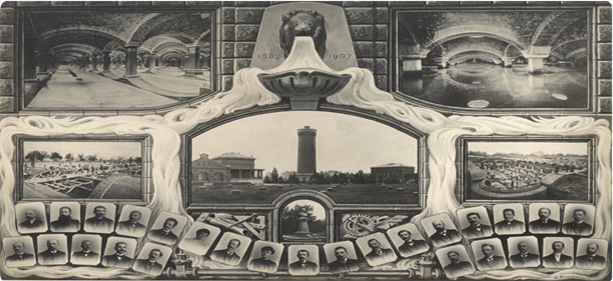
“Oh Warsaw!... soon therefore will your dreams come true. Several years from now you will be drinking pure water and will have got rid of the waste from which you catch typhoid fever, ague and diphtheria,” reported “Tygodnik Ilustrowany” in 1880. And so it happened. Six years later the Filter Station in Koszyki started operating and the first sections of sewers were ready. The construction was managed by the best specialist in the field, engineer William H. Lindley. FromIntroduction of Hanna Gronkiewicz-Waltz, the mayor of the City of Warsaw...

czytaj więcej

Album "125 years of Warsaw water supply 1886 - 2011"

“Oh Warsaw!... soon therefore will your dreams come true. Several years from now you will be drinking pure water and will have got rid of the waste from which you catch typhoid fever, ague and diphtheria,” reported “Tygodnik Ilustrowany” in 1880. And so it happened. Six years later the Filter Station in Koszyki started operating and the first sections of sewers were ready. The construction was managed by the best specialist in the field, engineer William H. Lindley.


1886 is considered to mark the beginning of the existence of modern waterworks in Warsaw. Professor Ryszard Żelichowski and Jarosław Zieliński wrote an interesting account of their development over 125 years. This is a lecture not only for the Varsavians or the historians of engineering. From the designs and pictures emerges a fascinating and, at times, dramatic picture of a fragment of the history of the capital of Poland.


Today, the Filter Station is not only a unique monument which deserves to be inscribed on the UNESCO World Heritage List. This is still the place where – as the waterworks people say – water is produced. And this water tastes better and better. The characteristic water-tower – the symbol of Warsaw water supply system – bears witness to the tradition of reliable, solid and uninterrupted work for the city’s well-being.


Hanna Gronkiewicz-Waltz, the mayor of the City of Warsaw


Afterword


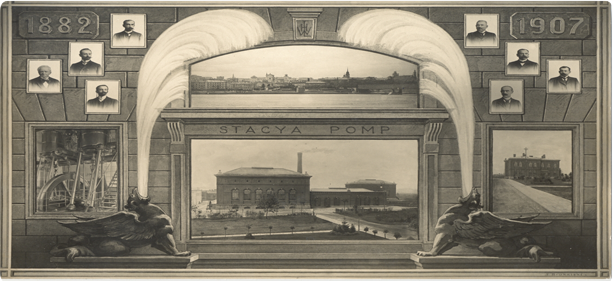
Warsaw owes its modern water supply and sewerage system to foreigners. The first one among them was Sokrates Starynkiewicz, a Russian Major-General, acting in the capacity of the mayor of Warsaw in the years 1875-1892, who initiated the design and construction works. In his wake came father and son Lindley, outstanding English engineers, who embarked on the realization of the project. 125 years ago the city water supply network, including pumping and filter stations, was constructed and put into operation according to their design.


William H. Lindley was convinced that the construction of the water supply and sewerage system was not only a technical challenge and profitable undertaking. The distinguished engineer considered his actions a civilizing mission: “[...] we too have our battlefield and we are fighting. Our battlefield is not that of the soldier, with thousands of dead and injured. On our battlefield we see thousands of people saved from death through the improvement of their health, which is the result of our work,“ said Lindley in Warsaw in 1909, and the actual effect of the construction of the water supply and sewerage system was “the sanitation of Warsaw,” as it was then written in the newspapers.


Lindley’s plans would always combine the excellence of sanitary engineering technical solutions and care for Warsaw and its residents. That is why the designs of Filter Stations featured green squares, rare species of plants and an observation deck at the water-tower. The area was intended to be not just a “water factory”, but also a park and recreation place for the inhabitants of Warsaw. Other examples, as minor as they may be, of a skilful approach to the public space, which reflect so well the manner of thinking of the engineers from the school of Lindley, were the designs of watering stations for dogs or tree watering devices.


Today, we are virtually finalizing the so-called Warsaw project. Certain project’s solutions located in the Filter Station in Koszykowa Street create a mix of modernity and history.


Continuation of the ancillary role of a municipal water treatment and sewage discharge company is one of the key elements of the tradition that has been preserved in the Warsaw waterworks. There is also a concern for an important part of our cultural heritage and the need to promote the awareness of it. To that end, our employees show hundreds of visitors round the Filter Station. That was the drive behind the establishment of a museum room and the careful storing of the unique drawings from the Lindley’s office in the company archive. That was also the reason for the creation of this album.


Henryk Brzuchacz, President of the Management Board, MPWiK w m.st. Warszawie S.A.


Ryszard Zelichowski, The Lindleys. The Story of a Family of Engineers.

The 19th-century Warsaw when he discovered that its major water supply and sewage systems had been designed by British engineer William Lindley (1808-1900). Together father William Lindley and his three sons were involved in designing or consulting on the water supply and sewage systems for 48 European cities...
czytaj więcej

Ryszard Zelichowski, The Lindleys. The Story of a Family of Engineers.


Through extensive research, Żelichowski traced Lindley sons projects of waterworks and  sewage systems at the end of the 19th century and the beginning of the 20th centuries. 


His study is part of a growing body of literature referred to as "Euro - Biography". His research identifies two major trends in Victorian engineering: (1) the incredible progress made by Western civilization, thanks to the ingenuity of these engineers in designing filtration systems for drinking water and in creating indoor plumbing, and (2) the profound legacy of these engineers as the first "true" Europeans who became deeply engaged in multi - culturalism for the benefit of the entire region. In today's lingo, we might have called them "Engineers Without Borders".


______

Ryszard Zelichowski. "Lindleyowie" (in Polish, "The Lindleys: The Story of a Family of Engineers"), Warsaw 2002, 811 pages.

Przejdź do strony:
  • << Pierwsza
  • < Poprzednia
  • 1
  • 2
  • Następna>
  • Ostatnia >>
Societas Lindleiana, wszelkie prawa zastrzeżone
  • O nas
  • Lindleyowie
  • E-biblioteka
  • Nasze archiwum
  • Kontakt
  • Linki
Projektowanie stron internetowych: www.bedweb.pl