• O nas

  • O nas

  • Lindleyowie

  • Lindleyowie

  • E-biblioteka

  • E-biblioteka

  • Nasze archiwum

  • Nasze archiwum

  • Kontakt

  • Kontakt

  • Nowości

  • Nowości

  • Linki

  • Linki

Aktualności

Europejski Rok Dziedzictwa Kulturowego w Niemczech z W. Lindleyem w tle

Podczas Europejskiego Roku Dziedzictwa Kulturowego w Niemczech Gimnazjum Klosterschule w Hamburgu realizuje Projekt William Lindley. Zaczynamy od niego

Europejski Rok Dziedzictwa Kulturowego w Niemczech z W. Lindleyem w tle


W marcu 2017 roku Przewodniczący Niemieckiego Narodowego Komitetu ds. Ochrony Zabytków, Minister Kultury Brandenburgii oraz Minister Stanu ds. Kultury  zaprosili chętnych do udziału w Europejskim Roku Dziedzictwa Kulturowego w 2018 roku. Tegoroczny projekt odbywa się w Niemczech pod hasłem "Dzielenie Dziedzictwa („Heritage sharing)" i jest inicjatywą Niemieckiego Komitetu Narodowego ds. Ochrony Zabytków, Rządu Federalnego, państw federalnych i stowarzyszeń gmin w Berlinie. Biuro Koordynacji spodziewa się około 500 projektów i około 1000 wydarzeń w Niemczech w ciągu całego roku.


Uroczysta inauguracja roku odbyła się 8 stycznia 2018 roku w Wielkiej Sali Ratusza w Hamburgu.


Sześć szkół połączonych w sieć regionalnej otrzymała zadanie zapoznania się i zinterpretowania roli  pomników oraz budowli zabytkowych w przestrzeni miejskiej. Zespoły uczyć się będą dziedzictwa kulturowego swojego miasta jako części historii północnych Niemiec i zaangażowania na rzecz ochrony zabytków. 


Projekt William Lindley. Zaczynamy od niego


Gimnazjum Klosterschule w Hamburgu, w ramach projektu William Lindley. Zaczynamy od niego, skoncentrowało się na Williamie Lindleyu, brytyjskim inżynierze, który w Hamburgu zaprojektował  pierwsze nowoczesne wodociągi i podziemną kanalizację na kontynencie europejskim, pierwsze połączenie kolejowe i zaangażował się w przeprojektowanie portu. Jego wyniki zostaną zaprezentowane publicznie w ramach wystawy zorganizowanej przez Urząd ds. Ochrony Zabytków w Hamburgu.


Gmach Gimnazjum


https://denkmal-aktiv.de/schulprojekte/archiv/schulen-2017/gymnasium-klosterschule-hamburg/


Kolejne spotkanie Towarzystwa Lindleyowskiego

W dniu 23 listopada 2011 roku (środa) o godzinie 17.00 odbędzie się spotkanie członków i osób zainteresowanych działalnością Towarzystwa Lindleyowskiego „Societas Lindleiana”.

Kolejne spotkanie Towarzystwa Lindleyowskiego

W dniu 23 listopada 2011 roku (środa)o godzinie 17.00 odbędzie się spotkanie członków i osób zainteresowanych działalnością Towarzystwa Lindleyowskiego „Societas Lindleiana”. Spotkanie będzie miało miejsce w gościnnych pomieszczeniach Archiwum m.st. Warszawy (Sala Pracowni Naukowej), przy ulicy Krzywe Koło 7 (Stare Miasto).


Tematem spotkania Towarzystwa będzie podsumowanie minionego roku, w którym obchodziliśmy 125-lecie rozpoczęcia pracy warszawskiego wodociągu Lindleyów.


Sekretarz Generalny TL „SL”, Paweł Weszpiński”, opowie o planach Lindleyowskich w zbiorach Archiwum oraz pracach konserwatorskich z nimi związanymi.


Zapraszamy!  

  • Archiwum
Slideshow Image 1 Slideshow Image 2 Slideshow Image 2 Slideshow Image 2 Slideshow Image 2 Slideshow Image 2 Slideshow Image 2

Nowości

  • wszystkie
  • spotkania
  • książki
  • wystawy
  • Informacje prasowe
  • Ciekawostki
315268235207197

The General National Exhibition in Lviv 130 years ago

W.H. Lindley General presents his design at National Exhibition in Lviv in 1894


To read more click on Czytaj więcej,

czytaj więcej

The General National Exhibition in Lviv 130 years ago

 On June 5, 1894, the General National Exhibition took place in Lviv, during which the "Racławice Panorama" was made available to visitors for the first time. Organized on the centenary of the Kościuszko Uprising, the exhibition was the largest economic and cultural undertaking of the partition period. The exhibition was not only a review of the economic achievements of Galicia, but above all a presentation of national culture and art beyond the partitions, "[...] a great manifestation of the unity and vitality of the Polish nation". The exhibition took two years to prepare. On an area of ​​approximately 46 hectares - within the Stryi Hill - 129 various buildings were erected, including: a palace of art, a concert hall, a stadium, a machine hall, stables, greenhouses, restaurants, and cafes.


Commemorative medal


William Heerlein Lindley prepared for this exhibition as befits such famous engineers. A pavilion specially opened for the occasion housed an exhibition of plans and models, and next to it was a "Model of a building presenting a navigable canal with a flushing device and buttresses". He also prepared a publication in Polish that popularized fifty years of experience in the design and implementation of municipal sewage and water supply works in an accessible way. The exhibition catalogue contained 138 items, of which numbers 42 to 93 concerned Warsaw. The Lindleys considered the work on water and sewage systems in Hamburg, Frankfurt am Main, Warsaw, Elberfeld, Mannheim and Hanau to be the most important of their achievements. The catalogue also contained a four-lingual explanation of "the typical construction of a navigable canal", carried out in Hamburg in 1842, Frankfurt in 1865 and Warsaw in 1882.


Part of the leaflet


R. Żelichowski, Lindleyowie. Dzieje inżynierskiego rodu, Societas Lindleiana, Warszawa 219, t. II, s. 231


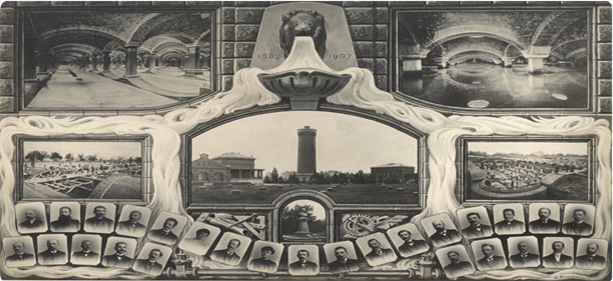
Lindley sewage canal designed for Hamburg in 1843

Free Ukraine: The Museum of the History of Toilets in Kiev is celebrating its 15th anniversary this year.

The Museum of the History of Toilets in Kiev is celebrating its 15th anniversary this year. Will it survive the devastating Russian rocket attacks?


To read more click on  czytaj więcej
czytaj więcej

Free Ukraine: The Museum of the History of Toilets in Kiev is celebrating its 15th anniversary this year.

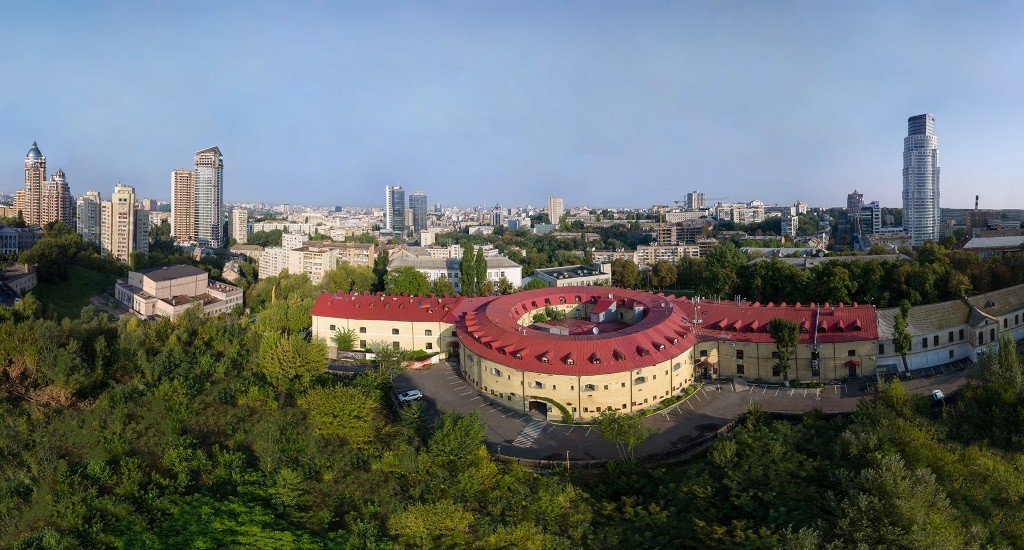
One of the few world museums dedicated to toilets is in Kiev, the capital of independent Ukraine bombed by Russian troops. It is worth paying him a virtual visit before the “collateral damage” accidentally destroys its unique collections.


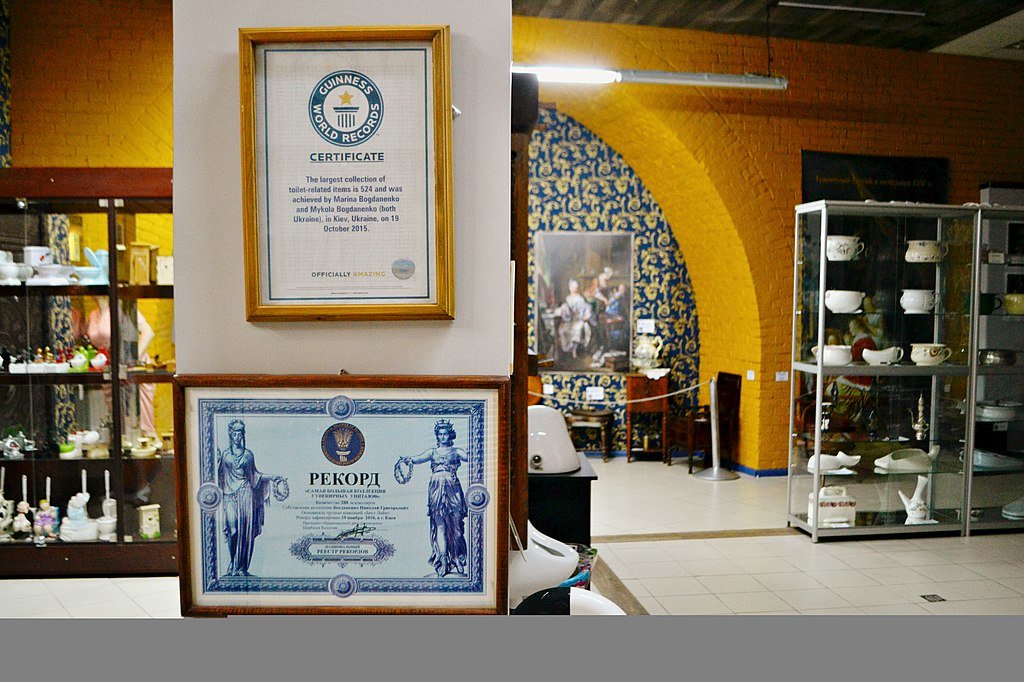
The Toilet History Museum is a private museum founded in Kiev by a married couple of businessmen and hygiene history enthusiasts, Nikolay and Marina Bogdanenko. It was opened in September 2007. It is on the list of the 10 most popular and interesting museums in Ukraine.


It is located in "Tower number 5", on Rybalska Street No. 22. The tower was part of the fortifications of the Kyiv Fortress and was finished in 1846 for a Russian army as a warehouse with provisions and ammunition. Today, the tower houses one of the largest business centers in Kiev and the world's largest collection of toilets and related souvenirs, which was recorded in the Guinness Book of Records.


The museum's exhibits are arranged chronologically according to the history of human development: "Prehistory", "Antiquity", "Middle Ages", "Rebirth", "XVII - XXI Century" and "ART WC".


We invite you to visit it, temporarily virtually, in person in the near future!


For details visit:


http://museumtoilet.com.ua/en/

https://kyivpastfuture.com.ua/ru/muzej-ystoryy-tualeta/

https://en.wikipedia.org/wiki/Toilet_History_Museum

Sixty years ago, the Kattwyk Coking Plant (Hamburg)

Sixty years ago, the Kattwyk Coking Plant (Hamburg) prepared a special medal in memory of William Lindley...
czytaj więcej

Sixty years ago, the Kattwyk Coking Plant (Hamburg)

In 1960, i.e. sixty years ago, the Kattwyk Coking Plant prepared a special medal in memory of William Lindley. On the obverse there is a bust of William Lindley with the inscription:
HAMBURGERGAS (Gas of Hamburg, in the upper part) and WILLIAM LINDLEY, ERBAUER DES ERSTEN HAMBURGER GASWERKS (W.Lindley, constructor of the first gasworks in Hamburg, in in the lower part). There is a large inscription on the reverse: HGW KOKEREI KATTWYK 1960 (Hamburger Gasworks, Coking Plant, Kattwyk 1960).


                   Collection: Societas Lindleiana


The commemoration involved the opening of a new coking plant in an industrial district of Hamburg, opened in 1960. The new coking plant was short-lived. It was extinguished in 1981 and was demolished a year later.


In August 1844, the foundation stone laying ceremony for the construction of the first gas coking plant at Grasbrook was held. A year later, the first public gas lanterns to illuminate Hamburg's main streets with coal gas were introduced. In the fall of 1845, there was such a large flood that the new gas facilities were unusable. A new building was needed. “It was taken over by the English engineer William Lindley, who was also responsible for building a modern water supply in Hamburg. The gas lanterns burned again at the end of 1846: 2020 in numbers. The brightness of the streets made the gas plant so popular that its image adorned the backs of playing cards, "writes Sasha Disko-Schmidt in the text Gasversorgung für die moderne Stadt (Gas supply a modern city).


Source:https://geschichtsbuch.hamburg.de/epochen/industrialisierung/gasversorgung-fuer-die-moderne-stadt/


Kattwyk, together with Altona, found itself within borders of Hamburg in 1937. Currently, this name is connected with the unusual Kattwykbrücke drawbridge over the southern Elbe for rail and road traffic. A 290-meter-long bridge connects Moorburg with the eastern Kattwyk peninsula, which belongs to the Elbe Hohe Schaar and Wilhelmsburg islands.

In 2018 the Institution of Civil Engineers in London celebrated two hundred years of activity

Five members of the Lindley family joined ICE in the 19th and the 20th century...
czytaj więcej

In 2018 the Institution of Civil Engineers in London celebrated two hundred years of activity

The Institution of Civil Engineers (ICE) is one of the world's most respected professional engineering institutions and has attracted some of history’s most famous and influential civil engineers Throughout 2018, ICE celebrated its 200th anniversary, and hosted number of activities to show how civil engineering has transformed people’s lives and is safeguarding the future for their families.


Five members of the Lindley family were members of this prestigious institution. William Lindley joined the Institution of Civil Engineers in 1842, William Heerlein joined ICE in 1878, Robert Searles in 1881 and Joseph Lindley in 1899. In the 20th  century Marie Lindley, the last civil engineer in the family, became in 1953 Associated Member and in 1972 she was the second woman in history of ICE  to receive full Fellowship.


Short history of ICE


From humble beginnings in 1818, a small group of young engineers met in a London coffee shop and founded ICE, the world’s first professional engineering body. ICE asked Thomas Telford to become its first President in 1820. His appointment not only gave ICE a major boost – he designed and built all types of infrastructure and brought many new members in – but also played a huge part in shaping the ICE of today.


Since then, ICE has become home to many of history's greatest engineers and 200 years later, has grown to more than 92,000 members in more than 150 countries around the world.


More to read: https://www.ice.org.uk/about-ice/our-history

https://en.wikipedia.org/wiki/Institution_of_Civil_Engineers


Institution of Civil Engineers, One Great George Street, London SW1


European Year of Cultural Heritage in Germany with W. Lindley in the background

During European Year of Cultural Heritage in Germany Klosterschule high school in Hamburg works on a Project William Lindley. A man to start with...
czytaj więcej

European Year of Cultural Heritage in Germany with W. Lindley in the background


In March 2017, the President of the German National Committee for the Protection of Monuments, the Minister of Culture of Brandenburg and the Minister of State for Culture invited the volunteers to participate in the European Year of Cultural Heritage in 2018. This year's project takes place in Germany under the slogan "Heritage sharing" and is an initiative of the German National Committee for the Protection of Monuments, the Federal Government, federal states and municipal associations in Berlin. The Coordination Office expects about 500 projects and about 1,000 events in Germany throughout the year.

The ceremonial inauguration of the European Year took place on January 8, 2018 in the Grand Hall of the Town Hall in Hamburg.

Six schools connected in a regional network were given the task of becoming acquainted with and interpreting the role of monuments and historic buildings in the urban space. Teams will learn about the cultural heritage of their city as part of the history of North Germany and commitment to the protection of monuments.

William Lindley project. A man to start with


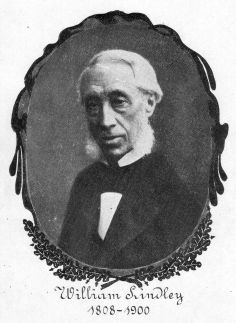
Klosterschule high school in Hamburg, as part of the project William Lindley project. A man to start with, focused on William Lindley, a British engineer who in Hamburg designed the first modern waterworks and underground sewers on the European continent, the first railway connection and engaged in the redesign of the port. Its results will be presented publicly as part of an exhibition organized by the Office for the Protection of Monuments in Hamburg.


Klosterschule high school


https://denkmal-aktiv.de/schulprojekte/archiv/schulen-2017/gymnasium-klosterschule-hamburg/

Przejdź do strony:
  • << Pierwsza
  • < Poprzednia
  • 1
  • 2
  • Następna>
  • Ostatnia >>
Societas Lindleiana, wszelkie prawa zastrzeżone
  • O nas
  • Lindleyowie
  • E-biblioteka
  • Nasze archiwum
  • Kontakt
  • Linki
Projektowanie stron internetowych: www.bedweb.pl